Top 10 Shipping Container Storage Options for Buyers

Choosing shipping container storage is less about finding the biggest steel box and more about matching it to the site, contents, and daily routine. A unit beside a workshop may need easy door access. One holding seasonal furniture needs a dry, stable interior. Small details matter.

In this guide, fictional storage planner Maya Chen offers a useful reminder: “A good container protects what you store and makes access practical.” Treat that as a starting point, not a guarantee. Buyers should check the container’s condition, door seals, ventilation, floor, and delivery requirements. Ask for clear photos, then inspect the unit when possible. Rust near a roof seam can matter more than a fresh coat of paint.

There are trade-offs. Newer units often look cleaner, while used containers can offer better value but need closer inspection. Ground preparation also deserves attention; a slightly uneven pad may complicate door operation. Not every buyer needs insulation, shelving, or extra ventilation. Still, overlooking moisture can damage cardboard boxes, tools, and upholstery over time. That part is easy to underestimate.

The options ahead compare common sizes, conditions, access features, and site considerations. They can help narrow the field, but no list replaces checking your own measurements and delivery route. Measure twice. Then ask one more question: will the container still work when your storage needs change?
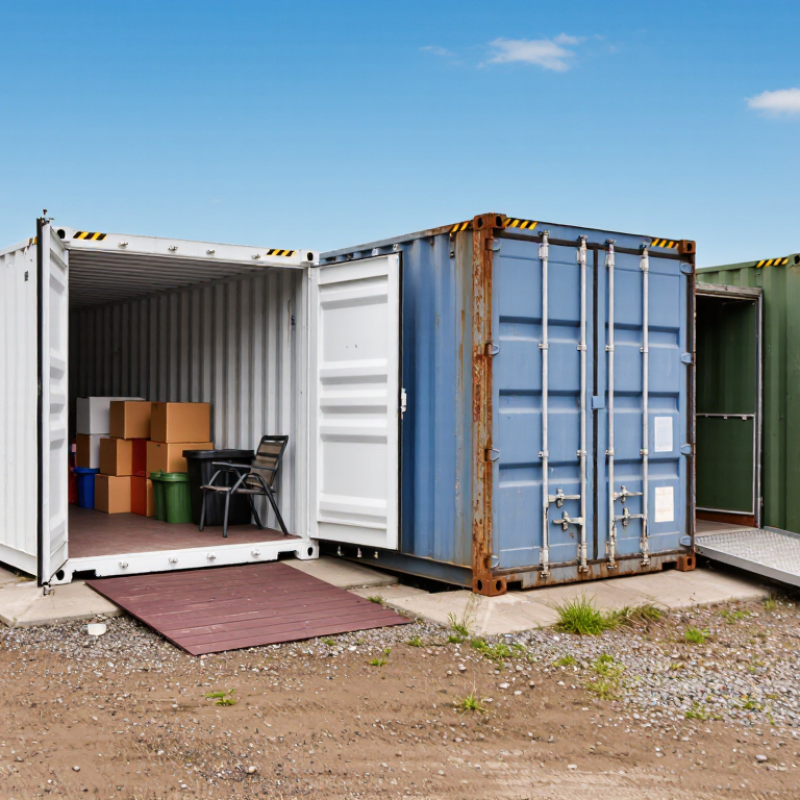
Top 10 Shipping Container Storage Options for Buyers

Types of Shipping Container Storage Available to Buyers

Shipping-container storage ranges from simple dry boxes to specialized units. Standard 20- and 40-foot containers suit tools, furniture, packaged goods, and inventory. ISO 668 defines their standard dimensions, helping buyers check fit before delivery. High-cube containers add roughly one foot of interior height, useful for tall shelving or bulky items. Need access from the side? Side-opening units can make long items easier to reach. Open-top containers suit goods loaded from above, while flat racks store oversized items that do not need enclosed walls. The choice is not always tidy.

Refrigerated containers maintain controlled temperatures for food and other temperature-sensitive goods. USDA’s 2023 Capacity of Refrigerated Warehouses report recorded about 3.8 billion cubic feet of refrigerated warehouse capacity in the United States. That figure describes warehouse space, not container demand, but it shows the scale of cold-storage infrastructure buyers may need to complement. Insulated containers offer a simpler option when protection from temperature swings matters more than active cooling. Check power access, ventilation, floor condition, door clearance, and delivery space before choosing. A cheap unit can still be the wrong fit. A site visit helps.

Top 10 Shipping Container Storage Options for Buyers

Compare typical internal storage volume across common container types. Capacity is approximate and varies by manufacturer and unit specification.

Ten Popular Shipping Container Storage Options

Ten popular shipping container storage options serve different site conditions. A standard dry container suits boxed stock, tools, and furniture that need weather protection. A high-cube unit adds roughly one foot of interior height, useful for shelving or bulky items. Side-opening containers allow access along the full length, while double-door models make loading from either end easier. Open-top units accommodate tall loads, though a tarp offers less protection than a solid roof. Flat racks hold oversized equipment, but they are not enclosed storage.

Refrigerated containers maintain controlled temperatures, but they need reliable power and regular equipment checks. Insulated containers reduce temperature swings without active cooling; they do not guarantee a fixed temperature. Ventilated units help air circulate around suitable goods. A modified container with shelving, lighting, or a personnel door can work as a small workspace, but changes may affect weather sealing and resale value. Details matter.

UNCTAD’s Review of Maritime Transport 2024 reports global container port throughput of 858 million TEUs in 2023. That scale reflects widespread container use, not a guarantee that every unit suits long-term storage. Check the floor for soft spots, inspect door seals, and confirm dimensions before delivery. A level base helps prevent doors from binding. I have seen buyers focus on price and overlook access clearance; that can be an expensive mistake. Reconsider the site plan before ordering.

How Container Size, Condition, and Features Affect Storage

Choosing a container by advertised capacity alone can lead to cramped storage. A 20-foot unit often suits tools, seasonal furniture, or boxed stock, while a 40-foot unit needs clear access and a firm, level base. Measure the largest item, then allow space for doors to open and people to move safely. A narrow aisle matters. Stackable cartons use height well, but irregular equipment leaves empty pockets. I would not trust a volume estimate without sketching a simple floor plan.

Condition changes what can be stored reliably. Check roof seams, door seals, floor boards, and corners for daylight, dampness, soft spots, or repair patches. Open the doors after rain if possible; a dry-looking interior can still hold moisture. Ventilation helps reduce condensation, though it does not control temperature. For paper, fabrics, or sensitive stock, consider a dry, insulated unit and monitor humidity with a basic gauge. Small details matter. Lockbox protection, shelving, tie-down points, and lighting can improve daily use, but each feature takes space or adds upkeep. Inspections are only snapshots, and weather may reveal problems later. Keep stored items off the floor and leave room for airflow.

Top 10 Shipping Container Storage Options for Buyers - How Container Size, Condition, and Features Affect Storage

# Container option Approx. external size (L × W × H) Approx. internal space / capacity Condition checks Storage features and best fit
1 10 ft standard dry container About 3.05 × 2.44 × 2.59 m (10 × 8 × 8.5 ft) Typically about 6–7 m³; interior length varies by design. Check door operation, floor condition, roof seams, and signs of water entry. Compact footprint for tools, seasonal items, or a small stock of goods. Less room for bulky loads than a 20 ft unit.
2 20 ft standard dry container About 6.06 × 2.44 × 2.59 m (20 × 8 × 8.5 ft) Interior about 5.9 × 2.35 × 2.39 m; roughly 33 m³. Inspect for leaks, corrosion, damaged flooring, and doors that do not seal or lock properly. Common general-purpose choice for household goods, equipment, and palletized cargo. Usually easier to site than longer units.
3 40 ft standard dry container About 12.19 × 2.44 × 2.59 m (40 × 8 × 8.5 ft) Interior about 12.03 × 2.35 × 2.39 m; roughly 67 m³. Check the full length of the roof and floor, door alignment, and evidence of previous repairs. Large-volume storage for long or numerous items. Confirm there is enough access and turning space for delivery and loading.
4 40 ft high-cube dry container About 12.19 × 2.44 × 2.90 m (40 × 8 × 9.5 ft) Interior height is commonly about 2.69 m; roughly 76 m³. Check overhead clearance at the site as well as roof, floor, seals, and locking hardware. Extra height suits tall equipment and stackable goods. The added exterior height can limit placement under overhead obstructions.
5 45 ft high-cube dry container About 13.72 × 2.44 × 2.90 m (45 × 8 × 9.5 ft) Interior length is typically about 13.5 m; capacity is commonly around 85–90 m³. Verify the exact unit dimensions, structural condition, door seals, and suitability of the delivery route. Provides extensive volume and additional height for large storage needs. Availability and site access may be more limited than for 20 or 40 ft units.
6 20 ft open-top container About 6.06 × 2.44 × 2.59 m (nominal) Similar floor area to a 20 ft dry unit; usable interior height depends on the model and cover arrangement. Inspect the top rails, removable roof bows, tarp or cover, and weather seals. Top loading can help with tall or awkward cargo. A tarp-covered roof may provide less weather protection than a solid-roof container.
7 40 ft open-top container About 12.19 × 2.44 × 2.59 m (nominal) Long floor area similar to a 40 ft dry unit; interior dimensions vary by construction. Check roof bows, top rails, tarp condition, floor strength, and the container’s weather-tightness. Useful for long, bulky items that need overhead loading. Protect stored contents carefully from rain and dust.
8 20 ft side-access container About 6.06 × 2.44 × 2.59 m (nominal) Capacity is close to a standard 20 ft unit, but internal fittings can reduce usable space. Test every door and locking point; inspect hinges, seals, and the side-opening frame for damage. Side doors make it easier to reach items along the length without unloading from the end. Requires clear access beside the unit.
9 20 ft double-door container About 6.06 × 2.44 × 2.59 m (nominal) Similar to a standard 20 ft unit; exact usable volume varies with door and frame design. Inspect both sets of doors, their seals, hinges, locking bars, and the condition of the end frames. Doors at both ends allow access from either side and can simplify loading long items or organizing separate storage zones.
10 Refrigerated container (reefer), commonly 20 or 40 ft Common lengths: about 6.06 m or 12.19 m; height is often about 2.59 m or 2.90 m. Insulated walls reduce interior space; dimensions depend on length, equipment, and model. Check insulation, door gaskets, drainage, refrigeration unit, electrical supply requirements, and operating records. Designed for temperature-controlled cargo. Storage at a set temperature requires a working unit, a suitable power supply, and ongoing monitoring.

Dimensions and capacities are approximate; actual specifications vary by manufacturer, age, and container configuration. Confirm the unit’s measured dimensions, condition, and site requirements before purchase or delivery.

Comparing Costs, Security, and Accessibility

Buyers usually compare on-site containers, indoor units, and shared container yards. An on-site unit can reduce repeat trips, but delivery and ground preparation add costs. Indoor storage may cost more per month, yet it can offer steadier conditions and controlled entry. Shared yards sometimes have lower rates, though access hours and gate procedures vary. Not just rent. Ask for a written estimate that includes transport, setup, insurance requirements, and any fees for moving the unit later.

Security depends on the location as much as the container. A sound door, protected lock area, perimeter lighting, and monitored access can reduce common risks. Still, a container is not automatically secure because it is made of steel. Check who can enter the site, how keys or codes are managed, and whether staff are present after hours. Accessibility matters too: drive-up access helps with bulky items, while indoor units may involve carts, corridors, or limited loading windows. That neat ranking can be wrong. Visit at the time you expect to load, and test whether the route, parking, and opening hours fit your actual routine.

How to Choose and Purchase the Right Storage Container

Choosing a storage container starts with the items you need to store, not the advertised price. Measure your largest boxes, equipment, and access path, then compare those dimensions with the unit’s interior and door opening. A standard 20-foot container can look spacious outside, but wall thickness and door clearance reduce usable space. Measure twice.

The UNCTAD Review of Maritime Transport 2024 reports global container port throughput reached 858.9 million TEU in 2023, up 2.4 percent. That figure describes port activity, not local storage inventory, but it shows how large and changing the container network is. Check local availability and delivery costs before choosing a size. A low purchase price can lose its appeal when a truck cannot reach the site or place the unit on level ground.

Inspect the roof for daylight, the floor for soft spots, and the doors for smooth movement and intact seals. Ask for clear photos and a written description of the unit’s condition. “Wind- and watertight” does not mean new or suitable for every use. One easy-to-miss detail: check ventilation needs before storing items sensitive to heat or condensation. Then compare the total quote, including transport, unloading, and site preparation.