What Is Shipping Container Storage?
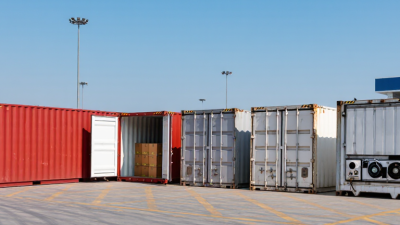
Shipping container storage uses durable steel containers to hold tools, furniture, inventory, equipment, or household belongings. The idea is simple. A container arrives at a site, where it can serve as a storage unit or be placed for temporary use. Some facilities keep containers on-site; others deliver one to a home or work location. The right option depends on access, space, weather exposure, and how often you need your belongings.
Container historian Marc Levinson’s work highlights how standard-sized containers made cargo handling more efficient. Put simply, standard dimensions help make containers easier to move and plan around. That principle matters in storage, too: a container’s footprint and door opening affect where it can sit and what can fit inside. Before choosing one, measure the placement area and the largest items you plan to store. Check whether delivery vehicles can reach the site. A narrow driveway can change the plan.
Not every container suits every item. Moisture, heat, ventilation, and ground drainage deserve attention, especially for sensitive belongings. A dry-looking floor is not a guarantee. Ask about the unit’s condition, locking arrangements, delivery access, and any facility rules. Then consider how often you will need entry. This guide explains what shipping container storage is, how common options differ, and which practical details help you choose. One caveat: neat dimensions on a website cannot show every site constraint. A careful inspection still matters.
Definition and Core Function of Shipping Container Storage
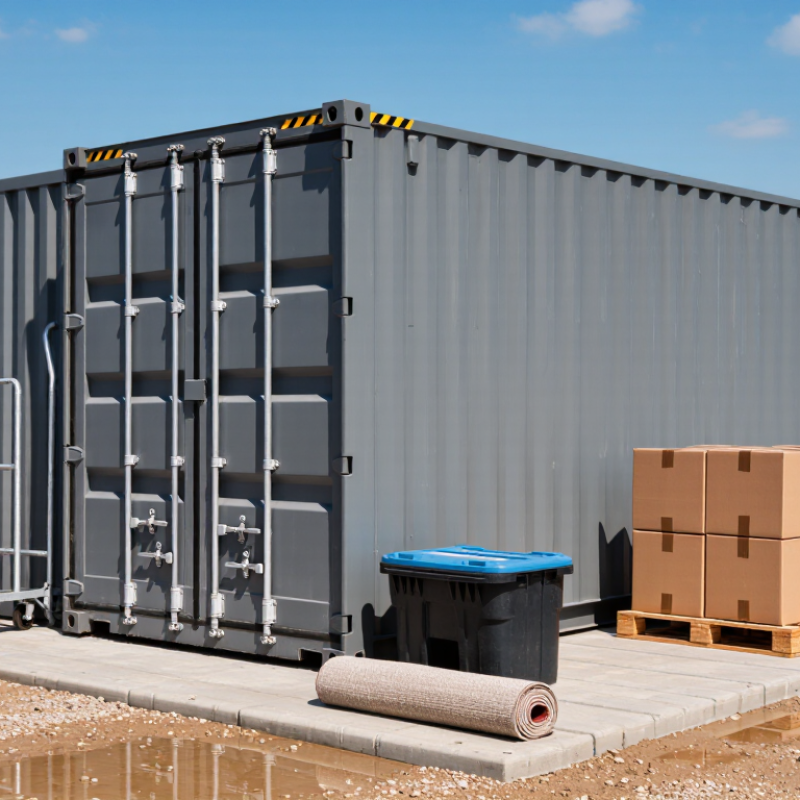
Shipping container storage is the use of a rigid, enclosed cargo container as a practical space for keeping goods, tools, or equipment. A standard unit has steel walls, a weather-resistant roof, and doors that close across one end. Its core function is simple: create a lockable, movable barrier between stored items and everyday exposure to rain, wind, dust, and casual access. It is storage, not climate control.
People use containers at construction sites, farms, warehouses, and homes when indoor space is limited or temporary access is useful. For example, a crew might keep ladders, boxed fittings, and hand tools inside, then move the unit as a project changes. The container’s condition and placement affect how well it serves that purpose. Check door seals, floor damage, rust, and signs of water entry before loading it. A level, well-drained base helps doors operate and reduces standing water around the unit. Small details matter.
A steel enclosure can still become hot, damp, or poorly ventilated. Sensitive materials may need additional protection, and heavy items should be distributed carefully rather than piled against one wall. In practice, secure storage is not automatic; it depends on the lock, site access, upkeep, and what is stored. That can be easy to overlook. Not always simple.
Container Types and ISO 668 Standard Lengths: 20 ft and 40 ft
What Is Shipping Container Storage?
Container Types and ISO 668 Standard Lengths: 20 ft and 40 ft
Shipping container storage uses durable freight units as enclosed space for equipment, stock, or household items. ISO 668 defines standard external dimensions for Series 1 containers. A 20 ft unit is 6.058 metres long; a 40 ft unit is 12.192 metres. Both are typically 2.438 metres wide. These figures describe the exterior, not the clear space inside. Wall thickness, door fittings, and floor structure reduce usable room. That difference matters. A pallet that fits on paper may not pass through the doors.
Height also varies. Standard-height units are about 2.591 metres tall externally, while high-cube units are about 2.896 metres. Choose based on the goods, loading method, and available site clearance. Measure the doorway and interior before arranging storage. It is easy to over-trust the length label. For scale, UNCTAD’s Review of Maritime Transport 2024 reports 858.9 million TEUs of global container port throughput in 2023; one TEU represents the capacity of a 20 ft container. This industry measure shows why 20 ft and 40 ft sizes are useful reference points, but storage needs still depend on real dimensions and access. A little extra clearance helps.
Typical Internal Capacities: About 33 m³ for 20-ft and 67 m³ for 40-ft Units
Shipping container storage means using a steel freight container as enclosed space for goods, equipment, or household items. The headline capacity figures are useful starting points: a typical 20-foot unit holds about 33 m³, while a standard 40-foot unit holds about 67 m³. The Container Handbook, published by the German Insurance Association, gives typical internal dimensions of roughly 5.90 × 2.35 × 2.39 metres and 12.03 × 2.35 × 2.39 metres, respectively. Multiplying those dimensions produces about 33.2 m³ and 67.6 m³. Actual measurements vary between containers. ISO 668:2020 defines standard container dimensions, but interior space depends on construction details.
Cubic capacity is not the same as usable storage. Corrugated walls, door framing, and unevenly shaped loads can leave awkward gaps. A stack of boxes may fit by volume yet block the doors or leave no safe aisle. Picture a narrow gap beside a pallet: it counts in the calculation, but may be difficult to use. Small details matter. Measure the inside length, width, and height of the specific unit before planning a layout. For delicate or bulky items, allow extra room for padding and handling. The 33 m³ and 67 m³ figures are practical estimates, not guarantees. That distinction is easy to overlook.
Site Placement, Loading Access, and CSC Safety Requirements
What Is Shipping Container Storage?
Site Placement, Loading Access, and CSC Safety Requirements
Shipping container storage works best when the site is planned around the container’s weight, doors, and delivery route. Choose firm, level ground that drains after rain. Support the container at its corner castings, using suitable foundations rather than uneven blocks. Check that delivery vehicles can turn and unload without crossing soft ground. Leave clear space at the doors for people, carts, or forklifts. A door that opens onto a fence is a small planning failure with daily consequences.
Loading access also depends on what goes inside. Keep heavy items low and distribute weight evenly; crowded aisles make inspection and retrieval harder. Before delivery, identify overhead obstructions and confirm the unloading area is clear. Check the CSC safety approval plate and inspect the container for serious corrosion, damaged locking gear, or distorted corners. The plate relates to transport safety, not a guarantee of present condition or suitability for every storage site. Requirements can vary by location and use, so confirm applicable guidance with a qualified inspector when uncertain. Even a tidy site plan deserves a second look.
What Is Shipping Container Storage? - Site Placement, Loading Access, and CSC Safety Requirements
| Topic | Typical information or requirement | Practical guidance |
|---|---|---|
| Storage container | A cargo container used to store goods on a site, either temporarily or for a longer period. | Choose a container size and condition suited to the goods, intended storage period, and delivery method. |
| Common 20-foot container dimensions | Typical external dimensions are about 20 ft long × 8 ft wide × 8 ft 6 in high (6.06 m × 2.44 m × 2.59 m). | Internal dimensions and door openings vary by container design and condition. Check the specific unit before planning storage or loading. |
| Common 40-foot container dimensions | Typical external dimensions are about 40 ft long × 8 ft wide × 8 ft 6 in high (12.19 m × 2.44 m × 2.59 m). | Allow for the delivery vehicle, lifting equipment, and safe working space; the container footprint alone does not describe the space required for delivery. |
| High-cube option | A common high-cube container is approximately 9 ft 6 in (2.90 m) high externally—about 1 ft (30 cm) taller than a standard-height unit. | Confirm overhead clearance along the access route and at the placement point, including wires, branches, canopies, and roof overhangs. |
| Ground and support | A firm, stable, reasonably level surface helps support the container and its load. | Use suitable supports at the container’s structural corner areas. Avoid soft, uneven, or waterlogged ground; seek site-specific advice if soil or loading conditions are uncertain. |
| Drainage and surroundings | Water should not collect around or beneath the container, and doors need clear operating space. | Check drainage, nearby slopes, vegetation, building access, and any local rules or permissions before placement. |
| Underground services | Containers and delivery equipment can impose substantial loads on the ground. | Locate buried utilities, drains, tanks, and other vulnerable infrastructure before choosing the placement area. |
| Delivery and lifting access | Required access depends on the delivery vehicle, lifting method, container size, and site layout. | Confirm route width, turning space, ground bearing capacity, overhead clearance, and the unloading area with the transport or lifting provider. There is no single clearance figure suitable for every delivery. |
| Loading access | Most general-purpose containers have a pair of doors at one end. | Position the door end where people and handling equipment can reach it safely. Keep the approach clear and do not block emergency routes or neighboring access. |
| Weight limits | Tare mass, maximum gross mass, and maximum payload differ between individual containers. | Read the markings on the specific unit’s safety approval plate. Do not rely on a generic online capacity figure or exceed the marked limits. |
| CSC safety approval plate | The International Convention for Safe Containers (CSC) provides a framework for the approval and examination of covered containers. The safety approval plate identifies information such as the approval reference and applicable mass limits. | Before use where CSC requirements apply, check that the plate is present and legible and that the container’s examination or approval status is current for its intended use. |
| CSC examination status | Under the CSC examination scheme, containers are subject to periodic examination or an approved continuous examination programme (ACEP). For periodic examination, the first examination is generally required within five years of manufacture, with subsequent examinations at intervals not exceeding 30 months. | Check the plate and supporting records for the applicable scheme and status. Requirements and responsibilities can depend on the container’s use and jurisdiction. |
| Condition and safe use | A safety plate does not by itself confirm that a container is currently undamaged or suitable for every storage purpose. | Inspect doors, locking bars, seals, roof, walls, floor, and corner fittings. Do not use a visibly damaged or unstable unit until it has been assessed and made safe. |
Note: Dimensions are typical nominal values, not guaranteed specifications. Verify the individual container’s markings, measurements, condition, and applicable local requirements before delivery and use.
Common Uses and Key Factors for Choosing a Storage Container
Shipping container storage turns a cargo box into a lockable, movable space for tools, stock, furniture, or renovation materials. On a worksite, crews can keep saws and fasteners near the job instead of hauling them each day. Retailers may store seasonal inventory, while households often use containers for bikes, patio chairs, or boxed belongings during a move.
Small spaces matter. UNCTAD’s Review of Maritime Transport 2024 reported 858.9 million TEUs of global container-port throughput in 2023. That figure measures port activity, not storage demand, but it reflects the scale of standardized containers in global trade.
Choosing a container starts with measuring what you plan to store, including bulky items that must pass through the doors. Check usable interior dimensions, door clearance, floor condition, roof seams, and locking points. Look for rust or daylight around seals. Moisture can damage cardboard, tools, and fabrics, so consider ventilation and whether goods need sealed bins.
Placement matters too: a level, well-drained surface helps keep doors operating smoothly, while delivery access must accommodate a large truck. A clean exterior can hide a leaky roof. It is easy to overlook that detail until the first heavy rain.
Related Posts
-
What Are the Top Shipping Container Storage Types in 2026?
-

Why Choose Shipping Containers for Your Next Project or Move
-

2026 Best One Trip Shipping Containers for Your Next Adventure?
-

China Best Small Shipping Containers for Your Storage Needs?
-

Why Shipping Containers are the Ultimate Solution for Cost-Effective Storage and Transport
-
2025 Top 5 One Trip Shipping Containers: Best Choices for Your Needs
Get a quote
Get a quote
Read More
Accept AllReject AllCustomise
Privacy Overview
| Cookie | Duration | Description |
|---|---|---|
| cookielawinfo-checkbox-advertisement | 1 year | Set by the GDPR Cookie Consent plugin, this cookie records the user consent for the cookies in the "Advertisement" category. |
| cookielawinfo-checkbox-analytics | 11 months | This cookie is set by GDPR Cookie Consent plugin. The cookie is used to store the user consent for the cookies in the category "Analytics". |
| cookielawinfo-checkbox-functional | 11 months | The cookie is set by GDPR cookie consent to record the user consent for the cookies in the category "Functional". |
| cookielawinfo-checkbox-necessary | 11 months | This cookie is set by GDPR Cookie Consent plugin. The cookies is used to store the user consent for the cookies in the category "Necessary". |
| cookielawinfo-checkbox-others | 11 months | This cookie is set by GDPR Cookie Consent plugin. The cookie is used to store the user consent for the cookies in the category "Other. |
| cookielawinfo-checkbox-performance | 11 months | This cookie is set by GDPR Cookie Consent plugin. The cookie is used to store the user consent for the cookies in the category "Performance". |
| CookieLawInfoConsent | 1 year | CookieYes sets this cookie to record the default button state of the corresponding category and the status of CCPA. It works only in coordination with the primary cookie. |
| viewed_cookie_policy | 11 months | The cookie is set by the GDPR Cookie Consent plugin and is used to store whether or not user has consented to the use of cookies. It does not store any personal data. |
| Cookie | Duration | Description |
|---|---|---|
| _cs_c | 1 year 1 month | The cookie is used by Content Square to save the user consent to be tracked. |
| Cookie | Duration | Description |
|---|---|---|
| _cs_id | 1 year 17 days 20 hours 13 minutes | This cookie is used to store the ContentSquare's user identifier ID. This is a persistent cookie and expires after 13 months. |
| _cs_s | 1 hour | This cookie is used to store the number of page's viewed by a visitor within the session for ContentSquare's solution. |
| _ga | 1 year 1 month 4 days | Google Analytics sets this cookie to calculate visitor, session and campaign data and track site usage for the site's analytics report. The cookie stores information anonymously and assigns a randomly generated number to recognise unique visitors. |
| _ga_* | 1 year 1 month 4 days | Google Analytics sets this cookie to store and count page views. |
| _gcl_au | 3 months | Google Tag Manager sets the cookie to experiment advertisement efficiency of websites using their services. |
| Cookie | Duration | Description |
|---|---|---|
| test_cookie | 15 minutes | doubleclick.net sets this cookie to determine if the user's browser supports cookies. |
| Cookie | Duration | Description |
|---|---|---|
| _cs_root-domain | session | Description is currently not available. |
| _cs_same_site | session | Description is currently not available. |