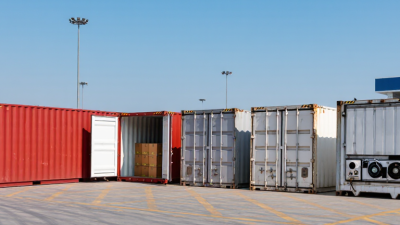
How to Choose Shipping Container Storage in 2026?
Choosing shipping container storage in 2026 takes more than comparing rental prices. A unit that looks sound in a listing may have a warped door, a damp floor, or too little clearance for a forklift. Start with what you will store, how often you need access, and how long the container must remain on site. Then check ground stability, delivery access, drainage, ventilation, locks, and the provider’s inspection process. Small details matter. Ask for recent photographs, dimensions, and a written account of any repairs.
Industry data offers useful context, but not a shortcut. UNCTAD’s Review of Maritime Transport 2024 reported that global seaborne trade grew 2.4% in 2023, while containerized trade declined slightly that year. The report projected a recovery in containerized trade for 2024. These figures describe shipping activity, not local storage prices or availability. That distinction is easy to miss. A busy port does not guarantee a suitable container near your property. Compare total costs, including delivery, collection, site preparation, and any access restrictions. Check whether the provider explains container condition and replacement options clearly. If a quote seems unusually simple, ask what it excludes. I would also verify the details in person when possible; photographs can hide awkward thresholds and poor drainage. The right choice is rarely the newest-looking box. It is the unit that fits your site, contents, access needs, and budget—with fewer unpleasant surprises.

Define Your Storage Needs, Access Requirements, and Timeline
Choosing shipping container storage in 2026 starts with a clear list of what you need to store. Measure bulky items, count boxes, and note anything that needs ventilation or careful protection from moisture. A sofa, for example, takes more room than its footprint suggests when wrapped and kept away from other furniture. Estimate how long storage will last, too. Be realistic. Plans change, and my first estimate is often too optimistic.
Tips: Leave a narrow aisle if you expect regular access. Keep frequently used boxes near the doors, and label them on more than one side. Ask about ground conditions, drainage, and how the unit is secured before booking.
Access needs can shape the right container and location. If you need weekly access, check opening hours, vehicle clearance, and whether you can reach the doors without moving other stored items. For a one-time drop-off, convenience may matter less than a suitable site and straightforward delivery. Confirm the expected start and end dates, plus any charges for extending the rental. A simple storage plan can still miss small details; check door clearance and item dimensions before delivery day. That extra check may prevent a frustrating rearrangement.
Choose a Container Type, Size, and Condition
Choose the container type around what you plan to store and how often you need access. A standard dry container suits many household goods, tools, and boxed inventory. Bulky equipment may need a high-cube model, which offers extra interior height. For temperature-sensitive items, an insulated or refrigerated unit may be appropriate, but only if its power and maintenance requirements fit your site. More features can mean more upkeep.
Choose size by measuring your largest items, not by guessing from a list of boxes. A 20-foot container can hold a surprising amount, yet long furniture or equipment may leave awkward gaps. A 40-foot unit provides more room, but it also needs a larger, level placement area and clear delivery access. Leave space for a safe walkway. It is easy to underestimate that.
Condition matters as much as capacity. Ask for current photos, then check the roof, door seals, hinges, and floor for leaks, deep corrosion, or damage. Open and close both doors if you can; stiff hinges are frustrating when your hands are full. A used unit may have dents or faded paint without affecting storage, but visible gaps deserve attention. Do not rely on “weather-tight” wording alone. Inspect the actual container, and be willing to reconsider if details are unclear.
| How to Choose Shipping Container Storage in 2026? — Choose a Container Type, Size, and Condition | |||||
|---|---|---|---|---|---|
| Container Type | Nominal Size | Approx. Internal Dimensions (L × W × H) | Approx. Internal Volume | Condition to Consider | Best Suited For |
| Standard Dry | 20 ft | 5.90 × 2.35 × 2.39 m (19 ft 4 in × 7 ft 9 in × 7 ft 10 in) |
About 33.2 m³ (1,170 ft³) |
Choose a unit with sound doors, intact seals, and no active leaks. Check the floor and interior for damage or persistent odors. | Tools, household items, boxed inventory, and storage needs where a smaller footprint is useful. |
| Standard Dry | 40 ft | 12.03 × 2.35 × 2.39 m (39 ft 5 in × 7 ft 8 in × 7 ft 10 in) |
About 67.7 m³ (2,390 ft³) |
Inspect the full roof and wall surfaces, door operation, seals, and floor. Ask whether the unit is suitable for storage rather than cargo transport. | Bulky furniture, equipment, or larger quantities of stored goods when site access allows a longer unit. |
| High Cube Dry | 40 ft | 12.03 × 2.35 × 2.69 m (39 ft 5 in × 7 ft 8 in × 8 ft 10 in) |
About 76.2 m³ (2,690 ft³) |
Use the same checks as for a standard dry container, and confirm there is adequate overhead clearance at the delivery site. | Tall items, vertical shelving, or storage that benefits from extra interior height. |
| Any type: used / lower-cost | 20 ft or 40 ft | Depends on the selected type and size | Depends on the selected type and size | Condition descriptions such as “wind and watertight” are not a substitute for an inspection. Check for holes, daylight through seams, standing water, corrosion, damaged flooring, and doors that do not close securely. | Non-sensitive goods when the unit has been inspected and its actual condition suits the contents. |
| Any type: newer / better condition | 20 ft or 40 ft | Depends on the selected type and size | Depends on the selected type and size | Ask for the unit’s age and inspection details. Confirm that the interior is clean and dry and that seals, locking hardware, and floor are in good condition. | Goods that need a cleaner interior or more reliable protection from ordinary weather exposure. |
Dimensions and capacities are approximate and can vary by manufacturer and unit. Measure the actual container and check door-opening dimensions before storing oversized items. Containers are not climate-controlled unless specifically fitted for that purpose.
Check Site Access, Placement Rules, and Security
Before choosing container storage, walk the delivery route as if you were driving the truck. Measure gate width, turning space, and overhead clearance. Low branches and utility lines can make an apparently open site unusable. Check whether the ground stays firm after rain; a heavy vehicle can leave deep ruts on soft soil. Small details matter.
Confirm placement rules with the property owner and relevant local office before scheduling delivery. Some sites restrict containers near boundaries, drains, entrances, or shared access lanes. Ask how much notice approvals require, and get the permitted location in writing. Requirements can vary by address, so an answer from a nearby property may not apply. It is tempting to treat this as paperwork, but moving a delivered container later can be costly.
Security depends on both the container and its surroundings. Look for a sound door seal, sturdy lock points, and doors that close without forcing them. Choose a position visible from occupied areas, with adequate lighting at night. Ask who can access the site and how keys or access codes are managed. A camera may help, but it cannot replace sensible access control. I would also check how water runs around the container; that detail is easy to overlook, and I might not get it right on the first visit.
Compare Delivery, Rental Costs, and Service Terms
Choosing shipping container storage in 2026 means looking beyond the monthly rental price. Ask how delivery is charged: a flat fee, distance-based rate, or separate drop-off and pickup fees. Confirm the delivery window and whether the truck needs a clear, firm path to the placement spot. A narrow gate or soft ground can change the plan. Measure the space, including room for the doors to swing open.
Compare the full rental terms before booking. Check the minimum rental period, billing cycle, late-payment charges, and rules for ending early. Ask who handles pickup and whether removal costs extra. Get the quote and any promises about weather protection in writing. A container can resist rain, but condition and ventilation matter; inspect seals and look for standing water or musty smells. Estimates can still miss details. That is worth checking twice.
Tips: Photograph the container at delivery, inside and out. Note dents, door alignment, and the floor condition before loading. Keep a copy of the service terms, and ask who to contact if the container shifts or leaks. A quick site check beforehand may prevent an awkward delivery day.
How to read this chart: These are broad illustrative US planning ranges, not verified 2026 market quotes; prices vary by location, container condition, rental duration, and delivery access. Before booking, compare the written monthly rate and one-way delivery charge, then check the minimum rental term, deposit, damage policy, pickup fees, and cancellation terms.
Verify the Provider Before Booking in 2026
In 2026, verify the storage provider before paying a deposit. Ask for its registered business name, yard address, written quote, and current insurance certificate. Call the insurer using a number you find independently. Request recent photos of the exact unit, including its roof, floor, door seals, and locking points. Check that the container number on the agreement matches the one delivered. Small detail. Easy to miss.
UNCTAD’s Review of Maritime Transport 2024 reported that global maritime trade grew by 2.4% in 2023, with further growth expected. That wider shipping activity can affect container availability and delivery schedules, so ask the provider to confirm the unit’s location and delivery date in writing. Get the full fee list, including transport, site preparation, access charges, and removal. Ask what happens if delivery is late or the unit differs from the photos.
Check whether the storage site has controlled access, lighting, drainage, and a clear contact process for problems. Read the agreement for renewal, cancellation, and damage terms before signing. If possible, inspect the yard in person and open the unit yourself. A polished website is not proof of good service. I still find it tempting to rush when a price looks low; that is exactly when I would slow down and verify the details.
Related Posts
-
What Are the Top Shipping Container Storage Types in 2026?
-
What Is Shipping Container Storage?
-

Best Cargo Storage Containers for Global Buyers in 2026?
-

Why Choose Shipping Containers for Your Next Project or Move
-
10 Best Cargo Storage Containers for Efficient Space Management
-
China Top Self Storage Containers Manufacturer?
Get a quote
Get a quote
Read More
Accept AllReject AllCustomise
Privacy Overview
| Cookie | Duration | Description |
|---|---|---|
| cookielawinfo-checkbox-advertisement | 1 year | Set by the GDPR Cookie Consent plugin, this cookie records the user consent for the cookies in the "Advertisement" category. |
| cookielawinfo-checkbox-analytics | 11 months | This cookie is set by GDPR Cookie Consent plugin. The cookie is used to store the user consent for the cookies in the category "Analytics". |
| cookielawinfo-checkbox-functional | 11 months | The cookie is set by GDPR cookie consent to record the user consent for the cookies in the category "Functional". |
| cookielawinfo-checkbox-necessary | 11 months | This cookie is set by GDPR Cookie Consent plugin. The cookies is used to store the user consent for the cookies in the category "Necessary". |
| cookielawinfo-checkbox-others | 11 months | This cookie is set by GDPR Cookie Consent plugin. The cookie is used to store the user consent for the cookies in the category "Other. |
| cookielawinfo-checkbox-performance | 11 months | This cookie is set by GDPR Cookie Consent plugin. The cookie is used to store the user consent for the cookies in the category "Performance". |
| CookieLawInfoConsent | 1 year | CookieYes sets this cookie to record the default button state of the corresponding category and the status of CCPA. It works only in coordination with the primary cookie. |
| viewed_cookie_policy | 11 months | The cookie is set by the GDPR Cookie Consent plugin and is used to store whether or not user has consented to the use of cookies. It does not store any personal data. |
| Cookie | Duration | Description |
|---|---|---|
| _cs_c | 1 year 1 month | The cookie is used by Content Square to save the user consent to be tracked. |
| Cookie | Duration | Description |
|---|---|---|
| _cs_id | 1 year 17 days 20 hours 13 minutes | This cookie is used to store the ContentSquare's user identifier ID. This is a persistent cookie and expires after 13 months. |
| _cs_s | 1 hour | This cookie is used to store the number of page's viewed by a visitor within the session for ContentSquare's solution. |
| _ga | 1 year 1 month 4 days | Google Analytics sets this cookie to calculate visitor, session and campaign data and track site usage for the site's analytics report. The cookie stores information anonymously and assigns a randomly generated number to recognise unique visitors. |
| _ga_* | 1 year 1 month 4 days | Google Analytics sets this cookie to store and count page views. |
| _gcl_au | 3 months | Google Tag Manager sets the cookie to experiment advertisement efficiency of websites using their services. |
| Cookie | Duration | Description |
|---|---|---|
| test_cookie | 15 minutes | doubleclick.net sets this cookie to determine if the user's browser supports cookies. |
| Cookie | Duration | Description |
|---|---|---|
| _cs_root-domain | session | Description is currently not available. |
| _cs_same_site | session | Description is currently not available. |