How to Choose the Right Refrigerated Container
Choosing a refrigerated container is less about selecting the largest unit and more about matching equipment to cargo, journey, and handling conditions. The right choice helps maintain stable temperatures, protect product quality, and avoid paying for unused capacity or features. Start with the cargo’s temperature requirements, load volume, transit time, and expected door openings. Fresh produce, frozen foods, and other temperature-sensitive goods can have very different needs. Small details matter. Check that pallets fit without blocking airflow channels, and leave space for air to circulate around the load. That check is easy to miss.
Next, compare container size, insulation, refrigeration performance, power supply, and monitoring options with the actual route. A unit may maintain its set point during steady operation yet struggle after frequent door openings or in hot surroundings. Ask suppliers for specifications, service history, operating guidance, and details about alarms or temperature records. Inspect the doors, seals, floor, and refrigeration equipment. Visible wear can signal problems, although appearance alone cannot confirm performance. No checklist is perfect. A trial run can reveal issues that paperwork misses. This guide explains how to weigh these factors, understand practical trade-offs, and choose a refrigerated container suited to your shipment—not just an ideal plan.
Identify Cargo Temperature Needs Within Typical Reefer Setpoints of −30°C to +30°C
Refrigerated containers may offer setpoints from −30°C to +30°C, but choosing a temperature starts with the cargo.
Match the setting to the product’s required temperature, not the outside weather or a generic idea of “cold.” UC Davis Postharvest Research and Extension Center guidance lists 13–14°C for bananas; colder conditions can cause chilling injury. In contrast, Codex Alimentarius’ Code of Practice for Processing and Handling of Quick Frozen Foods specifies −18°C or colder for quick-frozen food. One setting cannot suit every load.
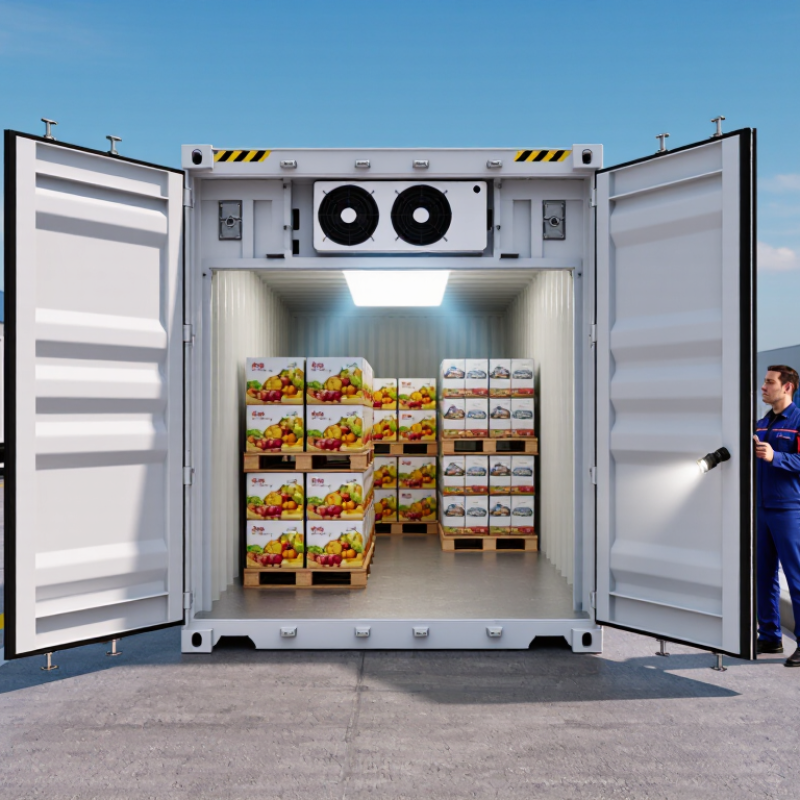
Check the cargo specification, its temperature before loading, and any requirements for humidity or ventilation. A reefer mainly maintains temperature; it may not cool warm cargo evenly after loading. Keep airflow paths clear, and confirm that cartons are arranged for circulation.
A small planning gap matters: the setpoint can be right while the product itself starts too warm. Use a calibrated probe to record product temperature, and review the readings during transit.
Tips:
Pre-cool cargo before loading. Verify the setpoint and ventilation with the carrier. Keep a temperature log, and investigate excursions rather than assuming the display tells the whole story.
Choose 20-ft or 40-ft ISO Reefers: Typical Volumes Are About 28 m³ and 67 m³
How to Choose the Right Refrigerated Container
A 20-foot ISO reefer typically offers about 28 m³ of internal volume. A 40-foot unit holds roughly 67 m³. These figures help compare capacity, but they are not guaranteed usable space. Insulation, interior fittings, and loading clearances affect how much cargo fits. Measure your cartons or pallets, then leave room for air to circulate around the load. Cold air needs a path.
Tips: Check the container’s internal dimensions, not just its stated volume. Compare your planned load with the usable floor area. Keep vents clear, and confirm the required temperature range with the cargo supplier.
Choose a 20-foot reefer for smaller shipments or when easier placement matters. A 40-foot unit can suit larger loads, but extra space does not always mean better cooling. Poorly arranged cargo may block airflow, even when the container is not full. It is easy to focus on cubic metres and overlook pallet layout; I would check both before booking. Real capacity varies by model and loading method, so request the unit’s specifications and build a little margin into the plan.
How to Choose the Right Refrigerated Container — 20-ft or 40-ft ISO Reefers
Dimensions and payloads are indicative and vary by equipment design and tare weight. The 67 m³ figure refers to a typical 40-ft high cube reefer; some standard-height 40-ft reefers have less internal volume. Confirm the container’s specification plate and cargo limits before loading.
Check Cooling Capacity, Airflow, and Ventilation Against Cargo Requirements
Choose a refrigerated container by matching its usable cooling capacity to the cargo’s heat load, not just its setpoint range. Ask for capacity data at the expected outside temperature and target temperature; performance can fall in hot conditions. Include heat from warm loading, door openings, and respiration from fresh produce. The FAO’s The State of Food and Agriculture 2023 reports that 13.2% of food was lost between harvest and retail in 2021. That figure is not caused by refrigeration alone, but it shows why temperature control deserves careful attention. Small gaps matter.
Airflow needs equal scrutiny. Cold air must travel through the load and return without blocked floor channels or tightly packed cartons. Keep the cargo below the container’s marked loading line, and leave the specified space near air outlets. Ventilation is cargo-specific: fresh produce may need fresh-air exchange, while frozen cargo typically follows different vent settings. Check the shipper’s temperature and ventilation instructions, then verify them against the container controls. A displayed setpoint is not proof that every carton has reached it. Use calibrated cargo probes where appropriate, and review temperature records during transit. Real loading is messy; even a careful plan may need adjustment when packaging or pallet patterns change.
Verify Power Compatibility: Many Reefers Use 3-Phase, 380–460 V Supply
Before choosing a refrigerated container, check its electrical requirements against the site supply. Many reefers use three-phase power at 380–460 V, but that range is not universal. Read the unit’s nameplate and operating manual; confirm voltage, frequency, rated current, and plug type. Small details matter. A 460 V unit may not run safely on a supply that only appears compatible.
Ask a qualified electrician to verify the outlet, grounding, cable capacity, and phase sequence before connection. The supply must also handle the compressor’s startup demand, not just its steady running load. If power comes from a generator, compare its continuous and surge ratings with the container’s requirements. Do not guess. I have seen a matching plug create false confidence: wiring and frequency can still be wrong. Record the measurements and clarify any mismatch with the equipment supplier before delivery. That extra check can prevent nuisance shutdowns and spoiled cargo, though site conditions can still change the calculation.
Confirm ISO 1496-2 Compliance, Payload Limits, and Monitoring Options
Choose a refrigerated container with documented ISO 1496-2 compliance, not just a claim on a sales sheet. Ask for the unit’s inspection and test records. The standard covers thermal containers, including their construction and performance testing. Confirm that the container’s rating matches the temperatures your cargo needs.
Check payload carefully. The maximum cargo weight is the container’s maximum gross weight minus its tare weight. Packaging, pallets, and securing materials count too. A container can fit the load but still exceed its weight limit. Verify the figures on the container’s rating plate, then check route-specific transport limits. Small details matter.
Monitoring needs equal care. Ask where sensors sit, how often readings are recorded, and whether alarms reach staff promptly. A display reading alone may miss warm spots near doors or airflow obstructions. Request calibration records and a sample temperature log. The International Institute of Refrigeration’s 2022 report estimates refrigeration uses about 20% of global electricity, making accurate setpoints and performance checks worthwhile. I would still question any system that offers data but no clear response plan. Cold air is not proof of stable cargo conditions.
How to Choose the Right Refrigerated Container
Confirm ISO 1496-2 compliance, payload limits, and monitoring options. The example below shows a frozen-cargo temperature-monitoring log; readings are illustrative, not a container specification.
For an actual shipment, set the temperature to the shipper’s cargo requirements and confirm the container’s allowable payload on its data plate. Payload depends on the unit’s rated gross mass minus its tare mass. Check ISO 1496-2 compliance documentation, and choose monitoring that records relevant air or cargo-probe temperatures and supports suitable alarms.