China Top Self Storage Containers Manufacturer?
Choosing China’s top self storage containers manufacturer requires more than comparing factory prices. Buyers need evidence of engineering quality, production consistency, and dependable after-sales service. A strong manufacturer should show clear steel specifications, welding standards, coating systems, load calculations, and inspection records. Photos are useful. Independent testing is better.
Industry consultant David Allan states, “A storage container must protect the customer’s belongings before it protects the operator’s investment.” That principle is practical. Look closely at door alignment, rubber seals, ventilation points, floor thickness, and lifting corners. A poorly fitted door may admit rain during one severe storm. That small defect can damage furniture, documents, or boxed inventory.
China has many capable manufacturers, but “top” depends on the project. A rural facility may need economical units with simple transport. An urban site may require compact layouts, stronger security features, and precise installation. Ask whether the factory has produced similar self storage containers for comparable climates. Request material certificates, sample units, dimensional drawings, and a realistic delivery schedule.
Do not trust polished brochures alone. Visit the production line when possible. Check whether workers measure welds or merely inspect appearance. Ask how rejected panels are handled. These details reveal operating discipline.
There is no perfect supplier. Even experienced buyers can overlook drainage or local foundation conditions. That weakness deserves attention. A reliable manufacturer will discuss risks openly, offer practical modifications, and document every agreed specification. The best decision combines verified experience, technical expertise, transparent communication, and long-term accountability. That is how a Chinese supplier becomes a dependable partner, not simply a low-cost source.
What Are Self-Storage Containers and How Are They Used?
What Are Self-Storage Containers and How Are They Used?
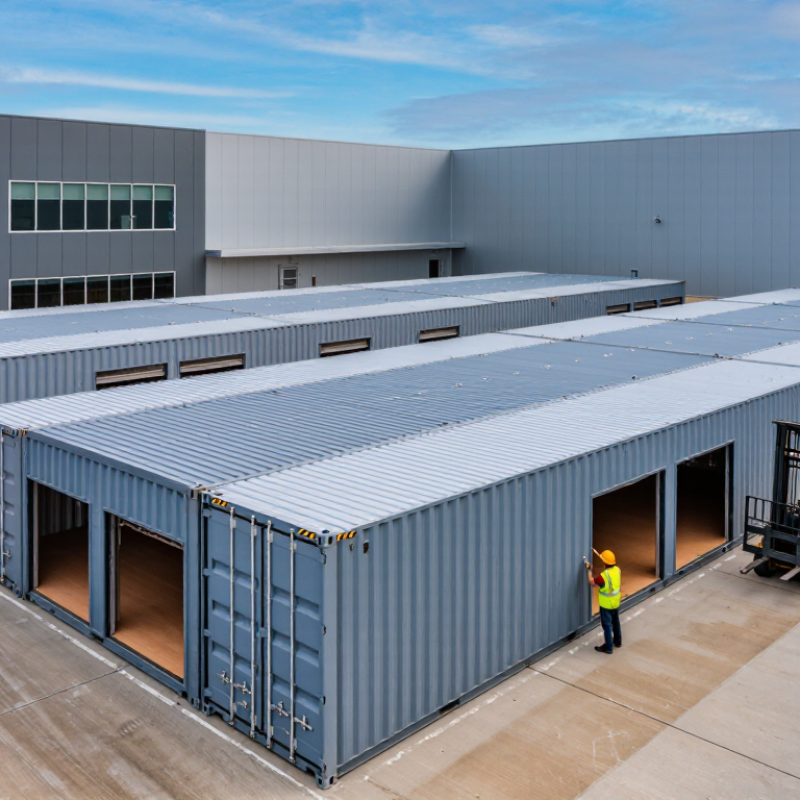
Self-storage containers are lockable steel units designed to hold furniture, tools, documents, and household goods. They can sit inside a storage facility or remain on a customer’s property. Common sizes range from compact 8-foot units to 20-foot and 40-foot containers. Their modular design supports moving, renovation, seasonal storage, and small-business inventory control.
According to the 2024 Self Storage Association Demand Study, approximately 16.7 million U.S. households used self-storage in recent years. That figure shows strong demand, but usage differs by region and household type. The Global Self Storage Industry Report also identifies household relocation, urban space shortages, and business inventory as major demand factors. A container is not automatically a good storage solution. Moisture control, ventilation, floor strength, and locking points matter greatly.
During site inspections, I check door alignment, weld quality, drainage, and internal condensation marks. Small defects become expensive problems. A reliable container should use corrosion-resistant steel and a weather-sealed door system. Users often place furniture directly against the walls, which can restrict airflow. Leave a narrow gap instead. Avoid storing wet cartons, unstable chemicals, or temperature-sensitive goods without professional advice. Data reports provide useful market direction, but they cannot replace a local inspection. Humidity, transport distance, loading equipment, and ground conditions still require practical judgment.
Why China Is a Major Self-Storage Container Manufacturing Hub
China Top Self Storage Containers Manufacturer?
Why China Is a Major Self-Storage Container Manufacturing Hub
China has become a major self-storage container manufacturing hub because its supply chain is broad and well connected. Steel mills, cutting workshops, coating suppliers, and assembly plants often operate within practical transport distances. This reduces material delays and supports competitive production costs. Skilled fabricators can also produce different sizes, door layouts, ventilation systems, and insulation options for varied storage projects.
The manufacturing process depends on more than low pricing. A reliable factory should control steel thickness, weld consistency, door alignment, drainage, and coating performance. Powder coating or galvanised surfaces can improve resistance to rain and humidity. Factory audits may include checking incoming materials, reviewing welding records, measuring finished units, and examining packaging protection. Small details matter. A poorly sealed corner can create moisture problems later.
China also benefits from developed ports and international freight services, making container delivery more manageable for overseas buyers. However, the hub is not flawless. Quality can vary between suppliers, and attractive samples may not represent regular production. Buyers should request clear drawings, inspection reports, material specifications, and production photos before ordering. A thoughtful purchasing process remains necessary. Manufacturing scale helps, but careful verification protects the final investment.
How Top Chinese Manufacturers Design and Produce Storage Containers
Top Chinese manufacturers design storage containers around durability, efficient space use, and practical installation. Their engineers study wall loads, door movement, ventilation, drainage, and local weather conditions. A coastal project may require stronger corrosion protection than an inland facility. This detail matters.
The design usually begins with CAD drawings and load calculations. Engineers select galvanized steel, reinforced frames, insulated panels, and secure locking systems according to the project’s use. They also check container dimensions against transport limits and site access. Small errors can become expensive later. A door that is only a few millimeters misaligned may cause water entry or difficult operation.
Production depends on controlled processes rather than appearance alone. Steel sheets are cut with programmed equipment, then formed and welded on positioning jigs. Workers inspect weld lines, panel flatness, coating coverage, and drainage holes. Finished units may undergo dimensional checks, door-cycle testing, and water-spray inspections. Photos and inspection records improve traceability for overseas buyers. Experienced manufacturers often build a sample unit before mass production, allowing engineers to adjust hinges, ventilation openings, or floor reinforcement. The process is not always perfect. A rushed design change can affect several later components. Careful communication between design, production, and quality teams remains essential.
Which Quality Standards Define a Reliable Storage Container Manufacturer?
A reliable self-storage container manufacturer should prove quality through measurable standards, not attractive paint or low prices. ISO 9001 certification shows that production follows documented quality controls, corrective actions, and traceable records. However, certification alone is not enough. Buyers should inspect welding procedures, steel grades, coating thickness, door alignment, and factory inspection reports.
The 2024 FEDESSA European Self Storage Annual Survey recorded more than 10,000 storage facilities across Europe, reflecting a mature and demanding market. Containers must withstand repeated opening, rain, humidity, and uneven ground. A dependable manufacturer should provide water-resistance testing, roof-load information, ventilation details, and corrosion-protection results. For units designed around freight-container dimensions, references to ISO 668 and CSC requirements can also clarify structural compatibility. Not every “ISO-ready” claim means the same thing.
Look closely at the details. A door should close smoothly without forcing the handle. Weld seams should appear continuous, clean, and free from visible pinholes. The 2024 Self Storage Association Demand Study also indicates strong and continuing household use of self-storage in major markets, increasing pressure on operators to reduce maintenance interruptions. Factory acceptance checks should include rain simulation, dimensional measurement, paint adhesion, and lifting-point inspection. A minor gap may become a serious leak after one winter. I would still request recent test records, because photographs can hide inconsistent production. Reliability is built in the factory, then verified before shipment.
Which Quality Standards Define a Reliable Storage Container Manufacturer?
ISO 668 provides internationally recognized nominal external dimensions for standard dry freight containers. Consistent dimensional control helps manufacturers maintain interchangeability, stacking compatibility, transport efficiency, and reliable installation in self-storage applications.
Reference values shown are nominal external dimensions for standard 20-foot and 40-foot containers under ISO 668: length 6.058 m and 12.192 m, width 2.438 m, and height 2.591 m. A reliable manufacturer should also demonstrate documented welding, coating, door-seal, corrosion-protection, and dimensional inspection procedures.