What Are the Best Self Storage Containers from China?
Choosing the best self storage containers from China means looking beyond a low quoted price. Buyers should compare the container’s intended use, dimensions, materials, and construction details. For example, a unit holding seasonal furniture may need different access and ventilation features from one storing cartons in a warehouse. Check the door seals, frame, floor capacity, coating, and locking points. Small details matter. A poorly finished edge or uneven door can become frustrating during daily use.
Supplier information deserves the same attention as product specifications. Request clear drawings, material descriptions, photographs of finished units, and written details about inspection and packaging. If possible, review a sample or arrange an independent pre-shipment inspection. Ask how the supplier handles replacement parts and delivery damage, too. These steps do not guarantee a perfect purchase, but they make differences easier to spot. Be cautious when claims sound impressive yet lack measurements or supporting records.
There is no single container that suits every buyer. A compact model may fit a narrow site, while a larger unit can make loading easier but require more space and handling. Compare the total delivered cost, not just the factory price, and confirm that the product matches your storage environment. A supplier’s polished catalog is useful, but it is not proof of consistent production. That distinction is easy to overlook. This guide examines practical selection criteria, common trade-offs, and questions worth asking before choosing self storage containers from China.
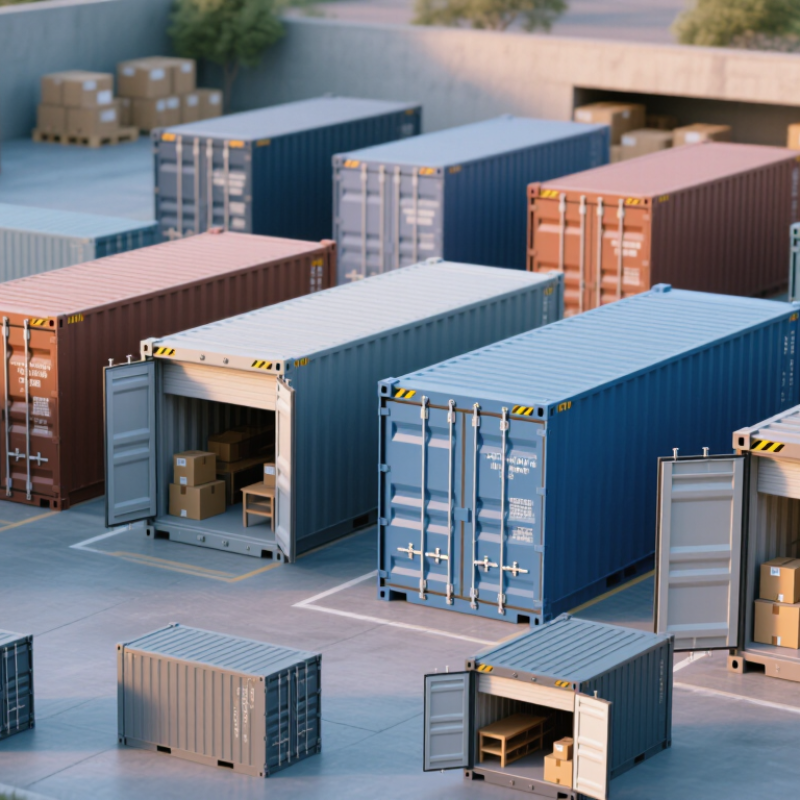
Define Chinese Self-Storage Containers by ISO 668 Type and Intended Use
Chinese self-storage containers are easier to compare when listed by ISO 668 size and intended use. ISO 668 classifies Series 1 containers by external dimensions and ratings; it does not certify a used unit’s condition. A 1CC container is approximately 6.06 metres long, while a 1AA is about 12.19 metres. Both are roughly 2.44 metres wide and 2.59 metres high. For taller shelving or bulky equipment, a 1AAA high-cube unit provides about 2.90 metres of external height. Measure the actual interior and doorway before ordering.
Use a standard-height 1CC for tools, cartons, or seasonal stock that needs straightforward access. Choose a 1AA when storing longer items or consolidating inventory in one space. A high-cube unit can fit taller racks, but its extra height does not guarantee more usable floor area. UNCTAD’s Review of Maritime Transport 2024 reports 858.9 million TEU in global container port throughput for 2023. TEU measures shipping capacity, not storage quality; the figure shows why standard sizes are widely recognized, not that every container suits self-storage.
For Chinese-sourced units, request the ISO type, external and internal measurements, door-opening dimensions, floor condition, and clear photos of roof seams and corner posts. Ask how the unit was inspected and whether ventilation or insulation is included. A dry-goods container may suit sealed boxes, but condensation can still affect stored contents in changing temperatures. Small detail. Confirm delivery access, too: a correctly sized container is useless if a truck cannot position it safely. My own caution is simple: specifications help, but they cannot replace a close inspection.
Compare 20-Foot and 40-Foot Units: 6.06 m vs. 12.19 m Long
A 20-foot self storage container is about 6.06 m long, while a 40-foot unit is about 12.19 m. The longer option offers nearly twice the floor length, but usable space is less than the exterior figures suggest. End walls, door frames, and container condition can reduce the clear interior dimensions. Measure the items you plan to store, not just the floor area.
A 20-foot unit often suits household furniture, tools, or several pallets when access and placement space are limited. A 40-foot container can hold larger loads, but it needs more room for delivery and positioning. Think about how often you will retrieve items, too. A tightly packed long container can leave boxes at the far end difficult to reach. That matters.
Before buying from China, request the internal length, width, and height, plus door-opening measurements. Ask for recent photos and details about floor condition, seals, and corrosion. I would not choose by length alone; a low price can distract from repairs or awkward access. Measure twice. I have seen plans change once the actual doorway is checked, and that is an easy detail to miss.
Assess Steel, Coatings, Ventilation, and Door Specifications
When comparing self-storage containers from China, look beyond exterior paint and advertised steel thickness. Ask for the steel grade, panel thickness, and weld details in writing. Inspect corners and roof seams for continuous welds, clean joins, and signs of distortion. A heavier panel can improve resistance to dents, but it also adds weight and may not suit every site. Check the floor support spacing, too; a strong shell cannot compensate for a weak base.
Coating quality depends on surface preparation as much as the topcoat. Request details on cleaning, primer, coating type, and dry-film thickness. Look closely at cut edges, welds, and lower corners, where water can linger and corrosion may start. Ventilation should reduce condensation without inviting rain inside. Small vents placed high and low can encourage airflow, but their position matters. Check for mesh or other barriers, and inspect after a wet-weather test if possible. A specification sheet alone is not proof.
Door operation deserves a hands-on check. Open and close each door several times, watching for binding, uneven gaps, or a loose hinge. Confirm the seal compresses evenly and the threshold sheds water. Ask how the locking points are built and whether the hardware can be replaced locally. I would not assume every container needs the thickest steel or the most vents; site exposure and stored contents change the trade-offs. Compare sample units, not just photographs.
Verify CSC Plates and ISO 1496 Series Test Documentation
A CSC plate is a useful starting point, not proof that every storage container suits your site. UNCTAD’s Review of Maritime Transport 2024 reports global container port throughput of 858 million TEUs in 2023. That scale makes traceable testing important. Check the plate’s approval number, maximum gross mass, stacking rating, and examination date. Confirm the details match the unit and its manufacturer’s records. A CSC approval concerns transport safety; it does not certify weather resistance or insulation.
Request test documentation for the relevant ISO 1496 series part. ISO 1496-1 covers general-purpose freight containers, including structural tests. The report should identify the test standard and edition, sample dimensions, test laboratory, date, and measured results. Compare its drawings and model details with the container offered. A report for a similar-looking unit may not apply. Check door openings, corner fittings, floor capacity, and roof details against your intended use. CSC requirements may not apply to a unit used only for stationary storage. One detail is easy to miss: paperwork can be genuine yet refer to an older design. Ask the supplier to explain any mismatch before ordering.
Compare Suppliers by Capacity, Lead Time, Certification, and Landed Cost
What Are the Best Self Storage Containers from China?
The best option depends on what you need to store and where the container will sit. Compare usable internal dimensions, not just advertised capacity. A unit that fits boxes may not fit shelving or a small forklift. Ask suppliers for dimensioned drawings, door-opening measurements, floor-load details, and photos of finished units. Small details matter.
Lead time needs a clear definition. Does it begin after deposit, drawing approval, or production confirmation? Request a schedule covering fabrication, inspection, port handling, and sea transit. Certification claims also deserve a close look. Ask for current documents and confirm they apply to the exact model and materials being quoted. A certificate with a different product scope offers little reassurance. I have seen neat quotations hide these gaps; it is worth slowing down.
Tips: Compare landed cost, not factory price alone. Include packaging, inland transport, ocean freight, insurance, duties, and destination handling. Ask for assumptions in writing, then check them with your freight forwarder. Keep one contingency line in your budget. Costs can shift.