Why Choose a Custom Sewer Jetter for Your Business?
A sewer-cleaning business rarely gets the same call twice. One morning, a crew may face grease near a restaurant; that afternoon, roots in a long municipal lateral. A standard jetter can handle routine work, but its hose length, water capacity, pressure, and vehicle setup may not suit every route. Fit matters. A Custom Sewer Jetter can be configured around the jobs your team actually performs, rather than forcing every job into one setup.
The need for dependable wastewater infrastructure is substantial. The U.S. Environmental Protection Agency’s 2022 Clean Watersheds Needs Survey estimated $630.1 billion in documented water-quality infrastructure needs over 20 years. That figure does not measure demand for sewer jetters. It does, however, show the scale of investment and maintenance facing water systems. For contractors, readiness matters. A unit with the right tank size, hose reel, and controls can reduce avoidable setup delays at the curb. It may also help crews respond to different pipe conditions without carrying equipment they rarely use.
Customization is not automatically the better choice. A larger tank can add weight, and higher pressure is not a substitute for sound operating judgment. The right specification starts with job records: common pipe diameters, typical run lengths, water access, and the space available on each vehicle. Ask manufacturers for clear performance data and service support, then compare those details with your crew’s experience. Small details count. A reel that reaches the work area safely can matter more than an impressive headline specification. Before investing, be honest about what your business needs—and what it may be overbuilding.
What a Custom Sewer Jetter Is and How It Works
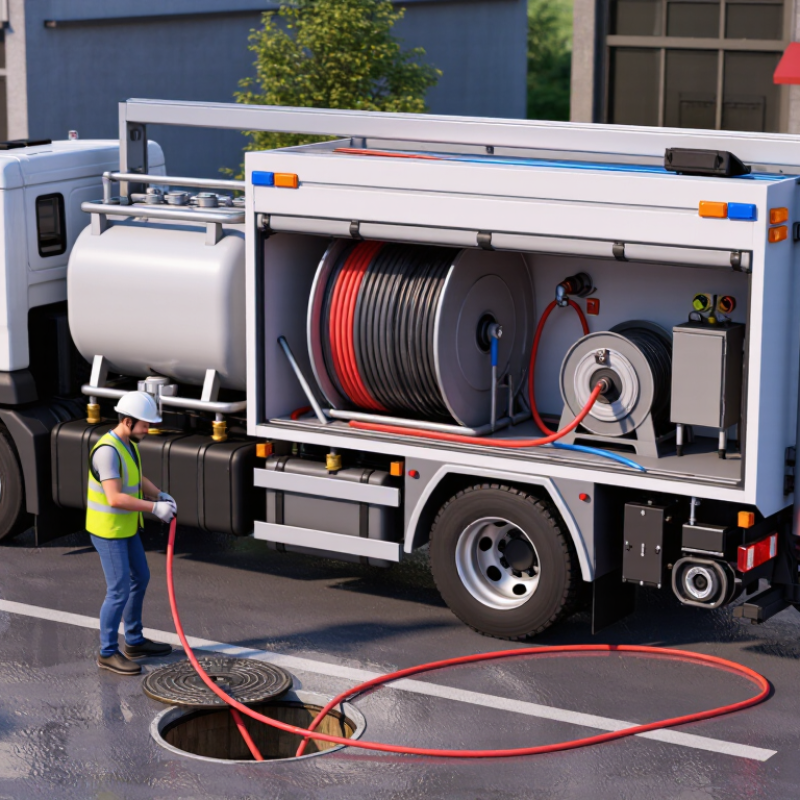
A custom sewer jetter is a vehicle- or trailer-mounted system configured for a particular crew’s pipe sizes, access points, and cleaning needs. It typically combines a water tank, high-pressure pump, hose reel, and interchangeable nozzles. The pump sends water through the hose; forward-facing jets break up obstructions, while rear-facing jets help move the nozzle through the pipe and flush loosened material toward the access point.
Customization may involve tank capacity, hose length, pump output, and controls that operators can manage safely from the work area. A narrow nozzle can suit a small lateral, while a different setup may be needed for longer runs or heavier deposits.
The US Environmental Protection Agency’s 2022 Clean Watersheds Needs Survey estimated $630.1 billion in wastewater, stormwater, and related infrastructure needs over 20 years. The American Society of Civil Engineers’ 2021 Report Card gave wastewater infrastructure a D+ grade. These figures show the scale of maintenance needs, but they do not mean jetting can repair damaged pipe.
In practice, crews should match the setup to the line and inspect conditions before choosing a cleaning approach. Excessive pressure can damage vulnerable pipes or connections, so operators need training and equipment guidance. A custom configuration can improve reach and reduce unnecessary setup changes.
Still, it is not a substitute for inspection, and that distinction is easy to miss.
How Customization Matches Your Business Needs
A custom sewer jetter should fit the work your crew handles most often, not just look capable on a specification sheet. A contractor clearing long municipal lines may need a different hose reel and water capacity than a team servicing restaurant drains. Consider typical pipe diameters, access points, and how far the unit must travel between jobs. These details influence setup time and how easily operators can work in tight spaces.
Tips: List your five most common job types before comparing configurations. Measure storage space, vehicle payload, and hose reach. Ask a qualified supplier to confirm that pump flow and pressure suit your intended applications. Practical checks beat guesswork.
Customization can also mean choosing controls that operators can use with gloves, or arranging storage for tools they reach for daily. Small details count. Still, more options do not automatically make a better machine. Extra capacity may add weight, cost, or maintenance needs your business does not require. Review service access, parts availability, and operator training alongside performance figures. Be honest about uncertain estimates; a configuration based on occasional peak jobs may not serve everyday work well. Revisit the setup as your workload changes.
Why Choose a Custom Sewer Jetter for Your Business? - How Customization Matches Your Business Needs
Planning guide: The example specifications below are indicative starting points, not universal recommendations. Actual requirements depend on pipe diameter and condition, nozzle selection, hose length, water supply, local rules, and the equipment manufacturer’s limits.
| Business Need | Typical Work | Customization to Consider | Illustrative Starting Range | How It Matches the Need |
|---|---|---|---|---|
| Indoor drain service | Clearing small branch lines in homes and commercial buildings. | Compact frame, manageable hose reel, flexible hose, and suitable small-line nozzles. | About 1,000–2,000 PSI and 2–5 GPM; hose length selected for the building and access points. | A compact setup can be easier to move through doorways and work areas. Pressure and flow should be selected for the pipe and blockage, not simply maximized. |
| Residential service calls | Cleaning residential sewer laterals and exterior drain lines. | Trailer or vehicle mounting, a practical hose reel, onboard water storage, and organized tool storage. | About 2,000–3,000 PSI and 5–10 GPM; tank capacity and hose length based on access and refill availability. | A balanced configuration can support varied service calls while keeping transport, setup, and water logistics manageable. |
| Commercial and property maintenance | Recurring cleaning of building drains, multi-unit properties, and longer service lines. | Higher-capacity pump options, longer hose reach, larger reel, and a tank sized to the expected work cycle. | About 2,500–4,000 PSI and 8–15 GPM; select hose length and tank capacity for the site and water access. | Matching flow, pressure, hose, and water supply to recurring workloads can reduce avoidable interruptions between jobs. |
| Municipal and heavy-duty work | Cleaning larger or longer sewer lines, subject to the job specification and pipe condition. | Heavy-duty mounting, higher-flow pump options, robust hose handling, and serviceable components. | Some applications use roughly 3,000–4,000 PSI and 10–20 GPM; confirm the required operating point for each job. | Customizing for the target pipe sizes and work demands can help avoid choosing a unit that is either undersized or unnecessarily large. |
| Remote sites with limited water access | Jobs where a reliable water connection may not be available nearby. | Onboard tank sized to vehicle payload and job duration, clear water-level monitoring, and refill planning. | Tank capacity is job-specific; commonly considered trailer-mounted options range from roughly 100 to 500 gallons. | Water capacity affects operating time, vehicle weight, and refill frequency. Confirm loaded weight and applicable towing or payload limits. |
| Frequent transport between jobs | Daily dispatch across multiple neighborhoods or job sites. | Vehicle or trailer layout, secure hose and tool storage, accessible controls, and equipment weight distribution. | Choose a mounting format and tank size that remain within the towing vehicle’s rated limits when fully loaded. | A layout designed around the route and crew can improve handling and reduce setup friction without compromising safe transport. |
| Specialized or seasonal workloads | Work that changes by season, pipe type, or customer segment. | Interchangeable nozzles, compatible hose options, service access, and controls suited to the operators. | Specify accessories and operating ranges for the actual pipe diameters, blockage types, and duty cycle. | A configurable setup can adapt to different jobs. Verify nozzle, hose, pump, and pressure compatibility before operation. |
Key Components and Configuration Options
Why Choose a Custom Sewer Jetter for Your Business?
Key Components and Configuration Options
A custom sewer jetter should match the pipes, access points, and jobs your crew handles. The U.S. EPA’s 2022 Clean Watersheds Needs Survey estimated $630.1 billion in water-quality infrastructure needs over 20 years. The estimate covers wastewater and stormwater systems; it is not a forecast of jetter purchases. Still, it underscores the scale of infrastructure requiring upkeep. Fit matters.
Core components include the pump, engine, water tank, hose reel, and nozzle. Pump flow and pressure affect cleaning performance, while hose length must suit typical run distances and bends. Tank size matters when water access is limited, but a larger tank adds weight. Choose a chassis that can reach work sites without compromising stability. Configuration is rarely tidy: a setup that excels in large mains may be awkward in narrow residential lanes.
Tips: Match nozzle type to pipe diameter and the material being removed. Confirm hose reach and water availability before specifying tank capacity. Ask a qualified equipment specialist to review operating conditions and maintenance needs. Small details count. Then review the proposed configuration against actual job records, not just the best-case workday.
Operational and Financial Benefits for Sewer Businesses
A custom sewer jetter can be configured around the pipe sizes, access points, and work mix your crews handle most. A tank sized for typical jobs may reduce refill stops, while hose length suited to local sites can limit repeated repositioning.
Less setup. More work time.
A machine built for your routes and workload can help crews finish jobs with fewer interruptions. That may improve daily scheduling and reduce labor spent moving equipment or waiting for water. Fuel, maintenance, and financing costs still matter. Customization is not automatically cheaper. The wrong configuration can tie up cash in capacity you rarely use, so base decisions on service records, job estimates, and operator feedback.
Tips: Review a month of work orders before choosing tank size or hose length. Ask operators where setup slows them down. Leave room for changing job types; your records may not tell the whole story.
Factors to Evaluate When Choosing a Custom Sewer Jetter
A custom sewer jetter should match your daily work, not just a best-case specification sheet. List the pipe diameters, common blockage types, and average job volume your crew handles. Compare pump flow and pressure with those conditions. Pressure alone does not show how quickly debris will move. A team clearing long runs may need more hose and water capacity than one servicing short commercial lines. Small differences matter.
Check payload limits, tank size, hose reel placement, and access to controls. Operators should reach shutoffs without awkward movement. Ask how the unit performs with a partly full tank, in cold weather, or on uneven streets. Test it if possible. A showroom demonstration may not reveal a cramped setup or difficult hose handling.
Maintenance deserves equal attention. Confirm filter access, drain points, hose replacement steps, and technical service availability. Request operating ranges and maintenance intervals in writing, then compare them with your crew’s schedule. Custom features can add value, but complexity can also increase downtime. Be honest about that. If your job mix changes by season, leave room for adjustment instead of designing around one unusual contract.
Article Source:
Get a quote
Get a quote
Read More
Accept AllReject AllCustomise
Privacy Overview
| Cookie | Duration | Description |
|---|---|---|
| cookielawinfo-checkbox-advertisement | 1 year | Set by the GDPR Cookie Consent plugin, this cookie records the user consent for the cookies in the "Advertisement" category. |
| cookielawinfo-checkbox-analytics | 11 months | This cookie is set by GDPR Cookie Consent plugin. The cookie is used to store the user consent for the cookies in the category "Analytics". |
| cookielawinfo-checkbox-functional | 11 months | The cookie is set by GDPR cookie consent to record the user consent for the cookies in the category "Functional". |
| cookielawinfo-checkbox-necessary | 11 months | This cookie is set by GDPR Cookie Consent plugin. The cookies is used to store the user consent for the cookies in the category "Necessary". |
| cookielawinfo-checkbox-others | 11 months | This cookie is set by GDPR Cookie Consent plugin. The cookie is used to store the user consent for the cookies in the category "Other. |
| cookielawinfo-checkbox-performance | 11 months | This cookie is set by GDPR Cookie Consent plugin. The cookie is used to store the user consent for the cookies in the category "Performance". |
| CookieLawInfoConsent | 1 year | CookieYes sets this cookie to record the default button state of the corresponding category and the status of CCPA. It works only in coordination with the primary cookie. |
| viewed_cookie_policy | 11 months | The cookie is set by the GDPR Cookie Consent plugin and is used to store whether or not user has consented to the use of cookies. It does not store any personal data. |
| Cookie | Duration | Description |
|---|---|---|
| _cs_c | 1 year 1 month | The cookie is used by Content Square to save the user consent to be tracked. |
| Cookie | Duration | Description |
|---|---|---|
| _cs_id | 1 year 17 days 20 hours 13 minutes | This cookie is used to store the ContentSquare's user identifier ID. This is a persistent cookie and expires after 13 months. |
| _cs_s | 1 hour | This cookie is used to store the number of page's viewed by a visitor within the session for ContentSquare's solution. |
| _ga | 1 year 1 month 4 days | Google Analytics sets this cookie to calculate visitor, session and campaign data and track site usage for the site's analytics report. The cookie stores information anonymously and assigns a randomly generated number to recognise unique visitors. |
| _ga_* | 1 year 1 month 4 days | Google Analytics sets this cookie to store and count page views. |
| _gcl_au | 3 months | Google Tag Manager sets the cookie to experiment advertisement efficiency of websites using their services. |
| Cookie | Duration | Description |
|---|---|---|
| test_cookie | 15 minutes | doubleclick.net sets this cookie to determine if the user's browser supports cookies. |
| Cookie | Duration | Description |
|---|---|---|
| _cs_root-domain | session | Description is currently not available. |
| _cs_same_site | session | Description is currently not available. |