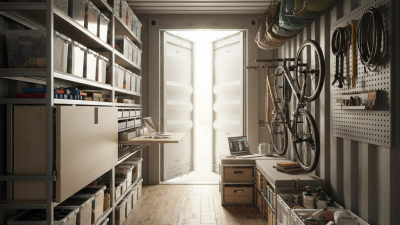
Why Choose a 10ft Shipping Container?
A 10ft shipping container offers compact storage without demanding a large footprint. It fits beside workshops, small warehouses, farms, and urban renovation sites. Its steel walls protect tools, inventory, equipment, and seasonal materials from rain, dust, and daily handling. For businesses with limited space, this smaller format can create valuable capacity without overwhelming the site.
Jean-Paul Rodrigue, a respected transport-geography scholar, described containerization as “a revolution in freight transportation.” That insight still matters today. A 10ft shipping container turns a standardized steel box into a practical storage or transport unit. Its corner castings support lifting and repositioning. Double doors can improve access. Ventilation options may reduce condensation, although they cannot solve every moisture problem.
Small footprint. Serious utility.
The best choice depends on the cargo, access route, flooring, security needs, and local placement requirements. A 10ft shipping container may be easier to deliver than a larger unit, but narrow entrances and soft ground can still create complications. Internal space is also limited. Bulky items may fit poorly, even when their total volume seems acceptable. That is where careful measuring becomes essential.
This guide examines the practical reasons to choose a 10ft shipping container, including mobility, durability, cost control, and site efficiency. It also considers the less obvious drawbacks. Smaller is not automatically better. A thoughtful decision begins with real measurements, reliable specifications, and an honest assessment of future needs.
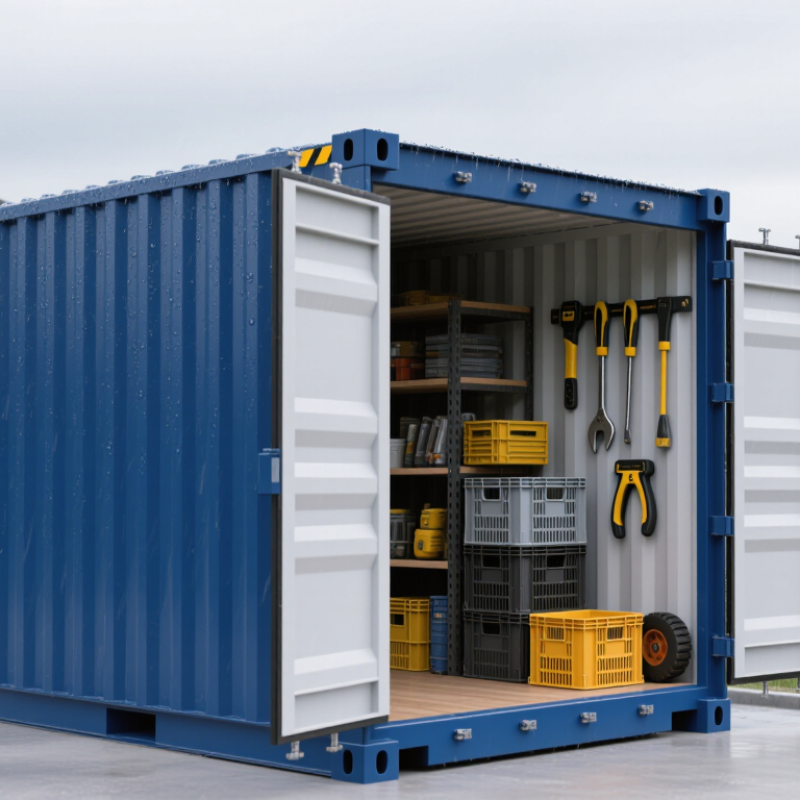
What Is a 10ft Shipping Container?
A 10ft shipping container is a compact steel unit designed to protect goods during transport and storage. A standard model usually measures about 10 feet long, 8 feet wide, and 8 feet 6 inches high externally. Internal space is smaller because of the steel walls, floor, and doors. Exact measurements vary by manufacturer and container age.
These containers usually include corner posts, locking doors, a timber or composite floor, and weather-resistant seals. Some units have ventilation openings or forklift pockets, but features are not always identical. A 10ft container can store tools, garden equipment, spare materials, or small business inventory. Its shorter length makes placement easier beside a building, on a compact worksite, or behind a retail unit. It still needs a level, stable base.
Small does not mean simple. Condensation can form inside when outdoor temperatures change. Poor ventilation may damage paper goods, fabrics, or untreated metal items. Inspect the roof, door seals, floor, and internal odor before accepting a used unit. Rust near the lower rails deserves careful attention. In practical planning, people sometimes focus only on capacity and forget access space. That mistake can make loading awkward. Check local placement requirements and measure the delivery route, including gates, turning areas, and overhead clearance.
Why Choose a 10ft Shipping Container?
What Is a 10ft Shipping Container?
A 10ft shipping container is a compact, ISO-standardized steel container designed for transporting, storing, and securing goods where a full-size container is unnecessary. Its nominal external dimensions are approximately 3.05m long, 2.44m wide, and 2.59m high.
Why choose 10ft? Compared with common 20ft and 40ft dry containers, the 10ft format requires less ground space and is easier to position in restricted areas. It is suitable for smaller cargo loads, site storage, workshops, equipment protection, and temporary storage projects.
What Are the Main Uses of a 10ft Shipping Container?
Why Choose a 10ft Shipping Container?
A 10ft shipping container suits projects needing secure storage without occupying much ground. Its compact footprint fits beside workshops, farms, building sites, and small commercial yards. I have found that careful measurement matters more than expected. Allow extra space for doors, drainage, and delivery equipment.
Many owners use these containers to store tools, seasonal furniture, gardening equipment, and boxed records. Steel walls offer strong protection from rain, dust, and unwanted access when the unit is properly maintained. Vents can reduce condensation, especially when warm air meets a cold metal wall. Shelving improves access, but heavy items should stay low and near the center.
It can also serve as a small workshop, equipment room, site office, or temporary sales kiosk. Add lighting, insulation, flooring, and electrical work through qualified professionals. A 10ft container is not spacious. That limitation deserves honest planning. A workbench may leave little room to move, and poor ventilation can make summer interiors uncomfortable. Check ground conditions, local permissions, fire requirements, and delivery access before installation. These details often decide whether the container becomes genuinely useful or simply becomes another obstacle.
Why Choose a 10ft Shipping Container? - What Are the Main Uses of a 10ft Shipping Container?
| Use or Feature | Typical Application | Relevant Capacity or Specification | Main Advantage | Important Consideration |
|---|---|---|---|---|
| Compact storage | Garden tools, household items, seasonal equipment, and business stock | Approximately 67 cubic feet of internal volume; exact capacity varies by container design | Provides secure enclosed storage while using less ground space than a 20ft container | Measure the available site and allow clearance for door operation and delivery |
| Small-scale shipping | Lower-volume cargo, spare parts, machinery components, and packaged goods | Commonly designed for international intermodal transport; payload depends on the container plate and route rules | Useful when a full-size container would leave too much unused space | Confirm maximum gross weight, cargo weight, and transport regulations before loading |
| Construction-site storage | Hand tools, cables, protective equipment, fittings, and consumables | Steel construction offers a lockable, weather-resistant enclosure when doors and seals are maintained | Fits into relatively restricted work areas and can be relocated when required | Use a suitable foundation and comply with site safety and local placement requirements |
| Retail or market kiosk | Temporary sales counters, ticket booths, pop-up shops, and display storage | Can be modified with service openings, insulation, lighting, and electrical systems | Creates a durable modular structure that can be reused at different locations | Structural alterations and public-use installations should be completed by qualified professionals |
| Workshop or hobby space | Repair work, woodworking, maintenance tasks, and equipment organization | Typical internal dimensions are about 9ft 2in long and 7ft 8in wide, subject to manufacturer variation | Offers a compact enclosed workspace with strong walls and lockable access | Ventilation, insulation, lighting, fire safety, and electrical work require careful planning |
| Agricultural storage | Irrigation parts, hand tools, feed-related equipment, and maintenance supplies | Compact footprint is suitable for farms, nurseries, and sites with limited storage areas | Keeps frequently used supplies together and protected from rain and unauthorized access | Control moisture and condensation; do not store hazardous materials without appropriate compliance measures |
| Event and temporary infrastructure | Event equipment, barriers, furniture, signage, and temporary project supplies | Can be transported and positioned as a movable storage unit when access and lifting arrangements are available | Supports repeated use across projects and reduces the need for permanent construction | Check delivery access, lifting requirements, ground bearing capacity, and local permits |
| Document and archive storage | Paper records, boxed files, archived materials, and non-sensitive business documents | Dry storage performance depends on ventilation, roof condition, door seals, and internal organization | Provides a separate lockable area without occupying valuable indoor floor space | Use shelving, pallets, moisture control, and an inventory system to protect contents |
| Why choose a 10ft container? | Projects requiring secure storage or transport without the footprint of a standard 20ft unit | Typical external size is about 10ft long, 8ft wide, and 8ft 6in high; dimensions vary by model | Balances portability, security, space efficiency, and lower unused capacity | Verify exact dimensions, tare weight, payload, condition, access requirements, and local regulations |
Note: Dimensions, internal volume, tare weight, payload, door opening, and construction details vary by container type, manufacturer, age, and regional standards. Always confirm the specification sheet for the specific unit.
How Does Its Size Support Efficient Storage and Transport?
Why Choose a 10ft Shipping Container?
How Does Its Size Support Efficient Storage and Transport?
A 10ft shipping container offers compact capacity without demanding a large yard. Its footprint is usually about 10 feet long and 8 feet wide. Internal dimensions vary, so confirm the supplier’s specification before planning shelves or pallets. The shorter length makes placement easier beside workshops, farms, building sites, or small warehouses. It can also fit through tighter access routes than longer containers. That matters when delivery space is limited.
Inside, the available height supports vertical storage for tools, cartons, seasonal equipment, and maintenance supplies. Strong shelving can separate heavy items from fragile stock. Keep weight low and distribute it across the floor. Uneven loading may affect handling and stability during transport. A clear central path also improves picking speed and reduces unnecessary movement.
Transport efficiency comes from its manageable size and lower total load. Standard lifting equipment can often position it with less site disruption, though ground conditions still require inspection. Door clearance is another practical detail. Measure the widest item, not just the container’s floor area. A 10ft unit may seem spacious at first, but packed boxes quickly remove working space. This is where planning can fall short. Leave room for access, airflow, and future stock changes. A simple layout sketch often prevents costly rearrangement.
What Materials and Features Ensure Its Durability?
Why Choose a 10ft Shipping Container?
A 10ft shipping container is compact, but its shell must withstand lifting, stacking, and road vibration. Durability begins with weathering steel, usually shaped into corrugated panels. Corrugation increases stiffness without adding excessive weight. Strong corner posts and castings transfer lifting forces safely. The roof shields cargo from rain, sunlight, and falling debris. ISO 668 standardizes container dimensions, while CSC inspection requirements address structural safety during international transport. That distinction matters.
A reliable unit also needs sealed welds, corrosion-resistant primer, and a durable topcoat. Marine-grade plywood flooring helps resist moisture, pallet impact, and repeated loading. Door gaskets should compress evenly, with no visible gaps. Field inspections often find corrosion beneath the frame, around door hinges, and near forklift pockets. These areas deserve close attention. UNCTAD’s Review of Maritime Transport 2024 reported more than 28 million TEU of global cellular container capacity, reflecting the demanding scale of container operations.
World Steel Association data identifies steel as one of the world’s most recycled materials, with over 650 million tonnes recycled annually. Recyclability supports responsible material use, but it does not replace maintenance. A small scratch through the coating can become a rust point in coastal air. Thicker steel may improve impact resistance, yet it also increases weight and handling costs. Specifications are never perfect. A careful inspection still matters more than attractive paint.
What Factors Should Buyers Consider Before Choosing One?
A 10ft shipping container suits compact sites, but its small footprint can mislead buyers. ISO 668 sets a typical external length near 3 metres and width near 2.44 metres. Internal space is smaller after wall insulation, doors, and framing. A standard unit may provide roughly 15 cubic metres, with usable payload depending on its plate and condition.
Buyers should inspect access, ventilation, flooring, and delivery clearance. A narrow driveway may block a crane truck, even when the container fits the yard. Check the door opening with your widest stored item.
Condensation is another practical concern. Unventilated steel walls can damage tools, cartons, and furniture during temperature changes. UNCTAD’s Review of Maritime Transport 2024 reported maritime trade growth of about 2.4% in 2023, showing continuing container demand. That demand can affect availability, transport pricing, and local delivery delays.
Tips: Request the CSC plate, recent inspection details, tare weight, and payload rating. Measure the site twice. Ask whether the price includes unloading, ground preparation, and taxes. New-looking paint is not proof of structural quality. I would also check the roof from inside; small daylight marks deserve investigation. A 10ft unit may be economical, yet two units can cost more than one larger container after delivery and placement fees. Conditions vary by region, so compare written quotations rather than relying on a low headline price.
Related Posts
-
10 Essential Tips for Maximizing Your 10ft Shipping Container Space
-
Maximize Your Space with a 10ft Shipping Container for Tiny Living Solutions
-
What is a 10ft shipping container and its uses?
-
2025 How to Use a 10ft Shipping Container for Your Storage and Transport Needs
-
How to Choose the Perfect 10ft Shipping Container for Your Needs
-
Best Side Opening Shipping Containers for Global Buyers?
Get a quote
Get a quote
Read More
Accept AllReject AllCustomise
Privacy Overview
| Cookie | Duration | Description |
|---|---|---|
| cookielawinfo-checkbox-advertisement | 1 year | Set by the GDPR Cookie Consent plugin, this cookie records the user consent for the cookies in the "Advertisement" category. |
| cookielawinfo-checkbox-analytics | 11 months | This cookie is set by GDPR Cookie Consent plugin. The cookie is used to store the user consent for the cookies in the category "Analytics". |
| cookielawinfo-checkbox-functional | 11 months | The cookie is set by GDPR cookie consent to record the user consent for the cookies in the category "Functional". |
| cookielawinfo-checkbox-necessary | 11 months | This cookie is set by GDPR Cookie Consent plugin. The cookies is used to store the user consent for the cookies in the category "Necessary". |
| cookielawinfo-checkbox-others | 11 months | This cookie is set by GDPR Cookie Consent plugin. The cookie is used to store the user consent for the cookies in the category "Other. |
| cookielawinfo-checkbox-performance | 11 months | This cookie is set by GDPR Cookie Consent plugin. The cookie is used to store the user consent for the cookies in the category "Performance". |
| CookieLawInfoConsent | 1 year | CookieYes sets this cookie to record the default button state of the corresponding category and the status of CCPA. It works only in coordination with the primary cookie. |
| viewed_cookie_policy | 11 months | The cookie is set by the GDPR Cookie Consent plugin and is used to store whether or not user has consented to the use of cookies. It does not store any personal data. |
| Cookie | Duration | Description |
|---|---|---|
| _cs_c | 1 year 1 month | The cookie is used by Content Square to save the user consent to be tracked. |
| Cookie | Duration | Description |
|---|---|---|
| _cs_id | 1 year 17 days 20 hours 13 minutes | This cookie is used to store the ContentSquare's user identifier ID. This is a persistent cookie and expires after 13 months. |
| _cs_s | 1 hour | This cookie is used to store the number of page's viewed by a visitor within the session for ContentSquare's solution. |
| _ga | 1 year 1 month 4 days | Google Analytics sets this cookie to calculate visitor, session and campaign data and track site usage for the site's analytics report. The cookie stores information anonymously and assigns a randomly generated number to recognise unique visitors. |
| _ga_* | 1 year 1 month 4 days | Google Analytics sets this cookie to store and count page views. |
| _gcl_au | 3 months | Google Tag Manager sets the cookie to experiment advertisement efficiency of websites using their services. |
| Cookie | Duration | Description |
|---|---|---|
| test_cookie | 15 minutes | doubleclick.net sets this cookie to determine if the user's browser supports cookies. |
| Cookie | Duration | Description |
|---|---|---|
| _cs_root-domain | session | Description is currently not available. |
| _cs_same_site | session | Description is currently not available. |