China Top Twin Shaft Concrete Mixer Manufacturers?
Choosing among China’s top twin shaft concrete mixer manufacturers requires more than comparing prices, motor power, or catalogue photographs. A reliable evaluation examines mixing intensity, discharge speed, wear protection, sealing design, and after-sales support. Twin Shaft Mixer Concrete equipment must handle demanding materials, including low-slump concrete, fiber mixes, and recycled aggregates. The mixer should produce a uniform batch without leaving dry pockets near the corners.
Dr. Pierre-Claude Aïtcin, a respected concrete technology specialist, emphasized, “Concrete is a complex material, not merely a mixture of cement and water.” That principle matters when reviewing Chinese manufacturers. Their equipment should be tested with the buyer’s actual recipe, moisture range, and aggregate size. A factory demonstration using ideal materials proves little. Ask for batch records, shaft torque data, liner specifications, and independent quality certificates. Small details matter. Door seals matter.
Experienced buyers also inspect welding quality, gearbox brands, bearing access, and cleaning procedures. A strong manufacturer explains maintenance intervals clearly. It does not hide limitations behind impressive capacity figures. Site experience can reveal problems that brochures omit, such as residue beneath the mixer door or uneven discharge during winter operation. No shortlist is perfect. Even a reputable supplier may need closer supervision during customization.
This guide introduces leading Chinese manufacturers through practical criteria, including engineering capability, production consistency, customization experience, spare-parts availability, and documented customer support. Readers should verify claims directly, request references, and compare test results under matching conditions. The lowest quotation may become expensive when downtime, replacement liners, and delayed technical service enter the calculation.
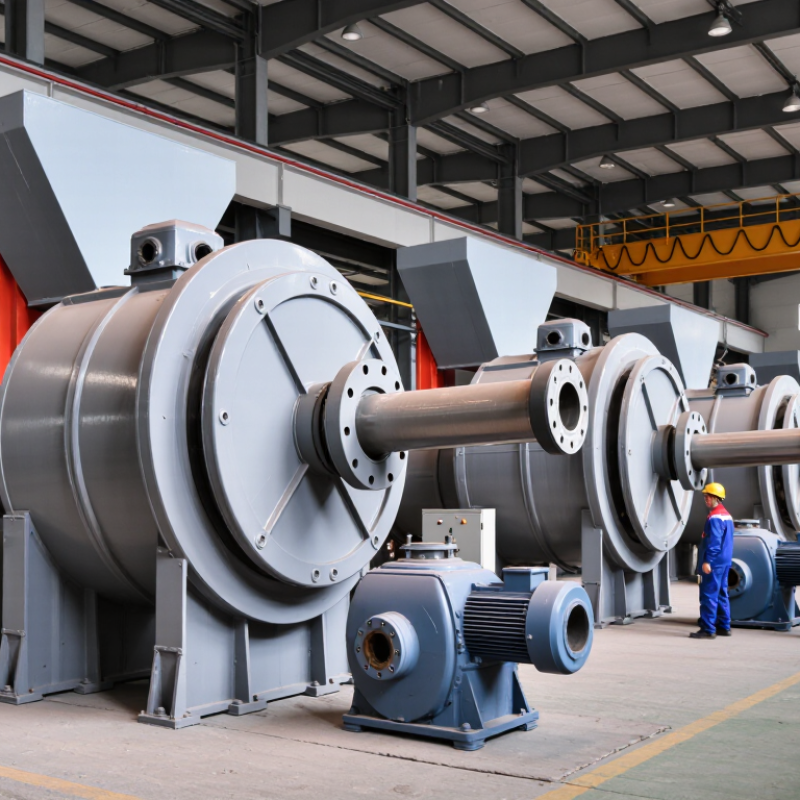
What Is a Twin Shaft Concrete Mixer?
A twin shaft concrete mixer uses two horizontal shafts fitted with synchronized paddles. The shafts rotate in opposite directions, lifting, folding, and compressing materials through a forced mixing cycle. This action differs from a simple drum mixer, which mainly relies on gravity and repeated rolling.
The mixer combines cement, aggregates, water, and admixtures inside a short, intensive zone. Proper paddle overlap helps reduce dry pockets around coarse stones. Many industrial systems complete a mixing cycle in roughly 30 to 60 seconds, depending on recipe, moisture, and loading volume. The Global Cement and Concrete Association reports that the world produces more than 14 billion cubic metres of concrete each year. That scale explains why consistent mixing matters, especially in ready-mix and precast plants.
In practice, shaft alignment and paddle wear deserve close attention. A worn paddle can leave uneven cement paste, even when the batch looks acceptable at discharge. Operators should check motor load, residue buildup, discharge time, and moisture correction records. Small errors become expensive quickly. The Concrete Plant Manufacturers Bureau identifies aggregate moisture and batch measurement as major controls for concrete uniformity. Yet mixer selection is not purely about capacity. A 3-cubic-metre machine may perform poorly if the feed system overloads it or cleaning access is limited. This is where equipment assessments can become too optimistic. Specification sheets rarely show the messiest ten minutes of a production shift.
Key Features of China’s Leading Twin Shaft Mixer Manufacturers
China’s leading twin shaft mixer manufacturers focus on high torque, uniform blending, and practical maintenance. GCCA reports that the world produces about 14 billion cubic metres of concrete annually. That scale demands equipment that handles repeated loading without unstable discharge.
Heavy-duty gearboxes are a key feature. They maintain torque when mixing stiff, low-slump concrete. Replaceable wear liners protect the chamber from aggregate abrasion. Hardened mixing paddles also extend service life. Experienced buyers should inspect shaft seals, bearing protection, and access doors. Small sealing failures can create large maintenance costs.
Automation is becoming equally important. Leading factories commonly offer PLC controls, moisture compensation, weighing integration, and recorded batch data. These functions support consistent water-cement ratios and reduce operator guesswork. The International Energy Agency identifies cement production as responsible for roughly 7% of global energy-related CO2 emissions. Efficient mixing cannot solve that problem alone, but shorter cycles and fewer rejected batches can reduce wasted materials. A 2024 market report from Grand View Research also identifies automation and infrastructure investment as major concrete equipment growth drivers. Numbers help.
However, attractive specifications can mislead. A larger motor does not always produce better concrete. Buyers should request trial batches using local aggregates, cement, and admixtures. They should also verify weld quality, spare-part availability, electrical compliance, and documented factory testing. Customization is useful, but excessive modifications may complicate future repairs. That detail is often overlooked.
How to Compare Chinese Twin Shaft Mixer Suppliers
China Top Twin Shaft Concrete Mixer Manufacturers?
How to Compare Chinese Twin Shaft Mixer Suppliers
China has many twin shaft mixer suppliers, but catalog claims rarely show real performance. Compare suppliers through measurable evidence. The Global Cement and Concrete Association reports roughly 14 billion cubic meters of concrete are produced worldwide each year. Small efficiency losses therefore become expensive at scale. Ask for verified batch capacity, mixing time, discharge residue, shaft speed, and motor power.
Request a complete factory data sheet. Check shaft diameter, paddle material, gearbox brand, bearing protection, liner thickness, and welding quality. A 3-cubic-meter mixer should not be judged by volume alone. Ask for a recorded test using your aggregate size, moisture level, and cement ratio. Measure the cycle with a stopwatch. Request test videos, inspection records, and references from similar climates. This is practical evidence.
Look closely at after-sales support. Confirm spare-part drawings, response times, installation guidance, and warranty exclusions. ISO 9001 certification can support process control, but it does not guarantee mixer durability. The IEA’s 2023 cement report links cement production with about 7% of global carbon dioxide emissions, so energy use deserves attention. Compare installed motor power and output per hour, not motor size alone. A polished brochure can mislead. Even experienced buyers sometimes overlook cleaning access and water leakage around seals. That mistake can quietly increase maintenance costs.
Typical Twin-Shaft Concrete Mixer Specifications in China
The chart presents common industry reference values for twin-shaft concrete mixers by nominal batch capacity. Actual motor power and output can vary with concrete mix design, aggregate size, moisture content, and mixing cycle requirements.
Factors to Check Before Choosing a Manufacturer
Choosing a twin shaft concrete mixer manufacturer in China requires more than comparing quoted prices. Visit the factory, if possible, and inspect welding, shaft alignment, blade thickness, and paint quality. Ask how long the mixing chamber lasts under abrasive aggregate. A reliable supplier should provide test records, material certificates, and clear production drawings. Do not accept vague claims. Request references from projects using similar cement, moisture levels, and daily output. Practical experience matters; a mixer designed for laboratory batches may struggle on a busy site.
Check the engineering details before discussing payment terms. Confirm motor power, gearbox configuration, discharge speed, liner material, and access for replacing wear parts. Ask whether the design handles your aggregate size without dead zones or excessive vibration. Technical answers should include measurable limits, not promotional language. Review welding inspections, dimensional checks, quality procedures, and final load testing. An independent inspection can reveal details that photographs hide. It costs time. It may prevent months of downtime.
Reliability also depends on communication after delivery. Clarify spare-parts availability, response times, installation guidance, warranty exclusions, and remote troubleshooting. Ask for a realistic maintenance schedule, not an ideal one. Check whether manuals are complete and written in understandable English. Stable export records and clear staff responsibilities improve accountability. I would also examine one uncomfortable issue: the cheapest offer may reflect thinner liners, rushed testing, or weak support. That is not always true, but ignoring it is poor procurement. Leave room for a site trial and change your decision if the evidence changes.