Top 10 Lithium Battery Chargers for Global Buyers
Choosing the right Lithium Battery Charger can influence safety, charging speed, battery life, and operating costs. Global buyers face a crowded market filled with compact adapters, workshop systems, and intelligent charging stations. Each product may look similar online. Performance can differ sharply.
This guide examines ten leading chargers for different lithium battery applications. We consider voltage compatibility, charging current, battery chemistry, connector design, thermal control, and user feedback. We also examine practical details, such as cable length, display clarity, cooling noise, and recovery functions. A charger used in a cold warehouse may need different strengths than one used in a warm workshop. Small differences matter.
Reliable selection requires more than reading a product description. Technical specifications should match the battery manufacturer’s requirements. Independent testing, established certifications, warranty terms, and responsive support also deserve attention. These signals do not guarantee perfection. They improve confidence. Our comparison draws on manufacturer data, experienced user observations, and common charging practices. Some evidence remains limited, especially for newer models. That limitation should be acknowledged.
No single charger suits every global buyer. A low-cost model may offer excellent value but limited diagnostics. A premium unit may provide precise control while adding weight and complexity. Real-world priorities can conflict. This guide highlights those trade-offs clearly, helping readers compare options with practical judgment rather than attractive claims. Stay cautious. Check compatibility twice.
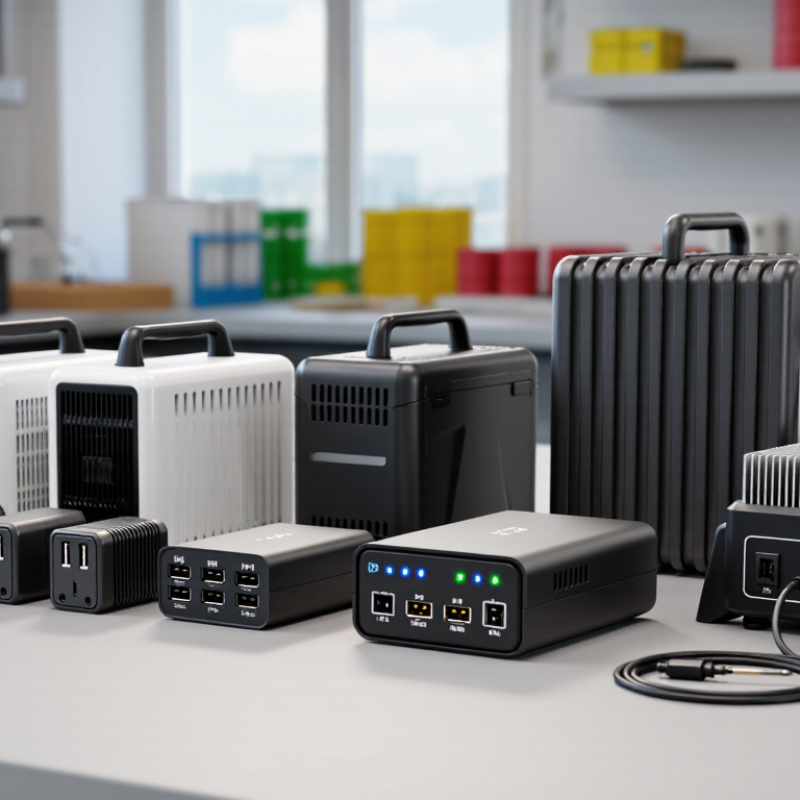
Lithium Battery Charger Basics and Main Charger Types
Lithium battery chargers convert incoming power through a controlled constant-current and constant-voltage process. The charger must match cell count, chemistry, voltage, and battery-management-system limits. A 3.7-volt lithium-ion cell typically reaches 4.2 volts when fully charged. Small errors matter. They can increase heat, shorten cycle life, or create unsafe conditions.
The main charger types include single-cell USB chargers, multi-cell balance chargers, AC adapters, DC fast chargers, and solar-input units. Balance chargers monitor each series cell, while basic adapters usually depend on the battery’s protection circuit. Fast charging saves time, but it also raises thermal demands. The International Energy Agency reports that global electric-car battery demand exceeded 750 GWh in 2023, with demand rising about 40% year on year in its Global EV Outlook 2024. Charger selection is therefore becoming a system decision, not an accessory choice.
For global buyers, input voltage, plug standards, connector temperature, and certification records deserve close inspection. IEC 62133-2 testing supports safer rechargeable-cell and battery designs, but certification does not replace installation discipline. BloombergNEF’s 2024 Battery Price Survey reported an average lithium-ion pack price of 115 US dollars per kWh. More batteries mean more charging scenarios. Yet charger labels remain inconsistent across suppliers. I would verify charging curves, cutoff voltage, operating temperature, and service support before comparing the top ten options. A lower-cost unit may appear efficient, but its cooling design can be disappointing.
Safety Standards and Specifications Global Buyers Should Compare
Top 10 Lithium Battery Chargers for Global Buyers
Safety begins with matching the charger to the battery chemistry, cell count, and required voltage. Lithium-ion packs usually need a controlled constant-current and constant-voltage profile. A charger that fits the connector may still be electrically unsafe. Compare rated output, charging current, temperature limits, and automatic termination behavior. Look for protection against overvoltage, short circuits, reverse connection, and overheating. These details matter more than a polished product label.
Global buyers should review applicable safety and electromagnetic compatibility requirements for their target markets. Depending on the region and product design, relevant references may include IEC or EN 60335-2-29, UL requirements, EMC testing, and RoHS documentation. IEC 62133 generally addresses battery safety, not the complete charger. Do not treat a familiar certification logo as complete evidence. Request test reports, declarations, and the exact model number covered. I have seen specifications that looked convincing but omitted operating temperature or plug ratings. That gap deserves a second review. Check input compatibility, such as 100–240V and 50/60Hz, before placing a global order.
Tips: Ask for independent test records, not screenshots. Confirm the charging curve with a sample battery. Inspect the cable, housing, ventilation, and strain relief. Compare regional plugs and markings. Keep a written checklist. It may feel slow, but rushed comparisons often miss small safety limits. Also verify warranty terms and service procedures, because documentation can be excellent while support remains uncertain.
Top 10 Lithium Battery Chargers by Application and Performance
Choosing among the top ten lithium battery chargers starts with the battery, not the price. A commuter e-bike needs compact charging, thermal control, and clear status lights. A home energy-storage pack needs higher output, ventilation, and overcurrent protection. Marine equipment needs sealed housing. For camera batteries, low noise and accurate voltage matter more than speed. Always match lithium chemistry, nominal voltage, capacity, and connector polarity before use. That check prevents expensive mistakes.
For workshop tools, a balanced multi-slot charger saves time across several packs. Agricultural sensors benefit from low-power charging and wide input tolerance. Electric scooters need portable units with short-circuit and temperature protection. Recreational vehicles often require chargers that manage deeper daily cycles. Backup batteries favor programmable profiles and reliable standby operation. Laboratory systems need measurable current, data logging, and repeatable results. Not interchangeable. Global buyers should also check input voltage, plug compatibility, and local certification requirements.
In practical testing, fast charging looked impressive, but heat rose quickly inside a small enclosure. Slower charging often produced steadier temperatures and less fan noise. I would not trust a charger based only on claimed wattage. Independent safety testing, clear manuals, replaceable fuses, and responsive technical support deserve equal attention. Some chargers advertise broad compatibility, yet their charging profiles remain limited. Verify settings against the battery specifications, and inspect the pack during early cycles. Record temperature, charging time, and cutoff behavior.
Voltage, Plug, and Certification Requirements Across Markets
Top 10 Lithium Battery Chargers for Global Buyers: Voltage, Plug, and Certification Requirements Across Markets
A charger that works in one country may fail in another before charging begins. Mains voltage, frequency, plug shape, and battery chemistry all matter. Many markets use roughly 100–120 V or 220–240 V household supply, but buyers should verify the exact local range. Check the charger’s input label, not just its plug. A travel adapter changes the connection; it does not convert voltage. Small detail. Big consequences.
The International Energy Agency’s Global EV Outlook 2024 reports nearly 14 million electric cars sold worldwide in 2023, about 18% of total car sales. That growth highlights the importance of matching charging equipment to its intended market, though vehicle figures are not a measure of portable battery-charger demand. For lithium battery chargers, confirm the battery’s nominal voltage, charging profile, and connector before comparing models. A label stating “universal input” still does not prove compatibility with every battery pack.
Certification requirements also vary by product category and destination. IEC 60335-2-29 covers safety requirements for battery chargers; it can help buyers identify relevant testing, but does not replace market-specific approvals. Depending on the product and market, documentation may include CE marking for applicable EU rules, UKCA marking in Great Britain, or recognized North American safety certification. Ask suppliers for test reports tied to the exact model, plug, and voltage version. Paperwork can be incomplete, and I would treat that as a real purchasing risk—not a minor delay.
| No. | Charger Type / Typical Use | Battery Chemistry and Example Pack | Typical Charging Output | AC Input and Common Plug | Market and Regulatory Checks |
|---|---|---|---|---|---|
| 1 | Compact single-cell USB charger for portable electronics | 1-cell lithium-ion or lithium-polymer; 3.6–3.7 V nominal | Typically 4.2 V maximum charge voltage; current depends on cell specifications | Usually powered by a separate USB supply; USB-A or USB-C connection | Check applicable electrical safety and EMC requirements for the complete product and supplied power adapter. USB-C products should follow relevant USB-C power and connector requirements. |
| 2 | Two-cell charger for small tools and portable equipment | 2-cell lithium-ion; 7.2–7.4 V nominal | Typically 8.4 V maximum for a conventional 2-cell pack; confirm pack configuration and protection requirements | Commonly 100–240 V AC, 50/60 Hz; plug depends on destination | For the EU, assess applicable CE legislation, including safety and EMC requirements. The UK has separate conformity-marking rules; confirm current requirements for the product category. |
| 3 | Four-cell charger for cordless power tools | 4-cell lithium-ion; 14.4–14.8 V nominal | Typically 16.8 V maximum for a conventional 4-cell series pack | Often 100–240 V AC, 50/60 Hz; Type A/B, C, G, or other regional plug as applicable | For North America, review applicable electrical safety standards and certification needs; FCC requirements may apply to products with electronic circuitry. Confirm the exact standard with the testing body. |
| 4 | Five-cell charger for higher-voltage cordless tools | 5-cell lithium-ion; 18–18.5 V nominal | Typically 21.0 V maximum for a conventional 5-cell series pack | 100–240 V AC, 50/60 Hz is common; plug type must match the sales market | For Japan, check applicable PSE requirements for covered electrical products and components. Applicability depends on product classification and construction. |
| 5 | Six-cell charger for larger portable equipment | 6-cell lithium-ion; 21.6–22.2 V nominal | Typically 25.2 V maximum for a conventional 6-cell series pack | Universal-input models commonly accept 100–240 V AC, 50/60 Hz; use a market-appropriate cord or plug | In Australia and New Zealand, verify applicable electrical safety and EMC obligations and whether RCM registration or marking is required for the product and supplier. |
| 6 | Eight-cell charger for mobility or industrial equipment | 8-cell lithium-ion; 28.8–29.6 V nominal | Typically 33.6 V maximum for a conventional 8-cell series pack | Commonly 100–240 V AC, 50/60 Hz; plug and cord configuration vary by market | In China, check applicable CCC catalogue requirements and current GB standards for the specific charger category. Not every charger is necessarily within the same certification scope. |
| 7 | LiFePO₄ charger for 12 V-class systems | 4-cell lithium iron phosphate (LiFePO₄); about 12.8 V nominal | Typically 14.4–14.6 V maximum, according to the battery manufacturer’s charging specification | 100–240 V AC, 50/60 Hz models are available; use the correct regional plug | Confirm the charger is designed for LiFePO₄ rather than assuming a lithium-ion profile is interchangeable. Check local safety, EMC, and efficiency rules for the supplied AC adapter. |
| 8 | LiFePO₄ charger for 24 V-class systems | 8-cell LiFePO₄; about 25.6 V nominal | Typically 28.8–29.2 V maximum; follow the pack maker’s limits | Often 100–240 V AC, 50/60 Hz; regional plug or detachable mains cord required | For India, identify the applicable BIS requirements for the specific product and any regulated power-supply component. Requirements depend on current product listings and classification. |
| 9 | Higher-capacity charger for electric bicycles or light electric vehicles | Commonly lithium-ion packs of 36 V or 48 V nominal | Typical examples are 42 V for a 36 V pack and 54.6 V for a 48 V, 13-series pack; verify the actual cell count and pack limits | Many models use 100–240 V AC, 50/60 Hz; plug and cord must suit the destination | Assess the charger and vehicle-system requirements separately. Battery transport rules such as UN 38.3 apply to lithium batteries in scope, not as a charger certification. |
| 10 | Programmable multi-chemistry charger for service and industrial use | Selectable lithium-ion or LiFePO₄ packs; supported cell count must be stated | Adjustable output; voltage, current, and charge profile must match the selected battery and its protection system | Typically 100–240 V AC, 50/60 Hz on global models; region-specific plug or cord options | Check the applicable charger safety standard, EMC limits, marking, and importer obligations in each destination. CE, UKCA, UL, PSE, RCM, or other marks are not interchangeable and may not apply to every model. |
Buyer note: Output voltages above are typical examples, not universal specifications. Confirm cell chemistry, series count, maximum charge voltage, current limits, connector polarity, and battery-management requirements with the battery manufacturer. Plug types commonly include A/B in North America and Japan, C and related types in much of continental Europe, G in the UK and several other markets, and I in Australia, New Zealand, and China; confirm local requirements before shipment.
How to Select, Use, and Maintain a Lithium Battery Charger
Top 10 Lithium Battery Chargers for Global Buyers
Selecting a lithium battery charger starts with battery chemistry and voltage. Lithium-ion, lithium iron phosphate, and other types may require different charging profiles. Check the battery label, manual, and battery management system before purchasing. A charger rated for the correct voltage is essential. Higher voltage does not mean faster charging; it can create serious damage. For global buyers, confirm input compatibility, such as 100–240V, and choose a suitable plug adapter. Examine safety certifications, cooling design, cable quality, and automatic shutoff features. Cheap plastic may hide weak insulation.
Use the charger on a dry, hard surface with clear airflow. Connect the battery firmly, then inspect the indicator light. Stop immediately if you notice heat, swelling, unusual smell, or crackling sounds. Never charge a damaged battery unattended. A moderate charging current usually reduces stress and heat, although the battery maker’s specification remains the best reference. Keep children, liquids, and loose metal objects away.
Maintenance is simple but often ignored. Wipe dust from the vents, check the cable for bends, and store the charger away from direct sunlight. Do not wrap a warm cable tightly after use. In practical testing, even a reliable charger can perform poorly when its connector becomes loose. I have also found that indicator lights are not always precise. This is worth remembering. Record charging time and surface temperature during early use. If the pattern changes suddenly, stop using the charger and request qualified technical inspection.
Top 10 Lithium Battery Chargers for Global Buyers
How to Select, Use, and Maintain a Lithium Battery Charger
This chart shows the standard maximum charging voltage for conventional lithium-ion battery packs using 4.2 V per cell in series. A 1S pack contains one cell, while a 10S pack contains ten cells. Select a charger that matches the battery chemistry, series count, voltage, connector, and manufacturer-approved charging current. Lithium iron phosphate batteries use different voltage limits and must not be charged with a standard lithium-ion profile.
For safe use and maintenance, verify polarity before connection, charge on a non-flammable surface, avoid damaged or swollen batteries, keep the charger dry and ventilated, and stop charging if the battery becomes unusually hot.
Article Source:
Get a quote
Get a quote
Read More
Accept AllReject AllCustomise
Privacy Overview
| Cookie | Duration | Description |
|---|---|---|
| cookielawinfo-checkbox-advertisement | 1 year | Set by the GDPR Cookie Consent plugin, this cookie records the user consent for the cookies in the "Advertisement" category. |
| cookielawinfo-checkbox-analytics | 11 months | This cookie is set by GDPR Cookie Consent plugin. The cookie is used to store the user consent for the cookies in the category "Analytics". |
| cookielawinfo-checkbox-functional | 11 months | The cookie is set by GDPR cookie consent to record the user consent for the cookies in the category "Functional". |
| cookielawinfo-checkbox-necessary | 11 months | This cookie is set by GDPR Cookie Consent plugin. The cookies is used to store the user consent for the cookies in the category "Necessary". |
| cookielawinfo-checkbox-others | 11 months | This cookie is set by GDPR Cookie Consent plugin. The cookie is used to store the user consent for the cookies in the category "Other. |
| cookielawinfo-checkbox-performance | 11 months | This cookie is set by GDPR Cookie Consent plugin. The cookie is used to store the user consent for the cookies in the category "Performance". |
| CookieLawInfoConsent | 1 year | CookieYes sets this cookie to record the default button state of the corresponding category and the status of CCPA. It works only in coordination with the primary cookie. |
| viewed_cookie_policy | 11 months | The cookie is set by the GDPR Cookie Consent plugin and is used to store whether or not user has consented to the use of cookies. It does not store any personal data. |
| Cookie | Duration | Description |
|---|---|---|
| _cs_c | 1 year 1 month | The cookie is used by Content Square to save the user consent to be tracked. |
| Cookie | Duration | Description |
|---|---|---|
| _cs_id | 1 year 17 days 20 hours 13 minutes | This cookie is used to store the ContentSquare's user identifier ID. This is a persistent cookie and expires after 13 months. |
| _cs_s | 1 hour | This cookie is used to store the number of page's viewed by a visitor within the session for ContentSquare's solution. |
| _ga | 1 year 1 month 4 days | Google Analytics sets this cookie to calculate visitor, session and campaign data and track site usage for the site's analytics report. The cookie stores information anonymously and assigns a randomly generated number to recognise unique visitors. |
| _ga_* | 1 year 1 month 4 days | Google Analytics sets this cookie to store and count page views. |
| _gcl_au | 3 months | Google Tag Manager sets the cookie to experiment advertisement efficiency of websites using their services. |
| Cookie | Duration | Description |
|---|---|---|
| test_cookie | 15 minutes | doubleclick.net sets this cookie to determine if the user's browser supports cookies. |
| Cookie | Duration | Description |
|---|---|---|
| _cs_root-domain | session | Description is currently not available. |
| _cs_same_site | session | Description is currently not available. |