Top Electronic Voltage Stabilizer Manufacturers Worldwide
Voltage instability can interrupt production, shorten equipment life, and create avoidable maintenance costs. For facilities with sensitive machinery, an Electronic Voltage Stabilizer helps keep supplied voltage within a more suitable range. Its value depends on the application, not just its advertised capacity. A small workshop protecting control panels has different needs from a plant running pumps, compressors, and automated lines.
This overview of leading manufacturers worldwide considers practical factors buyers can verify: rated load, input-voltage range, phase configuration, correction speed, protection features, and local technical support. Product labels and test data deserve close attention. A polished brochure is not proof of performance. Ask how a unit behaves during sudden load changes, and check whether its stated capacity matches real operating conditions. Details matter.
Manufacturers may offer servo-controlled, static, or relay-based designs, each suited to different requirements and budgets. Installation conditions matter too. Dust, heat, ventilation, and maintenance access can affect reliability, even when a stabilizer appears correctly sized. Service availability is easy to overlook until a fault occurs. Not always obvious.
Company comparisons should therefore focus on documented specifications, relevant experience, transparent warranty terms, and responsive after-sales support. No single supplier is best for every site, and rankings can miss important regional differences. Buyers should confirm technical claims with qualified professionals and request application-specific guidance. The comparisons ahead offer a starting point, not a substitute for careful evaluation.
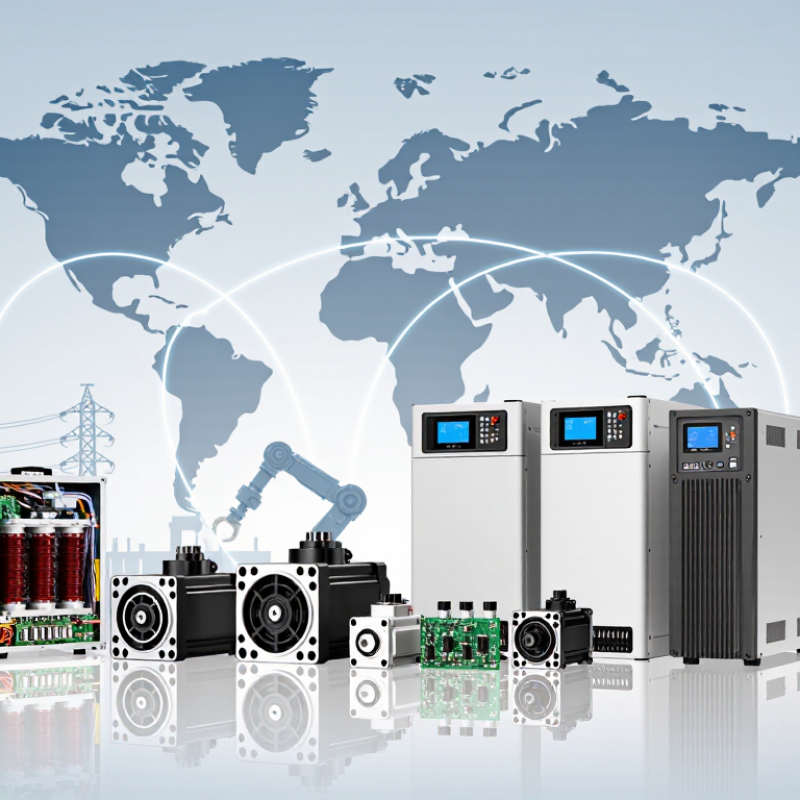
Electronic Voltage Stabilizers: Operating Principles and 230/400 V Systems
Electronic voltage stabilizers monitor incoming voltage and adjust it toward a set output. A controller senses the deviation, then changes transformer taps or moves a variable transformer. Correction takes time. Fast load changes may briefly pass through, so sensitive equipment still needs suitable protection. IEC 60038 specifies 230 V phase-to-neutral and 400 V phase-to-phase as standard nominal voltages in these systems. In a three-phase installation, check whether the stabilizer regulates each phase independently or responds to all phases together; the wrong arrangement can leave one phase poorly corrected.
Tips: Measure voltage under real operating loads, not only at an empty socket. EN 50160 states that, under normal conditions, 95% of weekly 10-minute voltage averages on public low-voltage networks should remain within ±10% of nominal voltage. That is a useful reference, not a stabilizer setting. Choose equipment for the actual load, including motor starting current, and confirm the required input range and output tolerance.
A 230/400 V label alone does not tell you how a stabilizer handles phase imbalance, overloads, or bypass operation. Ask for test conditions and response-time data, then compare them with your site measurements. A tidy specification sheet can still leave gaps. That deserves a second look. Sources: IEC 60038, Standard Voltages; EN 50160, Voltage Characteristics of Electricity Supplied by Public Distribution Networks.
Electronic Voltage Stabilizers: Operating Principles and 230/400 V Systems
Electronic voltage stabilizers sense changes in the incoming supply and adjust transformer taps or power-electronic switching to keep the output near its nominal voltage. This illustrative model shows deviations relative to a 230 V phase-to-neutral or 400 V phase-to-phase system. The modeled output remains within ±0.5% over the displayed input range; actual correction range and accuracy depend on the equipment and operating conditions.
Core Specifications: Input Range, kVA Capacity, and Typical ±1%–±5% Regulation
For buyers comparing electronic voltage stabilizer manufacturers worldwide, three specifications deserve close attention: input range, kVA capacity, and regulation accuracy. Input range defines the voltage the unit can accept while maintaining its specified output. A 230 V installation facing frequent dips may need a stabilizer rated for a wider lower limit, not merely a high correction speed. Check the range at full load; some ratings change as demand rises.
Small detail. Big consequence.
EN 50160:2022 provides useful grid context: under normal conditions, 95% of weekly 10-minute voltage values should remain within ±10% of nominal voltage on public low- and medium-voltage networks. That is a supply-quality benchmark, not a stabilizer performance guarantee. For capacity, remember that 10 kVA at a 0.8 power factor represents about 8 kW of real power. Motors, compressors, and transformers can also draw brief startup surges, so sizing exactly to steady-state load may be optimistic.
Regulation figures need the test conditions beside them. At 230 V, ±1% means about ±2.3 V, while ±5% allows roughly ±11.5 V. Ask whether accuracy applies across the full input range and at what load. The tighter figure is not automatically the better fit. Manufacturer specifications can differ, and real site measurements often expose assumptions that a catalogue cannot.
Leading Manufacturers by Region: Product Types and Industrial Applications
Electronic voltage stabilizer manufacturers vary by region, reflecting local power conditions and industrial demand. In East Asia, producers commonly supply compact relay-based units for workshops, commercial buildings, and smaller production lines. Servo-controlled models are also used where voltage changes gradually and equipment needs steadier input. They can be useful, though moving parts may require maintenance.
European manufacturers often offer static stabilizers and three-phase systems for automation, process equipment, and sensitive control panels. These units can respond quickly to voltage fluctuations. North American suppliers serve data rooms, manufacturing sites, and facilities with large motor loads, often providing higher-capacity configurations and monitoring options. Regional labels are only a guide; actual product ranges differ.
South Asian manufacturers address a broad mix of applications, from small businesses to textile and food-processing plants. Relay, servo, and tap-changing designs each suit different load sizes and operating conditions. Check the stabilizer’s input range, rated capacity, response time, and overload protection against real site measurements. A unit that looks adequate on paper may struggle during motor startup. That detail is easy to miss. Ask about service access and spare parts, too. These practical checks matter as much as the product category.
Comparing Manufacturers: IEC 60038 Ratings, Efficiency, and Protection Features
When comparing electronic voltage stabilizers, begin with the stated input and output ranges, not the headline voltage. IEC 60038 defines preferred nominal system voltages; it is a reference for matching equipment, not a stabilizer performance certificate. That matters. Check whether the unit’s rated output aligns with the installation’s nominal supply and whether its input window covers measured fluctuations. A 230 V label alone tells little. Note frequency, phase, rated kVA, and load type too. Motors and switching power supplies can behave differently under correction.
Efficiency deserves a like-for-like comparison. Ask for measured efficiency at several load levels, including light load, and confirm test conditions. Check the conditions. A unit can look efficient near full load yet waste more energy while lightly loaded. Compare standby consumption, regulation accuracy, and response time alongside the percentage figure. Also check whether ratings apply at the specified ambient temperature; heat can change usable capacity.
Protection features should match real risks at the site. Look for overvoltage and undervoltage shutdown, overload and short-circuit response, thermal protection, and clear fault indication. Check whether bypass is manual or automatic, and whether it maintains supply without voltage correction. Surge protection may be separate; do not assume stabilizing action replaces a dedicated surge protective device. Confirm coordination with upstream breakers and required ventilation, then compare warranties and service documentation. Published figures cannot predict every site’s load pattern, so treat comparisons as a starting point rather than a guarantee.
Voltage Selection: Load Sizing and EN 50160’s ±10% Supply-Voltage Range
Voltage selection starts with the equipment, not the stabilizer. IEC 60038:2009 identifies 230 V as a standard nominal low-voltage value in many supply systems. EN 50160:2022 says at least 95% of weekly, ten-minute mean RMS voltage values should remain within ±10% of declared voltage under normal conditions. At 230 V, that range is roughly 207–253 V. It describes supply quality, not a guarantee that every appliance will tolerate every voltage in that band. Check equipment nameplates and permissible input ranges.
Size by apparent power and operating conditions. A 2 kW load at a power factor of 0.8 needs 2.5 kVA before any allowance for startup current. Motors and compressors can draw several times their running current briefly, so check manufacturer data or measure inrush. Field readings matter. Record voltage at the equipment terminals during peak demand; long cables can worsen dips. I would not size from watts alone: that shortcut is easy to make, and sometimes costly to correct. Include continuous load, duty cycle, power factor, and any sensitive electronics when comparing stabilizer capacity.