Top Geothermal Wells Suppliers for Global Buyers?
Global demand for firm, low-carbon power is reshaping the geothermal drilling market. Geothermal Wells now support electricity generation, district heating, greenhouse farming, and industrial heat. Their value depends on more than drilling depth. Rock temperature, permeability, casing quality, water chemistry, and local service capacity all influence project returns.
The International Energy Agency’s The Future of Geothermal report estimates that geothermal power could reach about 800 gigawatts globally by 2050 under supportive conditions. The report also identifies drilling costs as a major barrier. IRENA reported roughly 15 gigawatts of global geothermal power capacity by the end of 2023. These figures show opportunity, but they do not guarantee easy development. Every reservoir behaves differently.
Dr. Jefferson Tester, a leading geothermal researcher at Cornell University, has described geothermal as a resource capable of providing “baseload power.” That reliability remains a central reason buyers compare suppliers carefully. The strongest vendors combine geological analysis, directional drilling, well completion, stimulation expertise, and long-term maintenance. They also explain limitations clearly.
This guide examines top Geothermal Wells suppliers for global buyers. It considers technical experience, regional delivery capability, project references, safety systems, and lifecycle support. Pricing matters. So does evidence.
A low quotation may conceal weak testing, delayed equipment, or costly well repairs. Buyers should request performance data, drilling records, warranty terms, and realistic timelines. Some supplier claims still deserve closer scrutiny. That is where careful comparison becomes essential.
What Geothermal Wells Are and How They Support Global Energy Projects
Top Geothermal Wells Suppliers for Global Buyers?
What Geothermal Wells Are and How They Support Global Energy Projects
Geothermal wells are engineered pathways into hot underground reservoirs. Production wells bring heated water or steam to the surface. Injection wells return cooled fluid underground, helping maintain reservoir pressure. A working project usually needs both.
The resource is invisible from the surface. That makes geological surveys, temperature testing, and drilling records essential. According to IRENA’s Renewable Capacity Statistics 2024, global geothermal power capacity reached about 14.9 gigawatts at the end of 2023. This capacity supports stable electricity, district heating, greenhouse agriculture, and industrial heat.
Drilling quality shapes project economics. Casing must resist corrosion, pressure, and repeated thermal changes. Cementing also matters, especially where fractured rock allows fluid movement.
The IEA’s Future of Geothermal report, published in 2024, estimates that geothermal energy could supply up to 15% of global electricity demand growth by 2050, with improved drilling and enhanced geothermal systems. That projection is ambitious. It is not guaranteed.
For global buyers, capable suppliers should provide well design, directional drilling, logging, completion services, and transparent performance data. Safety documentation and local regulatory experience deserve equal attention. A cheaper well may become expensive after leakage, scaling, or poor flow rates appear.
Small details matter. Even strong estimates can miss underground complexity. This is where careful site investigation and independent technical review protect long-term investment.
Key Criteria for Evaluating Geothermal Well Suppliers Worldwide
Top Geothermal Wells Suppliers for Global Buyers?
Key Criteria for Evaluating Geothermal Well Suppliers Worldwide
Selecting a geothermal well supplier requires more than comparing drilling prices. Buyers should examine completed projects in similar rock formations, temperatures, and well depths. A supplier with strong records in volcanic terrain may lack experience in sedimentary basins. Request documented data on drilling hours, lost circulation, casing failures, cement quality, and final well output.
Technical capability matters at every stage. Review the supplier’s drilling equipment, directional tools, mud systems, and well-control procedures. Ask how engineers manage unstable formations and unexpected pressure changes. Reliable suppliers explain their quality assurance process clearly. They should provide inspection reports, material certificates, and test results for casing, cement, valves, and other critical components.
Safety and local compliance deserve equal attention. Check training records, emergency plans, environmental controls, and insurance coverage. Confirm that the supplier understands local permits, labor rules, transport limits, and site conditions. References should come from recent projects, not only polished brochures. Speak with project owners about schedule changes, communication, spare parts, and after-sales support.
Price can mislead. A cheaper bid may exclude logging, cement testing, waste handling, or completion work. Compare the full scope line by line. No scorecard is flawless. Geological uncertainty remains. Buyers should leave room for contingency costs and independent technical review. One overlooked assumption can delay production for months.
Top Geothermal Wells Suppliers for Global Buyers? - Key Criteria for Evaluating Geothermal Well Suppliers Worldwide
| Evaluation Dimension | Reference Benchmark for Global Buyers | Evidence to Request from a Supplier | Why It Matters |
|---|---|---|---|
| Geothermal Resource Type | Hydrothermal, enhanced geothermal systems, geothermal heat-pump wells, or high-temperature systems above approximately 150°C. | A technical proposal identifying the reservoir type, temperature range, target depth, expected pressure, and well purpose. | Well design, drilling equipment, materials, testing methods, and cost can differ substantially by resource type. |
| Target Well Depth | Many commercial geothermal wells are approximately 1,000–5,000 m deep; enhanced geothermal projects may require roughly 3,000–6,000 m or more. | Depth capability of the proposed rig, drilling plan, casing program, and previous project depth records. | Greater depth generally increases drilling time, temperature exposure, equipment requirements, and project risk. |
| Formation Temperature | Low-temperature applications commonly operate below 90°C; direct-use and power projects often target approximately 90–150°C or higher, depending on technology. | Temperature logging method, maximum tool rating, expected bottom-hole temperature, and thermal-cycling procedures. | Temperature affects cement selection, casing design, logging tools, pumps, seals, and power-conversion efficiency. |
| Expected Flow Capacity | Commercial production rates vary widely by reservoir; project screening should normally compare the supplier’s guaranteed test method rather than a generic flow-rate claim. | Well-test program covering injectivity, productivity, pressure drawdown, recovery, fluid chemistry, and measurement uncertainty. | A reliable test plan is more meaningful than an advertised flow rate because geothermal wells are highly site-dependent. |
| Drilling Method and Rig Capacity | Rotary drilling is widely used; deeper or harder formations may require high-torque rigs, air or foam drilling, directional drilling, and specialized bottom-hole assemblies. | Rig specifications for depth, hook load, rotary torque, pump pressure, blowout-control equipment, and directional capability. | The rig must match the formation, trajectory, pressure regime, and planned casing sizes. |
| Casing and Wellhead Materials | Casing and wellhead components should be selected for anticipated temperature, pressure, corrosion, scaling, and thermal expansion conditions. | Material grades, connection specifications, pressure ratings, corrosion allowance, inspection records, and applicable API or ISO documentation. | Hot brines, dissolved gases, chlorides, and repeated heating and cooling can reduce component service life. |
| Cementing and Zonal Isolation | The design should address high temperature, lost circulation, thermal expansion, permeability, and isolation between aquifers or production zones. | Cement formulation, laboratory test results, centralizer plan, bond-log procedure, pressure-test criteria, and remedial-cementing capability. | Poor zonal isolation can cause cross-flow, contamination, casing damage, and expensive workovers. |
| Well Testing and Logging | A complete program may include temperature, pressure, caliper, cement-bond, spinner, acoustic, resistivity, injectivity, and production testing as appropriate. | Calibration certificates, tool temperature and pressure ratings, sample reports, data formats, and interpretation deliverables. | Independent data helps confirm reservoir performance and supports financing, permitting, and plant design. |
| High-Temperature Equipment | Tools, pumps, seals, cables, mud systems, and well-control equipment should be rated above the project’s expected operating temperature and pressure. | Equipment datasheets, maximum operating limits, maintenance intervals, spare-parts plan, and contingency procedures. | Temperature-related equipment failure is a major source of nonproductive time in deep geothermal drilling. |
| Fluid Chemistry Management | The design should consider silica scaling, carbonate scaling, corrosion, salinity, non-condensable gases, and potentially hazardous constituents such as hydrogen sulfide. | Sampling plan, laboratory analysis, corrosion and scaling model, chemical-treatment options, and worker-exposure controls. | Fluid chemistry affects flow assurance, materials selection, environmental compliance, and operating cost. |
| Health, Safety, and Well Control | The supplier should maintain formal well-control, pressure-control, H₂S-response, confined-space, lifting, emergency, and site-traffic procedures. | Safety-management certification, training records, incident statistics, emergency-response plan, and well-control certification of key personnel. | Geothermal operations can involve high pressure, hot fluids, toxic gases, heavy equipment, and unstable formations. |
| Standards and Quality Control | Procurement should specify applicable API, ISO, ASTM, local regulatory, and project-specific engineering requirements rather than relying on a general quality statement. | Quality manual, inspection and test plan, nonconformance process, traceability records, calibration certificates, and third-party inspection options. | Documented quality controls reduce failures, disputes, rework, and difficulties with regulators or insurers. |
| Environmental Performance | The project should include closed-loop fluid handling where appropriate, drilling-fluid control, cuttings management, water protection, noise control, and well-abandonment planning. | Environmental management plan, waste-disposal records, spill-response procedure, emissions controls, and restoration obligations. | Environmental requirements vary by jurisdiction and can determine whether permits and community approvals are obtained. |
| Project Schedule and Delivery | The schedule should separate engineering, permitting, mobilization, drilling, completion, testing, demobilization, and contingency time. | Detailed baseline schedule, critical-path analysis, equipment-mobilization plan, long-lead-item list, and delay-notification procedure. | Remote locations, customs, weather, road access, and specialist equipment can materially affect delivery time. |
| International Logistics | The supplier should be able to manage export documentation, customs classification, transport permits, local-content rules, and country-specific import requirements. | Incoterms, shipping plan, packing standards, customs responsibilities, insurance coverage, and local service-partner arrangements. | Clear logistics responsibility helps prevent border delays, unexpected charges, and equipment shortages. |
| Commercial Transparency | A comparable bid should distinguish mobilization, drilling-meter rates, casing, cementing, logging, testing, standby, consumables, taxes, freight, and contingency allowances. | Itemized quotation, assumptions, exclusions, escalation terms, currency, payment milestones, performance guarantees, and change-order rules. | A low headline price may exclude major services or site risks and therefore may not represent the lowest total project cost. |
| After-Sales and Local Support | Support should cover commissioning, troubleshooting, operator training, spare parts, warranty response, data handover, and workover planning. | Service-level agreement, response times, regional technicians, spare-parts inventory, warranty terms, and training curriculum. | Local support can reduce downtime and improve long-term well availability after drilling is complete. |
| Supplier Evaluation Score | A practical weighted model may assign 25% to technical capability, 20% to safety and quality, 20% to total cost, 15% to schedule, 10% to logistics, and 10% to service support. | Completed bid-comparison matrix with pass/fail requirements, weighted scores, documented assumptions, and reference checks. | A transparent scoring method helps global buyers compare suppliers consistently without relying only on price or marketing claims. |
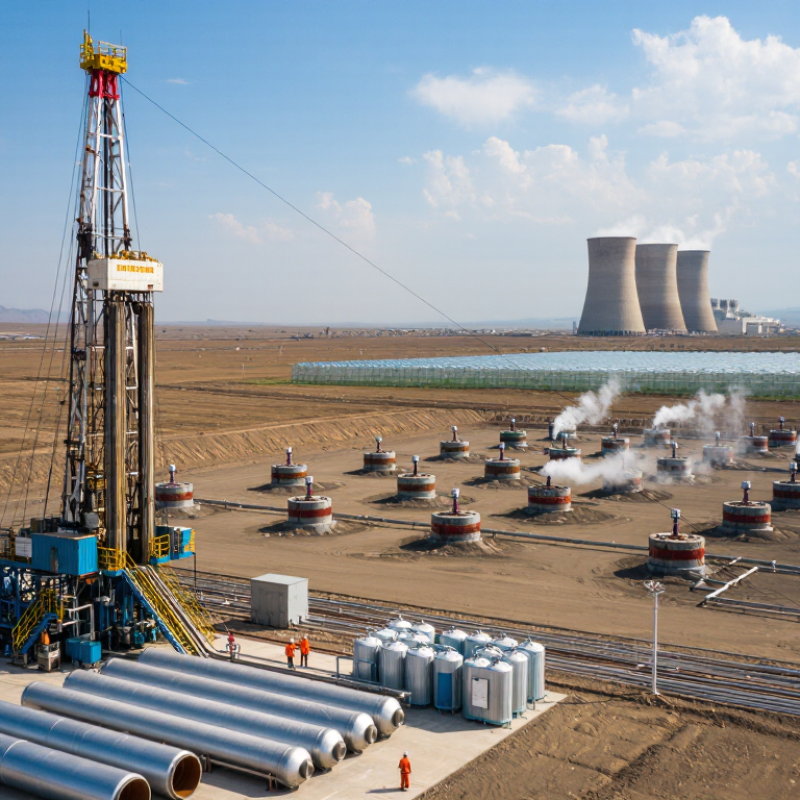
Leading Types of Geothermal Well Suppliers and Their Core Capabilities
Top Geothermal Wells Suppliers for Global Buyers?
Geothermal well suppliers usually fall into four groups: drilling contractors, equipment manufacturers, integrated engineering firms, and specialist well-service companies. Drilling contractors manage rigs, crews, casing, cementing, and site safety. Equipment manufacturers provide pumps, downhole tools, valves, sensors, and corrosion-resistant materials. Integrated firms can connect reservoir studies with drilling plans and construction schedules. Their wider scope helps reduce coordination gaps, but costs may rise.
Specialist service companies support logging, well testing, stimulation, and production monitoring. These capabilities matter when temperature, pressure, and rock conditions change unexpectedly. Experienced suppliers should show verified project records, qualified engineers, inspection documents, and clear maintenance procedures. Ask for test data from comparable wells, not only attractive brochures. I have seen technically strong proposals fail because spare parts arrived too late. No supplier is perfect. Review communication habits, response times, and local support before signing.
Tips: Match supplier type to project risk. Request a detailed casing design and drilling method statement. Confirm equipment temperature ratings, delivery schedules, warranty limits, and emergency support. Check whether field technicians can work with local crews. A practical factory visit can reveal more than polished presentations. Also, keep a contingency budget for lost circulation, unstable formations, or redesign work. These issues are common, yet often underestimated.
How to Compare Drilling Technology, Quality, Cost, and Delivery
Top Geothermal Wells Suppliers for Global Buyers?
Global buyers should compare geothermal well suppliers beyond the quoted meter price. The IEA’s 2024 The Future of Geothermal estimates that geothermal energy could provide up to 15% of global electricity demand growth by 2050. That expansion increases pressure on drilling performance. Ask whether suppliers use high-temperature measurement tools, directional control, and tested lost-circulation methods. Review nearby wells, penetration rates, nonproductive time, and cement failures. A polished rig photo proves little.
Cost comparisons need a complete scope. The U.S. Department of Energy’s GeoVision analysis identifies drilling as a major expense, often approaching half of total geothermal project costs. IRENA reported a global weighted-average geothermal electricity cost of about USD 0.071 per kilowatt-hour in 2023. Compare rig mobilization, bits, drilling fluids, casing, cement, testing, standby time, and possible remediation. For a 2,500-meter well, a low price per meter can hide expensive delays. Quality checks should include borehole deviation, caliper logs, pressure tests, cement integrity, and independent inspection.
Delivery means more than rig arrival. Request manufacturing lead times, spare-tool locations, crew availability, customs planning, and backup equipment. Set measurable milestones for mobilization, drilling sections, logging, casing, and handover. Field experience shows that high-temperature tool failures can disrupt an otherwise capable project. Suppliers should disclose failure rates, not only successful wells. This comparison is never perfectly clean. Geological differences weaken simple rankings, so buyers should verify references against drilling reports, not testimonials.
Top Geothermal Wells Suppliers for Global Buyers: How to Compare Drilling Technology, Quality, Cost, and Delivery
Industry planning benchmarks for geothermal well projects by drilling depth and temperature profile. Values are representative published ranges, not supplier quotations.
Confirm directional drilling, lost-circulation control, high-temperature tools, and real-time well monitoring capabilities.
Evaluate casing standards, cementing procedures, HSE performance, inspection records, and verified geothermal references.
Typical drilling costs rise sharply with depth, temperature, hard-rock conditions, and well-control complexity.
Allow additional time for permitting, rig mobilization, long-lead casing, logistics, and weather-related delays.
Reference basis: commonly reported geothermal well planning ranges from public guidance and industry studies by the U.S. Department of Energy, IRENA, and the World Bank. Actual costs and schedules vary by location, geology, well design, and market conditions.
Selecting the Right Supplier for Regional Regulations and Project Needs
Top Geothermal Wells Suppliers for Global Buyers?
Selecting a geothermal well supplier requires more than comparing drilling prices. Regional rules can change casing specifications, cement testing, well-control procedures, and water-discharge limits. A supplier experienced in volcanic reservoirs may not understand sedimentary formations or urban noise restrictions. Ask for completed projects with similar temperatures, depths, pressures, and rock conditions. Real evidence matters.
The IRENA Renewable Capacity Statistics 2024 recorded approximately 14.9 GW of global geothermal power capacity at the end of 2023. This expanding market increases demand for dependable drilling and completion expertise. Suppliers should provide documented safety records, qualified engineers, traceable materials, and testing procedures aligned with local regulators. Check their ability to manage lost circulation, corrosive fluids, and high-temperature logging. Small details can stop a project.
Compliance must be designed early. Confirm permit experience, environmental monitoring, worker protection, seismic-risk protocols, and emergency response planning before signing. The World Bank’s Global Geothermal Development Plan has repeatedly identified drilling risk as a major barrier to project finance. A polished proposal can still conceal weak field capacity. I would request references, inspection records, equipment lists, and a clear schedule for regulatory approvals. Do not rely on promises. Ask who will be physically present at the wellsite, especially when local rules differ from the supplier’s home market.
Article Source:
Get a quote
Get a quote
Read More
Accept AllReject AllCustomise
Privacy Overview
| Cookie | Duration | Description |
|---|---|---|
| cookielawinfo-checkbox-advertisement | 1 year | Set by the GDPR Cookie Consent plugin, this cookie records the user consent for the cookies in the "Advertisement" category. |
| cookielawinfo-checkbox-analytics | 11 months | This cookie is set by GDPR Cookie Consent plugin. The cookie is used to store the user consent for the cookies in the category "Analytics". |
| cookielawinfo-checkbox-functional | 11 months | The cookie is set by GDPR cookie consent to record the user consent for the cookies in the category "Functional". |
| cookielawinfo-checkbox-necessary | 11 months | This cookie is set by GDPR Cookie Consent plugin. The cookies is used to store the user consent for the cookies in the category "Necessary". |
| cookielawinfo-checkbox-others | 11 months | This cookie is set by GDPR Cookie Consent plugin. The cookie is used to store the user consent for the cookies in the category "Other. |
| cookielawinfo-checkbox-performance | 11 months | This cookie is set by GDPR Cookie Consent plugin. The cookie is used to store the user consent for the cookies in the category "Performance". |
| CookieLawInfoConsent | 1 year | CookieYes sets this cookie to record the default button state of the corresponding category and the status of CCPA. It works only in coordination with the primary cookie. |
| viewed_cookie_policy | 11 months | The cookie is set by the GDPR Cookie Consent plugin and is used to store whether or not user has consented to the use of cookies. It does not store any personal data. |
| Cookie | Duration | Description |
|---|---|---|
| _cs_c | 1 year 1 month | The cookie is used by Content Square to save the user consent to be tracked. |
| Cookie | Duration | Description |
|---|---|---|
| _cs_id | 1 year 17 days 20 hours 13 minutes | This cookie is used to store the ContentSquare's user identifier ID. This is a persistent cookie and expires after 13 months. |
| _cs_s | 1 hour | This cookie is used to store the number of page's viewed by a visitor within the session for ContentSquare's solution. |
| _ga | 1 year 1 month 4 days | Google Analytics sets this cookie to calculate visitor, session and campaign data and track site usage for the site's analytics report. The cookie stores information anonymously and assigns a randomly generated number to recognise unique visitors. |
| _ga_* | 1 year 1 month 4 days | Google Analytics sets this cookie to store and count page views. |
| _gcl_au | 3 months | Google Tag Manager sets the cookie to experiment advertisement efficiency of websites using their services. |
| Cookie | Duration | Description |
|---|---|---|
| test_cookie | 15 minutes | doubleclick.net sets this cookie to determine if the user's browser supports cookies. |
| Cookie | Duration | Description |
|---|---|---|
| _cs_root-domain | session | Description is currently not available. |
| _cs_same_site | session | Description is currently not available. |