China Top Explosion Proof Box Manufacturers?
Choosing among China’s top Explosion Proof Box manufacturers requires more than comparing prices, photographs, or factory claims. A dependable supplier should demonstrate practical experience with hazardous-area equipment, documented testing, traceable materials, and consistent production controls. The enclosure should match the application’s gas or dust classification, temperature range, ingress protection, and installation environment. Small details matter. Think of a stainless-steel box exposed to salt spray, vibration, and repeated cable movement.
Dr. Michael G. Pecht, a respected reliability engineering authority, defines reliability as “the probability that a product will perform its intended function under stated conditions for a specified period of time.” This principle applies directly to every Explosion Proof Box selection. A strong manufacturer should explain how its design maintains sealing performance, mechanical strength, heat control, and electrical safety during actual service. Certificates alone are not enough.
The market changes quickly. Rankings can become outdated. A supplier praised last year may offer weaker traceability today. Buyers should examine current certificates, inspection records, sample quality, response speed, and after-sales support. Factory visits or independent audits can reveal practical weaknesses that brochures often miss. This guide compares leading Chinese manufacturers through those real-world indicators, not through marketing language alone. Some conclusions may remain imperfect, because product quality depends on configuration, production batch, and installation discipline. Still, careful evidence creates a safer and more useful shortlist.
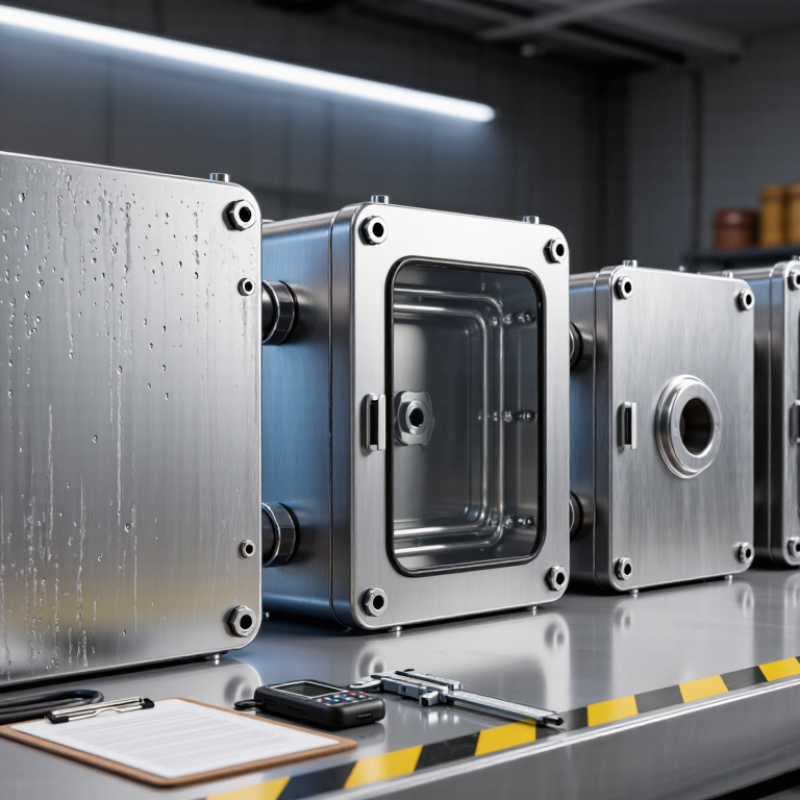
What Is an Explosion-Proof Box?
An explosion-proof box is a protective enclosure for electrical equipment used in hazardous areas. It does not prevent every explosion. Instead, it limits internal ignition and stops flames from reaching surrounding gases, vapors, or dust.
The enclosure usually uses thick metal walls, accurately machined flame paths, sealed cable entries, and controlled surface temperatures. IEC 60079-0 defines general equipment requirements, while IEC 60079-1 addresses flameproof protection. OSHA 1910.307 also requires suitable equipment for classified hazardous locations in the United States. Certification must match the zone, gas or dust group, and temperature class. A box rated for gas may not suit combustible dust.
Small details matter.
For example, an incorrectly tightened gland can weaken the protection system. A damaged thread may create a dangerous gap. Field experience shows that installation quality can matter as much as the enclosure itself. The U.S. Bureau of Labor Statistics reported 5,283 fatal workplace injuries in 2023, although this figure covers all industries and causes, not explosions alone. It still shows why documented inspection and maintenance deserve attention. Buyers should verify certificates, ingress protection, operating temperature, material strength, and repair procedures. Marketing language can sound convincing. Certification documents are more reliable.
Key Safety Standards for Explosion-Proof Boxes in China
China Top Explosion Proof Box Manufacturers? Key Safety Standards for Explosion-Proof Boxes in China
Selecting an explosion-proof box in China starts with standards, not appearance. GB/T 3836.1-2021 defines general requirements for equipment used in explosive atmospheres. Related parts cover flameproof protection “d,” increased safety “e,” and dust protection “t.” The enclosure must match the site’s gas or dust group, temperature class, and hazardous-zone classification. A thicker steel wall alone proves little.
According to the International Energy Agency’s Global Methane Tracker 2024, fossil-fuel operations released more than 120 million tonnes of methane in 2023. This figure highlights why ignition control remains essential near gas-processing and storage equipment. For dusty workplaces, the enclosure’s IP rating also matters. However, IP66 mainly addresses dust and water ingress; it does not automatically confirm explosion protection. This mistake still appears in purchasing checks.
Reliable manufacturers should provide traceable certificates, tested construction drawings, material details, and clear marking. Check cable glands, terminal spacing, grounding points, fasteners, and surface temperature limits. China’s GB/T 3836 requirements should align with the actual installation conditions, not only the catalog specification. Ask for factory inspection records and independent test evidence where applicable. Even experienced teams can overlook internal heat buildup. That detail deserves a second review.
How Chinese Manufacturers Design and Build Explosion-Proof Boxes
Chinese explosion-proof box manufacturers usually begin with the installation environment. Engineers review gas or dust risks, temperature, voltage, cable entry, and required ingress protection. They also study maintenance habits. A box that is difficult to open may create unsafe field work.
M Material selection depends on the application. Stainless steel resists corrosion in coastal plants. Aluminum reduces weight for indoor equipment. Thick walls, carefully machined joints, and controlled gaps help contain internal pressure. Cable glands, hinges, bolts, and sealing parts must match the enclosure design. Small details matter.
Machining accuracy matters greatly. Even a minor surface defect can affect joint performance. Manufacturers often use CNC equipment, coordinate checks, and controlled welding procedures. Each finished box may undergo visual inspection, insulation testing, grounding checks, pressure testing, and ingress protection verification. Qualified third-party laboratories can assess designs against relevant international requirements, such as IEC 60079 series standards.
Good factories also keep material records, inspection reports, and production traceability. They test prototypes before releasing large orders. Field feedback can reveal problems that laboratory work misses. For example, condensation may appear after repeated temperature changes. A design can pass a test yet remain inconvenient for technicians. That weakness deserves review.
Not every supplier applies the same discipline. Buyers should examine certificates, drawings, test records, and quality controls directly. Clear communication about hazardous-area classification prevents expensive redesigns. Reliable manufacturers explain limits instead of promising universal solutions.
Leading Chinese Explosion-Proof Box Manufacturers by Product Type
China Top Explosion Proof Box Manufacturers?
Leading Chinese Explosion-Proof Box Manufacturers by Product Type
Chinese explosion-proof box manufacturers often specialize by product type, not by one universal enclosure. Junction boxes manage cable connections in dusty or gas-prone industrial areas. Their quality depends on sealing surfaces, terminal spacing, grounding points, and reliable cable entries. Stainless steel versions suit coastal plants, while coated aluminum reduces weight for indoor installations. Small details matter.
Control boxes support switches, indicators, emergency stops, or monitoring instruments. Distribution boxes handle multiple circuits and usually require careful heat management. Lighting boxes and terminal enclosures serve different installation needs, even when their housings look similar. Experienced manufacturers should explain area classification, protection level, operating temperature, and installation position before recommending a model. A catalog alone is not enough.
Good suppliers provide dimensional drawings, material data, inspection records, and traceable test documentation. They should also verify sealing performance after drilling or customized machining. This is where mistakes happen. A poorly selected cable gland can weaken the entire enclosure. Manufacturers with practical engineering experience can review wiring layouts and maintenance access before production. Yet buyers should independently confirm certifications and local compliance requirements. No factory should promise suitability without understanding the site conditions, corrosive chemicals, vibration, and expected service life. Even a strong enclosure can fail when installation work is rushed.
How to Evaluate and Select a Chinese Manufacturer
China Top Explosion Proof Box Manufacturers? How to Evaluate and Select a Chinese Manufacturer
Market estimates show sustained demand for hazardous-area enclosures. MarketsandMarkets valued the explosion-proof equipment market at about USD 8.7 billion in 2023. Its forecast reaches nearly USD 12.1 billion by 2028. Fortune Business Insights reports different figures because its scope excludes some equipment categories. This difference matters. Buyers should examine definitions before trusting growth claims.
A capable Chinese manufacturer should provide valid certificates, test reports, and traceable production records. Check compliance with IEC 60079 requirements, enclosure ingress protection, temperature class, and material performance. Do not accept a certificate alone. Confirm its model number matches the proposed enclosure. Ask for drawing approval, alloy specifications, gasket details, and routine inspection records.
Visit the factory if possible. Watch machining, sealing, coating, and final testing. Photos are not enough. Review calibration records for torque tools and pressure testing equipment. Request a sample before placing a large order. Measure the wall thickness and inspect threads under bright light. Small defects become serious in harsh environments. I have seen supplier evaluations focus too heavily on price. That is a weak habit. Delivery history, engineering response time, spare-part support, and corrective-action records deserve equal attention. A manufacturer that admits a past failure may be more reliable than one promising perfection.
Article Source:
Get a quote
Get a quote
Read More
Accept AllReject AllCustomise
Privacy Overview
| Cookie | Duration | Description |
|---|---|---|
| cookielawinfo-checkbox-advertisement | 1 year | Set by the GDPR Cookie Consent plugin, this cookie records the user consent for the cookies in the "Advertisement" category. |
| cookielawinfo-checkbox-analytics | 11 months | This cookie is set by GDPR Cookie Consent plugin. The cookie is used to store the user consent for the cookies in the category "Analytics". |
| cookielawinfo-checkbox-functional | 11 months | The cookie is set by GDPR cookie consent to record the user consent for the cookies in the category "Functional". |
| cookielawinfo-checkbox-necessary | 11 months | This cookie is set by GDPR Cookie Consent plugin. The cookies is used to store the user consent for the cookies in the category "Necessary". |
| cookielawinfo-checkbox-others | 11 months | This cookie is set by GDPR Cookie Consent plugin. The cookie is used to store the user consent for the cookies in the category "Other. |
| cookielawinfo-checkbox-performance | 11 months | This cookie is set by GDPR Cookie Consent plugin. The cookie is used to store the user consent for the cookies in the category "Performance". |
| CookieLawInfoConsent | 1 year | CookieYes sets this cookie to record the default button state of the corresponding category and the status of CCPA. It works only in coordination with the primary cookie. |
| viewed_cookie_policy | 11 months | The cookie is set by the GDPR Cookie Consent plugin and is used to store whether or not user has consented to the use of cookies. It does not store any personal data. |
| Cookie | Duration | Description |
|---|---|---|
| _cs_c | 1 year 1 month | The cookie is used by Content Square to save the user consent to be tracked. |
| Cookie | Duration | Description |
|---|---|---|
| _cs_id | 1 year 17 days 20 hours 13 minutes | This cookie is used to store the ContentSquare's user identifier ID. This is a persistent cookie and expires after 13 months. |
| _cs_s | 1 hour | This cookie is used to store the number of page's viewed by a visitor within the session for ContentSquare's solution. |
| _ga | 1 year 1 month 4 days | Google Analytics sets this cookie to calculate visitor, session and campaign data and track site usage for the site's analytics report. The cookie stores information anonymously and assigns a randomly generated number to recognise unique visitors. |
| _ga_* | 1 year 1 month 4 days | Google Analytics sets this cookie to store and count page views. |
| _gcl_au | 3 months | Google Tag Manager sets the cookie to experiment advertisement efficiency of websites using their services. |
| Cookie | Duration | Description |
|---|---|---|
| test_cookie | 15 minutes | doubleclick.net sets this cookie to determine if the user's browser supports cookies. |
| Cookie | Duration | Description |
|---|---|---|
| _cs_root-domain | session | Description is currently not available. |
| _cs_same_site | session | Description is currently not available. |