2026 Top Types of Ball End Mills for CNC Milling
CNC milling often leaves its most visible marks on curved surfaces, blended corners, and sculpted pockets. A ball nose cutter can help machine these shapes because its rounded tip engages the material along a curved profile. The finish still depends on step-over, toolpath, material, and machine rigidity. Small details matter.
This guide explores common options for 2026, including solid-carbide, coated, tapered, long-reach, and micro ball end mills. It also considers flute count and tool diameter, since a cutter suited to a broad mold cavity may struggle inside a narrow pocket. A Ball End End Mill is not a universal fix. Its tip can wear unevenly near the center, where cutting speed is low, and a long tool may chatter when reach exceeds the setup’s stability. That part is easy to underestimate.
Choosing reliably means checking the tool maker’s geometry, recommended cutting data, and workpiece material, then validating the setup with a controlled test cut. For example, a small stepover may improve visible finish, but it can increase machining time. Coatings may support particular materials or conditions; they do not automatically improve every result. The sections ahead compare practical types, typical strengths, and limits, helping machinists narrow their choices without treating any single cutter as best for every job.
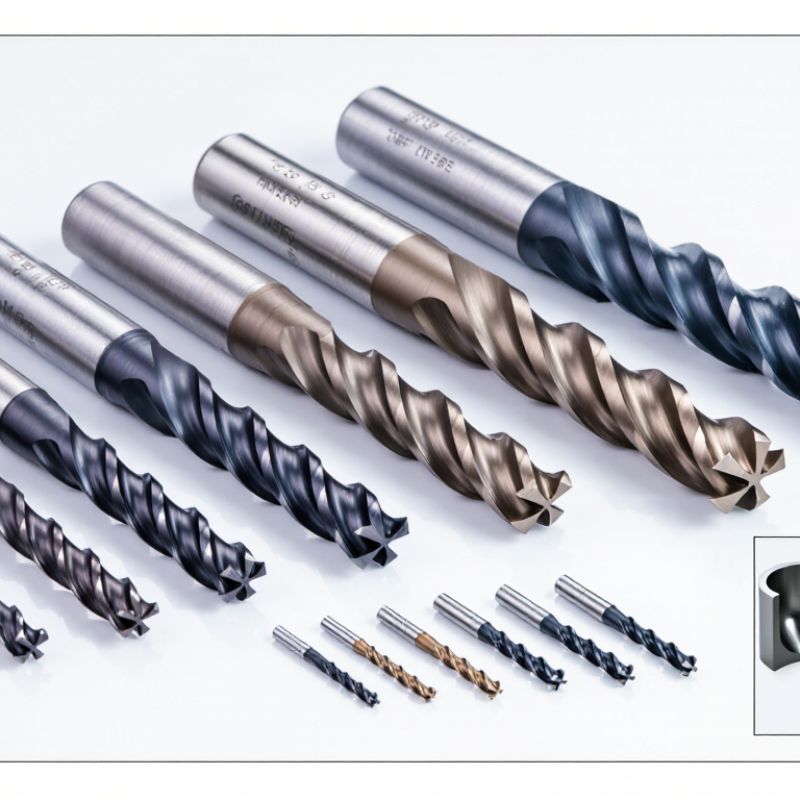
What Ball End Mills Are and How Their Rounded Tips Work
A ball end mill has a rounded, ball-shaped cutting tip rather than a flat end. Its curved edges let a CNC machine cut flowing surfaces, such as mold cavities, rounded channels, and sculpted contours. The tool removes material as the contact point moves across the workpiece. Near the center of the tip, cutting speed approaches zero, so the middle may rub instead of shear cleanly. That detail matters.
The rounded profile also affects surface finish. A small stepover leaves finer scallops between tool passes, but it takes longer to machine. A wider stepover is faster and may leave visible ridges that need finishing. On a curved surface, the contact area shifts as the tool moves, so toolpath direction and tilt can change the result. Chip clearance matters, too. Packed chips can mark the surface or wear the cutting edge. In practice, check the material, tool diameter, cutting parameters, and machine rigidity together. One setting rarely fits every job. It is easy to overfocus on the tip shape and overlook how the tool meets the workpiece.
Which Geometries and Flute Designs Define Ball End Mill Types
Ball end mill types are defined less by labels than by the cutting-end shape and flute layout. The hemispherical tip leaves a rounded path, useful for sculpted surfaces, radii, and three-dimensional finishing. A smaller ball radius reaches tighter concave details, but it may need a lighter step-over to reduce visible scallops. A longer neck can clear deep walls. It is also more prone to deflection. Tapered ball nose designs add a conical shank behind the rounded tip, offering extra rigidity for deep, narrow features.
Flute design changes how the tool behaves. Two-flute cutters provide open chip space, often helpful in softer materials and deeper cuts. Three- or four-flute designs add cutting edges and may improve finish when chips still clear freely. Helix angle matters too: a higher helix can cut smoothly, yet may pull on thin workpieces. Not every setup benefits. Short reach and a rigid holder matter as much as flute count. Check the tool’s cutting guidance, then test a small surface with conservative step-over. Inspect scallop height and edge wear. A drawing can make geometry look straightforward; actual results also depend on stick-out, runout, machine stiffness, and coolant access. A small test cut often reveals more than a rule of thumb.
2026 Top Types of Ball End Mills for CNC Milling – Which Geometries and Flute Designs Define Ball End Mill Types
| Ball End Mill Type | Defining Geometry | Typical Flute Design | Common Applications | Key Selection Considerations |
|---|---|---|---|---|
| Standard Ball Nose End Mill | Hemispherical cutting end with a radius equal to half the cutter diameter. | Usually two or four flutes; straight or conventional helix. | General 3D contouring, curved surfaces, dies, molds, and profile finishing. | A versatile starting point. Choose flute count and cutting parameters according to workpiece material, chip clearance, and finish requirements. |
| Two-Flute Ball End Mill | Ball-nose tip on a relatively open cutting geometry. | Two flutes provide larger chip spaces than many higher-flute designs. | Slotting, pocketing, and contouring where chip evacuation is important, including many aluminum and nonferrous-metal operations. | Useful when chips need room to clear. Confirm that the tool’s substrate and coating are suitable for the material being cut. |
| Four-Flute Ball End Mill | Ball-nose tip with more cutting edges around the circumference. | Four flutes generally provide more cutting edges and less flute space per edge than a comparable two-flute design. | Finishing and contouring in steels and other materials where a higher flute count can support the intended feed strategy. | Check chip evacuation, especially in deep or enclosed cuts; flute count alone does not determine achievable finish or productivity. |
| High-Flute-Count Ball End Mill | Ball end with multiple closely spaced cutting edges. | Typically five or more flutes, with reduced space between flutes compared with lower-flute-count tools. | Finishing or high-feed applications when the machine, tool, workpiece material, and toolpath are suited to the design. | Requires careful attention to chip load and chip clearance. It is not automatically the best choice for deep slots or materials that produce bulky chips. |
| Tapered Ball Nose End Mill | Ball tip transitions into a conical shank or cutting body; the taper increases stiffness relative to a slender straight-neck tool of similar reach. | Commonly two or more flutes, selected to suit the material and operation. | Deep 3D cavities, mold work, steep walls, and long-reach contouring. | Check the taper angle, ball radius, reach, and workpiece clearance. The taper must fit the cavity without rubbing adjacent surfaces. |
| Long-Neck Ball End Mill | Standard or reduced-diameter neck extends the cutting tip away from the holder and tool body. | Flute count varies; the cutting section may be short relative to the overall reach. | Reaching recessed features, deep pockets, and areas with limited access. | Long overhang increases deflection and vibration risk. Use the shortest practical reach and verify neck clearance. |
| Micro Ball End Mill | Small ball radius and small cutting diameter for fine features. | Often two flutes, with geometry designed to provide usable chip space at small scale. | Miniature molds, small-radius details, precision engraving, and fine-scale 3D surfaces. | Runout, tool deflection, toolholder condition, and machine resolution become especially important as tool diameter decreases. |
| Variable-Helix Ball End Mill | Ball-nose cutting end with flute helix angles that vary between or along the flutes. | Variable helix is used to disrupt regular engagement patterns and can help reduce chatter under suitable conditions. | Contouring and finishing where vibration or chatter is a concern. | Performance depends on setup stiffness, toolpath, engagement, and cutting parameters; variable helix does not eliminate the need for stable machining conditions. |
| Unequal-Pitch Ball End Mill | Ball nose with cutting edges spaced at unequal angular intervals. | Unequal flute spacing can interrupt repetitive cutting forces. | Machining operations that exhibit harmonic vibration or chatter with a regular-pitch cutter. | Consider it as one part of a chatter-control strategy alongside tool overhang, workholding, spindle speed, and radial engagement. |
| Roughing Ball End Mill | Ball-nose profile with cutting edges intended to remove material more aggressively than a fine-finishing geometry. | Flutes may include chip-breaking or serrated edge features, depending on the design. | Rough or semi-finish 3D machining where subsequent finishing passes are planned. | Check the intended material and finishing allowance. Serrated edges can leave a rougher surface than a finishing cutter. |
| Finishing Ball End Mill | Precision-ground ball profile designed to produce a consistent curved cut. | Often polished or finely ground flutes; flute count varies by material and tool design. | Final passes on sculpted surfaces, molds, dies, and other contoured parts. | Surface finish also depends on stepover, cutter radius, toolpath direction, runout, and tool condition. |
Selection note: Ball end mills cut with the rounded tip and adjacent flute edges. For a given ball radius, stepover affects the scallop height on a contoured surface; tool reach, workpiece material, machine rigidity, and chip evacuation should also be considered.
How Common Ball End Mill Types Differ in CNC Milling
Ball end mills differ mainly in tip shape, neck design, and flute arrangement. A standard ball-nose cutter has a rounded tip for sculpting curved surfaces and finishing contours. Its contact point moves across the workpiece, leaving small scallops that depend on step-over and tool radius. Reduce the step-over for a smoother finish, but expect longer cutting time. Small details matter.
Tapered ball end mills combine a spherical tip with a narrowing shank. The added support can help when machining deep cavities or narrow mold features, where a long, slender tool may deflect. They are useful for angled walls, too, though the taper must clear the part without rubbing. This distinction is not always neat; tool reach and machine rigidity can matter as much as the cutter type.
Flute count changes chip space and surface behavior. Two-flute designs leave more room for chips, which can help in softer materials or deeper cuts. Four-flute versions often provide a steadier finish in suitable conditions, but crowded chips can become a problem. A common shop-floor mistake is choosing by flute count alone. Check the material, stickout, spindle speed, and coolant or air flow, then test a conservative cut. At the very tip, cutting speed approaches zero, so the toolpath and engagement deserve attention.
How to Match a Ball End Mill to Material and Toolpath
A ball end mill’s rounded tip suits sculpted surfaces, fillets, and curved pockets, but the right geometry depends on the cut. For aluminum, a sharp, polished edge and open flute space help clear sticky chips. In stainless steel, a tougher carbide grade and steady engagement can reduce edge damage. Hardened alloys often need a wear-resistant cutting edge and conservative speeds. Material matters. So does chip evacuation.
Match flute count and reach to the toolpath, not just the workpiece. A two-flute cutter leaves more room for chips in softer materials; higher flute counts can support smoother finishing when chip loads stay controlled. Use a shorter tool whenever possible. Long-reach tools deflect more, especially during deep, narrow cuts. On shallow 3D contours, a smaller step-over reduces visible scallops, though it increases machining time. Steep walls may call for a tapered ball end mill, which adds stiffness and helps limit chatter. Check the CAM simulation for sudden engagement changes, then verify runout before cutting. Small details matter. A perfect-looking toolpath can still leave a rough finish if the cutter flexes. I would not assume one setting works across every material; test a modest cut and inspect the surface before committing.
How Cutting Parameters Affect Ball End Mill Performance
Cutting parameters shape how a ball end mill behaves, especially on curved surfaces. The cutting speed changes with the tool’s contact point. Near the tip, surface speed becomes very low, which can encourage rubbing instead of clean cutting. A slight tool tilt may move the contact away from the center. Small changes matter.
Feed per tooth must suit the tool diameter, material, and machine rigidity. If feed is too high, a thin shank may deflect and leave visible chatter marks. If it is too low, the edge can rub and build heat. Radial stepover controls the scallop height between passes; a smaller stepover usually leaves a smoother finish, but increases machining time. There is no single setting that fits every job.
Axial depth and tool engagement also affect load. On a narrow finishing pass, modest engagement can help protect the edge, while roughing may need a different strategy. Watch the chips. Long, warm chips or a changing surface finish can signal poor evacuation or excess heat. Coolant or air flow should match the material and setup, not habit alone. Even careful calculations need a test cut; tool wear and fixturing can make the first estimate imperfect.
2026 Top Types of Ball End Mills for CNC Milling — How Cutting Parameters Affect Ball End Mill Performance
Calculated feed rate for a two-flute ball end mill at a constant spindle speed of 12,000 rpm. Feed rate increases linearly with feed per tooth; these values illustrate the formula, not universal cutting recommendations.
Formula: Feed rate (mm/min) = feed per tooth (mm/tooth) × number of flutes × spindle speed (rpm). Solid-carbide, HSS, coated, and variable-helix ball end mills suit different materials and conditions; choose feed and other cutting parameters for the specific tool, workpiece, engagement, and machine setup.
Article Source:
Get a quote
Get a quote
Read More
Accept AllReject AllCustomise
Privacy Overview
| Cookie | Duration | Description |
|---|---|---|
| cookielawinfo-checkbox-advertisement | 1 year | Set by the GDPR Cookie Consent plugin, this cookie records the user consent for the cookies in the "Advertisement" category. |
| cookielawinfo-checkbox-analytics | 11 months | This cookie is set by GDPR Cookie Consent plugin. The cookie is used to store the user consent for the cookies in the category "Analytics". |
| cookielawinfo-checkbox-functional | 11 months | The cookie is set by GDPR cookie consent to record the user consent for the cookies in the category "Functional". |
| cookielawinfo-checkbox-necessary | 11 months | This cookie is set by GDPR Cookie Consent plugin. The cookies is used to store the user consent for the cookies in the category "Necessary". |
| cookielawinfo-checkbox-others | 11 months | This cookie is set by GDPR Cookie Consent plugin. The cookie is used to store the user consent for the cookies in the category "Other. |
| cookielawinfo-checkbox-performance | 11 months | This cookie is set by GDPR Cookie Consent plugin. The cookie is used to store the user consent for the cookies in the category "Performance". |
| CookieLawInfoConsent | 1 year | CookieYes sets this cookie to record the default button state of the corresponding category and the status of CCPA. It works only in coordination with the primary cookie. |
| viewed_cookie_policy | 11 months | The cookie is set by the GDPR Cookie Consent plugin and is used to store whether or not user has consented to the use of cookies. It does not store any personal data. |
| Cookie | Duration | Description |
|---|---|---|
| _cs_c | 1 year 1 month | The cookie is used by Content Square to save the user consent to be tracked. |
| Cookie | Duration | Description |
|---|---|---|
| _cs_id | 1 year 17 days 20 hours 13 minutes | This cookie is used to store the ContentSquare's user identifier ID. This is a persistent cookie and expires after 13 months. |
| _cs_s | 1 hour | This cookie is used to store the number of page's viewed by a visitor within the session for ContentSquare's solution. |
| _ga | 1 year 1 month 4 days | Google Analytics sets this cookie to calculate visitor, session and campaign data and track site usage for the site's analytics report. The cookie stores information anonymously and assigns a randomly generated number to recognise unique visitors. |
| _ga_* | 1 year 1 month 4 days | Google Analytics sets this cookie to store and count page views. |
| _gcl_au | 3 months | Google Tag Manager sets the cookie to experiment advertisement efficiency of websites using their services. |
| Cookie | Duration | Description |
|---|---|---|
| test_cookie | 15 minutes | doubleclick.net sets this cookie to determine if the user's browser supports cookies. |
| Cookie | Duration | Description |
|---|---|---|
| _cs_root-domain | session | Description is currently not available. |
| _cs_same_site | session | Description is currently not available. |