China Top 10 Alloy Steel Round Bar Manufacturers?
China’s alloy steel industry combines large-scale production with increasingly demanding quality expectations. The World Steel Association reported that China produced approximately 1.005 billion tonnes of crude steel in 2024. This volume creates a broad manufacturing base for Alloy Steel Round Bar, used in shafts, gears, pressure equipment, construction machinery, and automotive components.
Market size alone does not identify reliable suppliers. Manufacturing capability matters more. The World Steel Association and China Metallurgical Industry Planning and Research Institute highlight the importance of efficiency, process control, and product quality across modern steelmaking. For round bars, buyers should examine furnace technology, refining capacity, heat-treatment accuracy, dimensional tolerances, and inspection records. A bright, smooth bar means little without traceable chemistry and verified mechanical properties.
Metallurgist George Krauss wrote, “The properties of steels are determined by their microstructure.” That principle remains practical. Quenching, tempering, alloy composition, and cooling rates can change a bar’s strength and toughness significantly. One small process variation may affect an entire batch.
This guide reviews ten notable Chinese Alloy Steel Round Bar manufacturers. It considers production scale, certifications, export experience, alloy grades, machining support, and customer feedback. The ranking is not permanent. Supplier performance can change with equipment upgrades, raw-material costs, and management decisions. That uncertainty deserves attention.
Some manufacturers communicate technical details clearly. Others provide limited public evidence. Buyers should request mill certificates, third-party test reports, sample bars, and production references before ordering. The strongest shortlist balances price with consistency, delivery reliability, and engineering support. This approach is less convenient, but usually safer for critical applications.
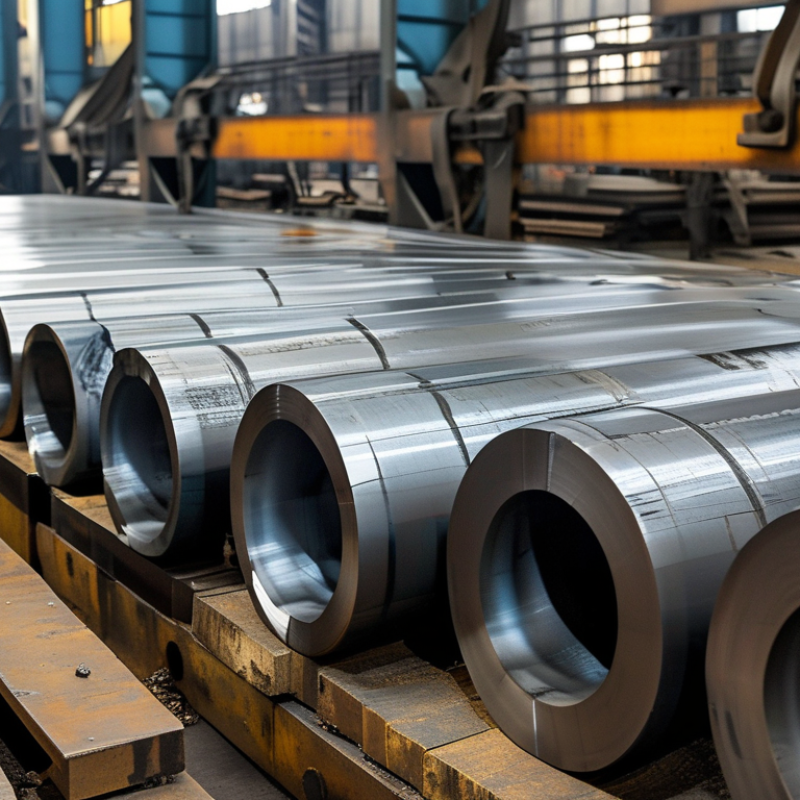
Alloy Steel Round Bars: 4140 Chemistry and ASTM A29 Industry Standards
When comparing China’s top ten alloy steel round bar manufacturers, buyers should examine chemistry before production capacity. Grade 4140 is a chromium-molybdenum steel used for shafts, bolts, gears, and other stressed components. Its typical chemistry includes 0.38–0.43% carbon, 0.75–1.00% manganese, 0.80–1.10% chromium, and 0.15–0.25% molybdenum. Silicon, phosphorus, and sulfur also require control. Exact limits may vary by ASTM edition or purchase specification.
ASTM A29 defines general requirements for hot-wrought carbon and alloy steel bars. It does not replace the agreed grade, size, heat treatment, or testing requirements. A reliable supplier should provide a heat analysis, product analysis when required, mechanical test results, and complete heat traceability. Mill test certificates should match the bar markings, not merely repeat a standard template. That detail is easy to overlook.
In practice, 4140 bars can arrive annealed, normalized, or quenched and tempered. These conditions produce different hardness and machining behavior. Inspectors should check diameter, straightness, surface defects, hardness, and ultrasonic quality when the application demands it. I have seen purchasing teams focus heavily on price and delivery, then discover unclear heat-treatment records. That is not a small issue. Chemistry alone cannot prove service performance. Samples should be verified independently when the order is critical, because paperwork can be accurate yet incomplete.
China’s Top 10 Manufacturers by Capacity, Diameter Range, and Steelmaking Route
China’s top 10 alloy steel round bar manufacturers should be assessed by capacity, diameter range, and steelmaking route, not advertising visibility. The World Steel Association reported China’s crude steel output at about 1,005 million tonnes in 2024, representing more than half of global production. However, national output does not equal round bar capacity. A reliable ranking must separate billet, bar, and finished precision capacity.
Capacity matters first. Large producers may offer annual bar capacity from several hundred thousand tonnes to over one million tonnes, depending on product mix. Diameter capability is equally important. Standard rolling lines commonly cover 20–200 millimetres, while forging facilities may exceed 1,000 millimetres. Smaller diameters demand tight dimensional control. Larger sections require stronger internal quality assurance.
Steelmaking routes reveal more. Integrated blast furnace–basic oxygen furnace systems support volume, while electric arc furnaces offer flexible alloy production. Secondary refining through LF, VD, or VOD improves chemistry and cleanliness. ESR remains valuable for demanding aerospace and tool-steel applications.
The China Iron and Steel Industry Association has repeatedly highlighted cleaner production, process efficiency, and quality stability as industry priorities. Therefore, a practical top-10 evaluation should review certified capacity, melting equipment, inspection records, and delivery performance. Public data is incomplete. That is a weakness. Some capacity figures combine ordinary carbon steel with alloy products, which can distort rankings. A careful buyer should verify heat numbers, ultrasonic testing, and actual diameter availability before accepting any published league table.
Quality Benchmarks: ISO 9001, EN 10204 3.1, and EN 10228-3 Ultrasonic Testing
When comparing China’s top 10 alloy steel round bar manufacturers, buyers should look beyond price and polished websites. Quality begins with a working ISO 9001 system. This standard controls procedures, records, corrective actions, and customer feedback. It does not automatically guarantee perfect bars. That distinction matters. During an audit, request process maps, calibration records, heat-treatment charts, and recent nonconformity reports. Real manufacturing evidence is stronger than broad promises. Ask how each heat is identified from melting through machining and packing. A missing traceability link can complicate failure analysis months later.
EN 10204 3.1 certification should provide material-specific results, approved by an inspection representative independent of production. The document should match the heat number, dimensions, grade, chemistry, mechanical results, and delivery condition. Check actual values, not only pass statements. For forged round bars, EN 10228-3 ultrasonic testing helps detect internal discontinuities in ferritic or martensitic steel forgings. The purchase specification should state testing class, probe method, reference sensitivity, acceptance limits, and report format. Ask for a marked bar or scan record when practical. UT results can vary with surface condition, geometry, and operator skill. Do not treat a clean report as unquestionable. Rechecking critical lots may cost more, but weak verification costs more. Calibration evidence should remain available.
| Benchmark Area | Quality Requirement | Relevant Standard or Reference | Objective Evidence to Request | Recommended Assessment |
|---|---|---|---|---|
| 1. Quality management system | A documented quality management system covering production, inspection, nonconformity control, corrective action, and traceability. | ISO 9001:2015 | Valid certificate showing the legal manufacturing site and a scope covering steel products or relevant metal processing. | Required |
| 2. Product inspection certificate | Material-specific inspection results linked to the supplied heat, batch, or product quantity. | EN 10204:2004, Type 3.1 | Signed inspection certificate issued under the manufacturer’s responsibility, including chemical composition and mechanical test results. | Required |
| 3. Ultrasonic testing capability | Ultrasonic examination of forged ferritic or martensitic steel products when required by the purchase specification. | EN 10228-3 | UT procedure, equipment calibration records, operator qualification, test report, scanning coverage, and acceptance level. | Conditional |
| 4. Chemical composition control | Heat analysis and, where specified, product analysis must meet the ordered alloy steel grade and applicable product standard. | Applicable grade standard and purchase specification | Heat number, ladle analysis, product analysis where required, and laboratory method or report reference. | Required |
| 5. Mechanical properties | Delivered bars should meet the specified tensile strength, yield strength, elongation, and impact requirements after the agreed heat treatment. | Applicable material standard; commonly EN 10083 or ASTM/SAE specification where ordered | Test temperature, specimen orientation, heat-treatment condition, tensile results, hardness, and impact results where applicable. | Required |
| 6. Heat-treatment traceability | Normalizing, annealing, quenching, tempering, or other agreed treatment must be traceable to the material heat and production batch. | Purchase specification and approved manufacturing procedure | Heat-treatment chart or record showing furnace identification, temperature range, holding time, cooling method, and batch reference. | Required |
| 7. Dimensional conformity | Diameter, roundness, straightness, length, and permitted tolerances must conform to the ordered dimensional standard. | EN 10060 or the dimensional standard stated in the purchase order | Inspection report with measured dimensions, sampling plan, measuring equipment identification, and tolerance limits. | Required |
| 8. Surface condition | Bars should be free from harmful cracks, laps, seams, excessive scale, and other discontinuities beyond the agreed acceptance criteria. | Product standard and purchase specification | Visual inspection report, surface-condition requirement, grinding or peeling records where applicable, and photographs if requested. | Required |
| 9. Positive material identification | Every bundle or unit should remain identifiable from the material marking through shipment and documentation. | Contractual traceability requirement | Bundle tag, heat number, grade, size, quantity, manufacturing condition, and matching 3.1 certificate. | Evidence Required |
| 10. Independent verification and records | Inspection records should be retained and made available for review; third-party inspection may be used for higher-risk applications. | EN 10204:2004 and agreed inspection plan | Inspection and Test Plan, calibration certificates, nonconformity records, packing list, and optional third-party inspection report. | Risk-Based |
Comparing Grades, Heat Treatment, Tensile Strength, and Yield Strength Data
Comparing ten leading alloy steel round-bar manufacturers requires more than price or surface finish. Grade selection comes first. Common options include 4140, 4340, 42CrMo4, and 1045 carbon steel. According to ASM Handbook, Volume 4D, chromium-molybdenum grades gain strength through quenching and tempering. Their final properties depend heavily on section size and cooling rate.
Indicative values show the difference clearly. Quenched-and-tempered 42CrMo4 often reaches 900–1,100 MPa tensile strength and 650–850 MPa yield strength. Normalized 1045 usually provides about 570–700 MPa tensile strength and 300–450 MPa yield strength. These figures are not universal. Mill certificates must state diameter, heat number, test position, and treatment condition.
Heat treatment records deserve close inspection. A reliable producer should document austenitizing temperature, oil or polymer quenching, tempering temperature, and hardness results. ASTM A370 and EN ISO 6892-1 define widely used mechanical testing practices. ASM data also warns that larger bars may show lower core strength than surface samples. That detail is often missed. Comparing tensile strength alone can mislead buyers, especially when yield strength controls permanent deformation. A stronger grade may still fail a design review if toughness, machinability, or dimensional stability receives less attention. I would also question unusually high values without complete test conditions.
Ranking Suppliers by MOQ, Lead Time, Export Volume, and Traceability Performance
China Top 10 Alloy Steel Round Bar Manufacturers?
A useful top-ten ranking should not rely on factory size alone. It should score MOQ, lead time, export volume, and traceability. UN Comtrade records under HS 7228 help verify alloy-steel export activity, while World Steel Association data provides market context. In 2023, global crude steel production reached about 1.89 billion tonnes, showing the scale behind this supply chain.
MOQ often separates stockists from production mills. A practical ranking should favor suppliers offering small trial lots, commonly 1–5 tonnes, without hiding cutting or packing fees. Lead time needs two measurements: production time and port-ready time. For standard round bars, 20–35 days may be realistic; custom heat treatment can extend this period. Verify both dates in writing.
Export volume is stronger when supported by customs records, repeat shipment history, and destination diversity. However, volume alone can mislead. A large exporter may still provide weak documentation. Traceability deserves the highest operational attention. Look for heat numbers on bundles, matching mill certificates, chemical analysis, mechanical-test results, and EN 10204 3.1 documentation. ISO 9001 certification supports process control, but it does not automatically prove heat-level traceability. One weakness remains: public trade data may combine different alloy products under broad codes. Buyers should therefore audit recent certificates, inspect bundle markings, and compare promised lead times against actual delivery records.
China Alloy Steel Round Bar Supplier Benchmark
Comparison of common export-supplier profiles using practical procurement indicators: minimum order quantity, lead time, documentation completeness, and traceability readiness.
The figures represent indicative market benchmarks rather than company-specific disclosures. Lower MOQ and shorter lead time improve purchasing flexibility, while higher documentation and traceability scores indicate stronger heat-number control, mill test certificate availability, chemical and mechanical test records, and export-document readiness.
Get a quote
Get a quote
Read More
Accept AllReject AllCustomise
Privacy Overview
| Cookie | Duration | Description |
|---|---|---|
| cookielawinfo-checkbox-advertisement | 1 year | Set by the GDPR Cookie Consent plugin, this cookie records the user consent for the cookies in the "Advertisement" category. |
| cookielawinfo-checkbox-analytics | 11 months | This cookie is set by GDPR Cookie Consent plugin. The cookie is used to store the user consent for the cookies in the category "Analytics". |
| cookielawinfo-checkbox-functional | 11 months | The cookie is set by GDPR cookie consent to record the user consent for the cookies in the category "Functional". |
| cookielawinfo-checkbox-necessary | 11 months | This cookie is set by GDPR Cookie Consent plugin. The cookies is used to store the user consent for the cookies in the category "Necessary". |
| cookielawinfo-checkbox-others | 11 months | This cookie is set by GDPR Cookie Consent plugin. The cookie is used to store the user consent for the cookies in the category "Other. |
| cookielawinfo-checkbox-performance | 11 months | This cookie is set by GDPR Cookie Consent plugin. The cookie is used to store the user consent for the cookies in the category "Performance". |
| CookieLawInfoConsent | 1 year | CookieYes sets this cookie to record the default button state of the corresponding category and the status of CCPA. It works only in coordination with the primary cookie. |
| viewed_cookie_policy | 11 months | The cookie is set by the GDPR Cookie Consent plugin and is used to store whether or not user has consented to the use of cookies. It does not store any personal data. |
| Cookie | Duration | Description |
|---|---|---|
| _cs_c | 1 year 1 month | The cookie is used by Content Square to save the user consent to be tracked. |
| Cookie | Duration | Description |
|---|---|---|
| _cs_id | 1 year 17 days 20 hours 13 minutes | This cookie is used to store the ContentSquare's user identifier ID. This is a persistent cookie and expires after 13 months. |
| _cs_s | 1 hour | This cookie is used to store the number of page's viewed by a visitor within the session for ContentSquare's solution. |
| _ga | 1 year 1 month 4 days | Google Analytics sets this cookie to calculate visitor, session and campaign data and track site usage for the site's analytics report. The cookie stores information anonymously and assigns a randomly generated number to recognise unique visitors. |
| _ga_* | 1 year 1 month 4 days | Google Analytics sets this cookie to store and count page views. |
| _gcl_au | 3 months | Google Tag Manager sets the cookie to experiment advertisement efficiency of websites using their services. |
| Cookie | Duration | Description |
|---|---|---|
| test_cookie | 15 minutes | doubleclick.net sets this cookie to determine if the user's browser supports cookies. |
| Cookie | Duration | Description |
|---|---|---|
| _cs_root-domain | session | Description is currently not available. |
| _cs_same_site | session | Description is currently not available. |