China Top 10 PET Flexible Circuit Manufacturers?
China’s electronics supply chain offers a wide range of flexible circuit capabilities, from quick-turn prototypes to high-volume production. This guide to China’s top 10 Pet Flexible Circuit manufacturers is intended to help buyers compare potential suppliers, not declare one universal winner. The right choice depends on the product, order size, and required performance. A wearable control, for example, may need a thin PET substrate, closely spaced copper traces, and a connector that survives repeated bending. Details matter.
Pet Flexible Circuit sourcing calls for more than checking a company profile. Buyers should ask about design support, material options, line width and spacing, inspection methods, lead times, and experience with similar applications. Request drawings, sample parts, and current quality documentation where appropriate. Then confirm that stated capabilities match the specific design. Small differences can matter. A circuit that works on a bench may behave differently inside a warm, tightly packed enclosure. A neat spreadsheet cannot show everything.
The manufacturers featured in this article are presented as candidates for further evaluation, rather than as guaranteed fits for every project. Company capabilities, certifications, and production capacity can change, so verify details directly before making a decision. That extra step can feel slow. It is still worthwhile. The comparison ahead focuses on practical factors that help engineers and purchasing teams ask clearer questions and narrow their options with confidence.
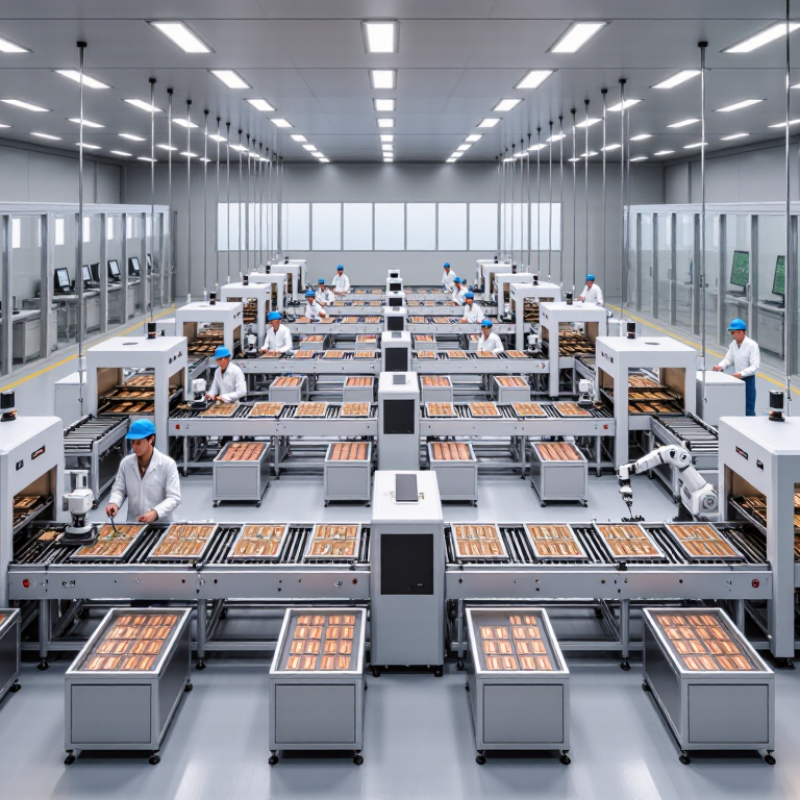
What Is a PET Flexible Circuit? Common 25–125 μm Substrate Films
A PET flexible circuit uses a thin polyethylene terephthalate film as its insulating base. Common substrate thicknesses range from 25 to 125 μm. At 25 μm, the film bends easily around a tight curve, but handling and registration become more demanding. A 125 μm sheet feels stiffer and can support more stable processing, though it may not suit compact folds. There is no universal best thickness. PlasticsEurope’s PET film eco-profile reports a density of about 1.38 g/cm³, useful when estimating material mass. Density alone, however, does not predict circuit performance.
Film choice should reflect the build, not just the drawing. Check dimensional stability after heating, copper adhesion, surface treatment, and the smallest bend radius. ASTM D882 provides a tensile-testing method for thin plastic sheeting; it can help compare film lots, but it does not establish circuit suitability. In practice, a sample coupon exposed to the actual lamination and bending sequence often reveals problems earlier. Watch for edge curl and fine wrinkles. Small details matter. One assumption deserves a second look: a thicker substrate is not automatically more reliable. Resin, copper pattern, and process conditions can change the result.
How to Evaluate China’s Top 10 PET FPC Manufacturers: Five Key Criteria
Choosing among China’s PET flexible circuit manufacturers takes more than comparing quotations. Start with material and process capability. Ask which PET films, copper foils, and bonding methods they can support. Request a sample drawing that specifies thickness, trace width, and minimum bend radius. Details matter.
Engineering support is the second test. Can the team review a layout, flag tight corners, and explain how repeated bending may affect copper traces?
Third, check quality controls. Ask for inspection records, electrical test coverage, and sample results from a production lot—not only a polished presentation. A useful answer includes measurable limits and explains what happens when a sample fails.
Fourth, assess production readiness. Confirm typical order quantities, stated lead times, and how capacity changes during busy periods. If possible, compare a pilot run with the approved sample.
Fifth, judge communication and commercial transparency. Clear replies about tooling, revisions, and delivery risks often matter as much as a low unit price. Not always.
A scorecard helps, but it cannot capture every shop-floor detail. Visit the facility when practical, or request dated process photos and traceable test documents. If evidence is incomplete, record the gap rather than assuming the supplier is reliable.
China’s Top 10 PET Flexible Circuit Manufacturers: Profiles and Capabilities
China’s top ten PET flexible circuit manufacturers should be compared by process capability, not by a headline ranking. Useful profiles describe substrate handling, circuit patterning, lamination, and electrical testing. PET suits thin, lightweight circuits in displays, sensors, and membrane interfaces. It is often economical, but tolerates less heat than polyimide. Details matter. Ask whether a supplier uses printed conductive inks, etched copper, or both; these processes support different designs and performance needs.
Grand View Research estimated the global flexible printed circuit board market at about US$20.6 billion in 2023, with projected annual growth of 10.3% from 2024 to 2030. This broad market figure is not PET-specific, but it signals expanding demand for flexible electronics. Strong manufacturer profiles should therefore show sample trace widths, material specifications, bend-test results, and inspection methods. A clean sample helps, but repeatability across production batches matters more. Some supplier claims may sound convincing; request measured data.
Tips: Share drawings, operating temperature, bend radius, and expected volume before comparing quotations. Ask for a small pilot run and test resistance, adhesion, and repeated flexing. One overlooked detail can change the result: connector design.
China’s Top 10 PET Flexible Circuit Manufacturers: Profiles and Capabilities
The entries below are anonymized capability profiles, not verified company rankings or supplier-specific claims. They summarize common PET flexible-circuit manufacturing capabilities; actual specifications vary by manufacturer and project.
| Profile | Typical focus | PET and conductor options | Common fabrication capabilities | Typical applications | Buyer checks |
|---|---|---|---|---|---|
| Profile 01 | High-volume printed circuits | PET film with printed conductive inks; silver-based inks are commonly used in printed electronics. | Screen printing, curing, coverlay or insulating-layer printing, and sheet or roll processing. | Membrane switches, simple sensor circuits, and consumer-product interfaces. | Ask for line-width and spacing limits, resistance data, and production-yield records for the design. |
| Profile 02 | Fine-feature printed circuits | PET substrates with screen-printed or other patterned conductive inks. | Artwork-controlled printing, registration control, curing, and visual inspection. | Compact controls, wearable interfaces, and low-profile sensor assemblies. | Confirm the minimum feature size on the selected PET thickness and ink system. |
| Profile 03 | Adhesive-backed circuit assemblies | PET circuit layers combined with pressure-sensitive or heat-activated adhesive constructions. | Die cutting, lamination, release-liner handling, and connector or tail preparation. | Labels, control panels, and circuits mounted to product housings. | Check adhesive compatibility, peel performance, temperature exposure, and mounting surface. |
| Profile 04 | Membrane-switch circuit specialists | Printed PET circuits integrated with spacer, graphic, and adhesive layers. | Multilayer registration, embossing or forming where specified, and switch-stack assembly. | Appliance controls, industrial keypads, and instrument panels. | Request switch-life test conditions, actuation-force data, and environmental test results. |
| Profile 05 | Sensor and resistive-circuit integration | PET with conductive and, where needed, resistive functional inks. | Pattern printing, controlled curing, electrical measurement, and sensor-layer lamination. | Pressure, touch, and other printed sensor assemblies. | Validate calibration method, repeatability, drift, and operating-environment limits. |
| Profile 06 | Flexible printed-heater circuits | PET-based constructions using conductive or resistive printed patterns, subject to thermal-design limits. | Pattern printing, insulation layers, terminal preparation, and resistance inspection. | Low-temperature heating elements and surface-heating assemblies. | Confirm maximum temperature, power density, thermal uniformity, and safety requirements. |
| Profile 07 | Hybrid printed and etched circuits | PET film with printed conductors, or a hybrid construction using patterned metal foil where suitable. | Printing or metal-pattern processing, lamination, coverlay application, and profile cutting. | Circuits requiring a mix of printed features and more robust conductor sections. | Clarify conductor construction, bend requirements, adhesion, and interlayer reliability. |
| Profile 08 | Roll-to-roll production | Flexible PET web processed in continuous or semi-continuous production where the design permits. | Web handling, repeat-pattern printing, curing, in-line inspection, and slitting. | Repeat-volume circuits, sensor webs, and other suitable printed-electronics products. | Check web width, registration control, splice policy, traceability, and minimum order quantities. |
| Profile 09 | Custom prototypes and low-volume builds | PET film and conductor or ink options selected to match prototype requirements. | Sample printing, manual or semi-automatic assembly, design revisions, and inspection. | Engineering samples, design validation, and pilot production. | Ask about tooling charges, prototype lead time, design-for-manufacture review, and scale-up controls. |
| Profile 10 | Integrated circuit and finished-part assembly | PET circuit layers integrated with connectors, adhesives, graphics, or other specified components. | Lamination, die cutting, connector attachment, final inspection, and packaging. | Ready-to-install control panels, sensor modules, and flexible subassemblies. | Verify assembly scope, inspection criteria, change control, and applicable quality certifications. |
Manufacturing Benchmarks: Common 18 μm and 35 μm Copper Foils
For PET flexible circuits, 18 μm and 35 μm copper foils are common manufacturing benchmarks, not automatic quality grades. The thinner foil can support finer traces and a lighter, more flexible layout. It is often considered for signal paths and compact designs. The thicker foil generally offers lower electrical resistance and more copper for current-carrying paths. That matters.
Copper thickness affects more than conductivity. With 35 μm foil, etching may require closer control to preserve narrow lines and spacing. Thicker copper can also make a circuit feel stiffer, especially where it bends repeatedly. An 18 μm design may bend more easily, but its traces still need adequate width and careful handling. Neither option guarantees long service life.
A reliable comparison should include finished trace width, copper adhesion, resistance, and bend-cycle results. Check the actual laminate stack-up too; PET grade and adhesive thickness influence flexibility and process limits. Ask for measured values, not just nominal foil thickness. One detail is easy to miss: the copper specified at the start may not equal the remaining copper after etching. Trial panels can reveal that gap before a design moves into volume production.
How to Match PET Circuit Capabilities to Product Applications
Matching PET circuit capability to an application starts with the product’s real operating conditions. A thin control panel may need fine traces and accurate registration. A wearable sensor may need repeated bending, stable adhesion, and low-profile connectors. PET is practical for many lightweight designs, but heat exposure and tight folds can limit its use. That matters.
Grand View Research estimated the global flexible electronics market at USD 29.3 billion in 2022, with a projected 9.2% compound annual growth rate from 2023 to 2030. This broad market estimate is not specific to PET circuits, but it signals growing demand for flexible product designs. For a high-volume keypad, ask about line-width control, conductive ink or copper processes, and inspection yield. For a sensor patch, ask how bending cycles and adhesive aging are tested. Test early.
When comparing Chinese manufacturers, match their process range to your drawing, not just their quoted minimum thickness. Request sample data for trace spacing, resistance, bend radius, and dimensional tolerance. Also confirm whether those values come from routine production or a one-off prototype. I would not assume a successful flat sample proves long-term flex life. A small pilot run can expose weak bonding or cracked traces before tooling costs grow.
Article Source:
Get a quote
Get a quote
Read More
Accept AllReject AllCustomise
Privacy Overview
| Cookie | Duration | Description |
|---|---|---|
| cookielawinfo-checkbox-advertisement | 1 year | Set by the GDPR Cookie Consent plugin, this cookie records the user consent for the cookies in the "Advertisement" category. |
| cookielawinfo-checkbox-analytics | 11 months | This cookie is set by GDPR Cookie Consent plugin. The cookie is used to store the user consent for the cookies in the category "Analytics". |
| cookielawinfo-checkbox-functional | 11 months | The cookie is set by GDPR cookie consent to record the user consent for the cookies in the category "Functional". |
| cookielawinfo-checkbox-necessary | 11 months | This cookie is set by GDPR Cookie Consent plugin. The cookies is used to store the user consent for the cookies in the category "Necessary". |
| cookielawinfo-checkbox-others | 11 months | This cookie is set by GDPR Cookie Consent plugin. The cookie is used to store the user consent for the cookies in the category "Other. |
| cookielawinfo-checkbox-performance | 11 months | This cookie is set by GDPR Cookie Consent plugin. The cookie is used to store the user consent for the cookies in the category "Performance". |
| CookieLawInfoConsent | 1 year | CookieYes sets this cookie to record the default button state of the corresponding category and the status of CCPA. It works only in coordination with the primary cookie. |
| viewed_cookie_policy | 11 months | The cookie is set by the GDPR Cookie Consent plugin and is used to store whether or not user has consented to the use of cookies. It does not store any personal data. |
| Cookie | Duration | Description |
|---|---|---|
| _cs_c | 1 year 1 month | The cookie is used by Content Square to save the user consent to be tracked. |
| Cookie | Duration | Description |
|---|---|---|
| _cs_id | 1 year 17 days 20 hours 13 minutes | This cookie is used to store the ContentSquare's user identifier ID. This is a persistent cookie and expires after 13 months. |
| _cs_s | 1 hour | This cookie is used to store the number of page's viewed by a visitor within the session for ContentSquare's solution. |
| _ga | 1 year 1 month 4 days | Google Analytics sets this cookie to calculate visitor, session and campaign data and track site usage for the site's analytics report. The cookie stores information anonymously and assigns a randomly generated number to recognise unique visitors. |
| _ga_* | 1 year 1 month 4 days | Google Analytics sets this cookie to store and count page views. |
| _gcl_au | 3 months | Google Tag Manager sets the cookie to experiment advertisement efficiency of websites using their services. |
| Cookie | Duration | Description |
|---|---|---|
| test_cookie | 15 minutes | doubleclick.net sets this cookie to determine if the user's browser supports cookies. |
| Cookie | Duration | Description |
|---|---|---|
| _cs_root-domain | session | Description is currently not available. |
| _cs_same_site | session | Description is currently not available. |