10 Tips for Choosing the Best RS422 to Ethernet Converter
Choosing the best Rs422 To Ethernet converter requires more than checking connector types and advertised speed. The right device must connect older RS-422 equipment with modern Ethernet networks reliably. A factory controller may send data through a 30-meter shielded cable, while the converter operates inside a hot, electrically noisy cabinet. These details matter.
Jan Axelson, a respected serial-communications author, describes RS-422 as “a standard for balanced voltage digital interface circuits.” That balanced signaling helps resist interference, but the converter still needs careful evaluation. This guide examines ten practical selection points, including baud-rate support, terminal wiring, isolation, surge protection, network protocols, configuration tools, and operating temperature. It also considers whether the unit supports TCP server, TCP client, UDP, or virtual COM modes. A technically impressive converter can still fail if its software feels confusing or its pinout is poorly documented.
Look beyond the product label. Check the actual distance, cable type, grounding conditions, and expected traffic pattern. A warehouse installation may need DIN-rail mounting and dual power inputs. A laboratory setup may value simple browser configuration instead. Redundancy is useful, but it can increase cost and setup time. No converter is perfect.
Some choices remain uncertain. Manufacturer claims may use ideal test conditions, not your cabinet. Therefore, compare manuals, inspect certifications, request compatibility evidence, and test a sample with your existing equipment. The strongest Rs422 To Ethernet decision combines published specifications with hands-on verification, clear support, and realistic expectations.
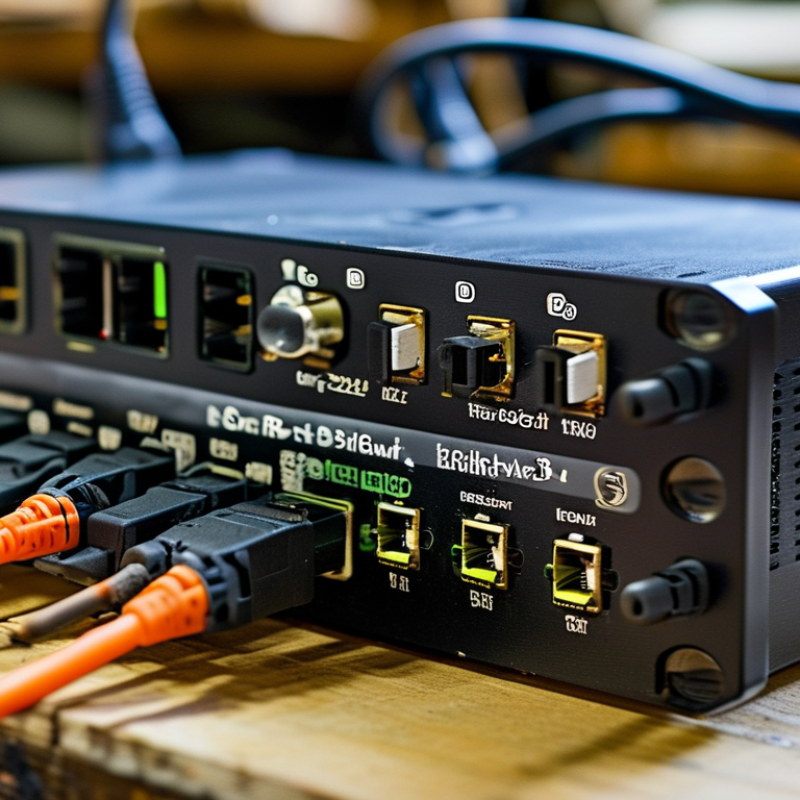
Define Your RS422 Communication and Ethernet Conversion Requirements
10 Tips for Choosing the Best RS422 to Ethernet Converter
Define the RS422 communication requirement before comparing converter features. Record baud rate, data bits, parity, stop bits, cable length, and device count. RS422 uses balanced differential signaling, but wiring mistakes still cause unstable data. Confirm whether the system needs point-to-point or multidrop communication. Check termination at the correct cable ends. Field commissioning often reveals missing grounding details and unclear signal labels. That is not a minor issue.
Tip: Measure the real traffic. A slow sensor and a high-speed controller need different packet handling. Choose a converter supporting the required baud rate, serial framing, and transparent transmission mode. For Ethernet, define TCP or UDP, client or server behavior, port numbers, and reconnect rules. IoT Analytics reported 16.6 billion connected IoT devices in 2023, with 18.8 billion expected in 2024. More connected equipment increases integration pressure, but higher device counts do not automatically require higher bandwidth.
Tip: Specify the installation environment. Review isolation, surge protection, operating temperature, humidity, enclosure type, and available power. Industrial sites may need DIN-rail mounting and redundant communication paths. Confirm latency and packetization settings with actual application data, not only datasheet claims. A converter can pass a simple test and still fail during alarms or burst traffic. Test long cables, startup recovery, and network interruptions before deployment. Leave room for uncertainty. Requirements often change after the first machine is connected.
Check Compatibility with Devices, Protocols, and Network Standards
10 Tips for Choosing the Best Rs422 To Ethernet Converter
Compatibility begins with the serial interface, not the product label. RS422 uses balanced differential signaling, so verify connector wiring, polarity, baud rate, data bits, parity, and stop bits. Check whether the converter supports your device’s actual voltage levels and termination needs. A small wiring error can create intermittent frames that look like software faults.
Protocol support matters just as much. RS422 only defines electrical signaling; it does not automatically translate Modbus RTU, proprietary commands, or ASCII messages into Ethernet traffic. Confirm whether the converter offers transparent tunneling, protocol conversion, or both. The 2024 Industrial Network Market Share report placed Industrial Ethernet at 71% of surveyed connections, showing why 10/100/1000 Mbps support and stable auto-negotiation deserve attention. The number is persuasive, but survey scope still matters.
Review network standards before installation. IEEE 802.3 compatibility, IPv4 or IPv6 support, VLAN handling, and duplex settings should match the existing switch. NIST SP 800-82 Rev. 3 emphasizes availability, timing, and controlled changes in operational technology networks. Choose documented management features, not vague “industrial grade” claims. In field testing, I would check packet loss during cable faults and power cycling. One overlooked detail remains common: a converter may pass data perfectly on a bench, yet fail when the device expects strict timing. Test the real device, protocol, and network together.
Evaluate Performance, Isolation, Protection, and Environmental Ratings
A reliable RS422-to-Ethernet converter should be judged beyond its advertised baud rate. Check throughput under continuous traffic, not only laboratory bursts. RS422 can support long cable runs, but grounding, termination, and cable capacitance still affect signal quality. In field commissioning, technicians often discover that a fast converter performs poorly beside variable-frequency drives. A packet-loss log is more useful than a glossy specification.
Isolation deserves careful measurement. Look for a stated isolation voltage, test method, and isolation capacitance. IEC 62368-1 and IEC 61010-1 provide useful safety frameworks, although the correct standard depends on the application. For surge protection, IEC 61000-4-5 uses a 1.2/50 microsecond voltage waveform and an 8/20 microsecond current waveform. ESD testing under IEC 61000-4-2 commonly includes 8 kV contact and 15 kV air discharge levels. These figures do not guarantee immunity in every cabinet. Installation still matters.
Environmental ratings reveal practical durability. An IP65 enclosure resists dust and water jets, according to IEC 60529, but it is not submersible. NEMA enclosure classifications add useful context for industrial locations. Check operating temperature, humidity, vibration, and condensation limits. A converter rated from -40°C to 75°C may still fail when mounted above a hot power supply. That detail is easy to miss. Also verify DIN-rail strength, removable terminals, watchdog behavior, and documented recovery after link loss. Industry automation surveys consistently rank unplanned downtime among major operational costs, so diagnostic visibility deserves equal attention.
10 Tips for Choosing the Best RS422 to Ethernet Converter
A brand-neutral engineering screening model for evaluating performance, electrical isolation, protection, environmental durability, and management features. The weighting reflects practical selection priorities rather than any company or product ranking.
Performance includes RS-422 data rate, Ethernet speed, latency, and buffering. Isolation and protection cover galvanic isolation, ESD, surge, and transient resistance. Environmental suitability includes operating temperature, humidity tolerance, and enclosure requirements. Always verify the converter’s datasheet against the installation environment and cable length.
Compare Configuration Options, Management Features, and Installation Needs
10 Tips for Choosing the Best RS422 to Ethernet Converter
Compare Configuration Options, Management Features, and Installation Needs
Start with the serial details, not the product shape. Confirm baud rate, data bits, parity, stop bits, and duplex mode. RS422 wiring also needs correct differential pairs and termination. A practical test uses the actual cable length, connector type, and controller. Bench results can mislead.
Look for flexible configuration options. Web setup is convenient, while command-line access helps during remote maintenance. Some installations need static IP addresses, VLAN support, or automatic recovery after a network outage. Check whether settings can be backed up and restored.
I once overlooked a parity option, and the converter appeared unreliable for hours.
Management features affect long-term service. Status pages should show link speed, serial activity, errors, and connection state. Syslog or SNMP support can help technicians detect failures before production stops. Secure user accounts and encrypted management access are important. Avoid devices with vague firmware policies. Ask how updates are verified and documented.
Installation needs deserve equal attention. Measure the cabinet space, power supply range, heat, and mounting points. DIN-rail mounting may save time, but wall mounting can simplify access. Choose galvanic isolation where ground differences are possible. Leave room for cable bends. Small details matter. Review the manual with an electrician or controls technician before installation.
My own plans have missed clearance around terminal blocks, so I now measure twice.
Assess Reliability, Technical Support, Warranty, and Total Ownership Cost
Choosing an RS422 to Ethernet converter requires more than checking speed and connector types. Reliability should be tested in realistic conditions. Look for stable communication during long transmissions, electrical isolation, surge protection, and a documented operating temperature range. A clear datasheet matters. So does evidence from testing.
Technical support can prevent expensive downtime. Ask whether engineers respond quickly and understand serial timing, termination, grounding, and network configuration. Request practical guidance before purchasing. Can they explain diagnostic logs or firmware updates? If every answer is vague, reconsider the supplier. I have seen installation delays caused by one overlooked setting. It was not dramatic, but it was costly.
Warranty terms reveal confidence, but read the details carefully. Check warranty length, replacement procedures, shipping responsibility, and exclusions for industrial environments. A longer warranty is not automatically better. The total ownership cost includes configuration time, spare units, software licenses, maintenance, and future replacement risks. Calculate labor, too. A cheap converter may require repeated troubleshooting or an external isolator. That changes the decision. Leave room for uncertainty, because early estimates are often too optimistic. Test one unit in the actual network before ordering many.
Article Source:
Get a quote
Get a quote
Read More
Accept AllReject AllCustomise
Privacy Overview
| Cookie | Duration | Description |
|---|---|---|
| cookielawinfo-checkbox-advertisement | 1 year | Set by the GDPR Cookie Consent plugin, this cookie records the user consent for the cookies in the "Advertisement" category. |
| cookielawinfo-checkbox-analytics | 11 months | This cookie is set by GDPR Cookie Consent plugin. The cookie is used to store the user consent for the cookies in the category "Analytics". |
| cookielawinfo-checkbox-functional | 11 months | The cookie is set by GDPR cookie consent to record the user consent for the cookies in the category "Functional". |
| cookielawinfo-checkbox-necessary | 11 months | This cookie is set by GDPR Cookie Consent plugin. The cookies is used to store the user consent for the cookies in the category "Necessary". |
| cookielawinfo-checkbox-others | 11 months | This cookie is set by GDPR Cookie Consent plugin. The cookie is used to store the user consent for the cookies in the category "Other. |
| cookielawinfo-checkbox-performance | 11 months | This cookie is set by GDPR Cookie Consent plugin. The cookie is used to store the user consent for the cookies in the category "Performance". |
| CookieLawInfoConsent | 1 year | CookieYes sets this cookie to record the default button state of the corresponding category and the status of CCPA. It works only in coordination with the primary cookie. |
| viewed_cookie_policy | 11 months | The cookie is set by the GDPR Cookie Consent plugin and is used to store whether or not user has consented to the use of cookies. It does not store any personal data. |
| Cookie | Duration | Description |
|---|---|---|
| _cs_c | 1 year 1 month | The cookie is used by Content Square to save the user consent to be tracked. |
| Cookie | Duration | Description |
|---|---|---|
| _cs_id | 1 year 17 days 20 hours 13 minutes | This cookie is used to store the ContentSquare's user identifier ID. This is a persistent cookie and expires after 13 months. |
| _cs_s | 1 hour | This cookie is used to store the number of page's viewed by a visitor within the session for ContentSquare's solution. |
| _ga | 1 year 1 month 4 days | Google Analytics sets this cookie to calculate visitor, session and campaign data and track site usage for the site's analytics report. The cookie stores information anonymously and assigns a randomly generated number to recognise unique visitors. |
| _ga_* | 1 year 1 month 4 days | Google Analytics sets this cookie to store and count page views. |
| _gcl_au | 3 months | Google Tag Manager sets the cookie to experiment advertisement efficiency of websites using their services. |
| Cookie | Duration | Description |
|---|---|---|
| test_cookie | 15 minutes | doubleclick.net sets this cookie to determine if the user's browser supports cookies. |
| Cookie | Duration | Description |
|---|---|---|
| _cs_root-domain | session | Description is currently not available. |
| _cs_same_site | session | Description is currently not available. |