Top 5 Tips for Choosing the Best EV Charger for Your Needs?
Choosing the right EV Charger is essential for every electric vehicle owner. It impacts your daily driving experience and charging efficiency. With various options on the market, making an informed decision can feel overwhelming.
When selecting an EV Charger, consider your vehicle's specific needs and your charging habits. Do you need a fast charger for quick top-ups, or is a standard charger sufficient for overnight use? Understanding the differences between Level 1 and Level 2 chargers can clarify your choices. Many people underestimate the importance of compatibility. Ensure your charger aligns with your vehicle model for optimal performance.
User reviews and expert recommendations can guide you, but personal needs are unique. Reflect on your lifestyle. Do you often travel long distances, or are you mostly commuting? Identifying the charger that best fits these needs can transform your EV experience. A well-chosen charger not only enhances convenience but also supports a more sustainable lifestyle. Take your time to evaluate all factors involved.
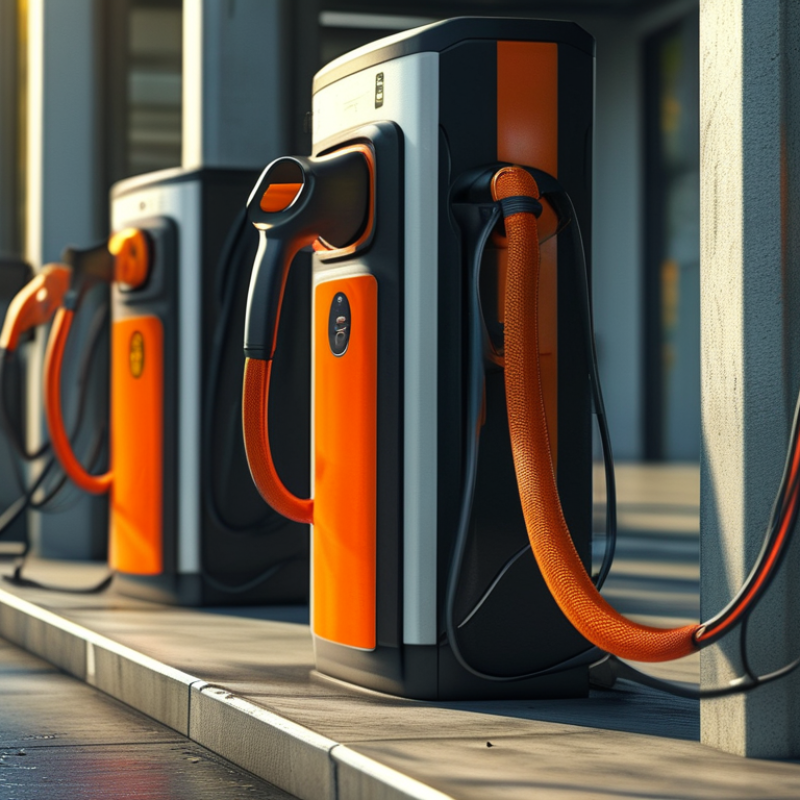
Understanding Different Types of EV Chargers: Level 1, 2, and DC Fast Charging
When selecting an EV charger, understanding the types available is crucial. Level 1 chargers use a standard 120V outlet. These chargers are the most accessible but offer slow charging speeds. Typically, they provide about 4-5 miles of range per hour. For daily commutes, this may suffice, but owners of larger EVs may find it limiting.
Level 2 chargers require a 240V outlet. They significantly reduce charging time, adding around 25 miles of range per hour. According to the U.S. Department of Energy, these chargers are becoming increasingly popular for home installation. The upfront cost might be higher, but the efficiency gained can offset initial expenses over time.
DC fast chargers provide the quickest charging. They can restore 80% of an EV battery's capacity in about 30 minutes. However, they are often found at public charging stations and not as suitable for home use. Reports show that their increasing availability is vital for long-distance travel. Choosing the right charger involves considering your daily driving needs and infrastructure access. The decision can impact both convenience and costs in the long run.
Assessing Charging Speed: How kW Ratings Impact Your EV Charging Time
When considering an EV charger, charging speed is crucial. The kW rating significantly influences how quickly your vehicle can charge. According to the U.S. Department of Energy, Level 2 chargers typically deliver between 3.3 kW to 22 kW. A higher kW rating means faster charging times. For example, a 7 kW charger can fully charge a standard electric vehicle in approximately 5 hours.
For many drivers, kW ratings can be confusing. Users often miscalculate their needs, leading to frustration. Selecting a charger that matches your vehicle's capabilities is essential. If your car's onboard charger supports 11 kW, opting for a 22 kW charger won’t yield faster results. Instead, the charge time remains limited by the vehicle’s acceptance rate.
Many factors also affect charging time. External temperatures, battery state of charge, and even the charger’s efficiency play roles. It's important to consider your charging habits too. If you only have access to a charger at night, a slower charging option might suffice. Evaluating all these details ensures a more satisfying EV ownership experience.
Evaluating Installation Requirements: Home vs. Public Charging Options
When evaluating installation requirements for EV chargers, it's essential to consider both home and public charging options. According to a recent industry report, over 80% of EV owners prefer to charge at home due to convenience. Home chargers typically require a dedicated electrical circuit, which may necessitate an upgrade to your current system. This process can be costly and time-consuming. Home charging stations can add value to your property, but it's crucial to assess your electrical capacity.
Public charging stations serve as a vital supplement. Studies show that approximately 25% of charging happens in public areas. Accessibility and charging speed are two major factors. Not all public chargers are created equal; some offer fast charging while others are slower, affecting your charging experience. Knowing the location and type of public charger is necessary, especially for long trips. Additionally, mapping tools, such as those provided by various organizations, can guide drivers to the nearest stations.
However, the reliability of public charging varies greatly. Issues like station downtime or inoperability can lead to frustrating experiences. Drivers should consider their charging habits and explore backup options. Evaluating both home and public installations allows for a tailored approach that meets individual needs while accommodating potential limitations.
Analyzing Connector Types: Compatibility with Your Electric Vehicle Model
When selecting an electric vehicle (EV) charger, compatibility is crucial. Different EV models use various connector types, which affects charging efficiency and speed. Familiarize yourself with the most common connector types: Type 1, Type 2, and CCS. Check which type your vehicle requires before making a decision.
Another important tip is to assess the power output of the charger. Not all chargers provide the same charging speed, which can lead to frustration. If you have a daily commute, a faster charger may be essential. For occasional use, slower options might suffice. Understand your routine and decide accordingly.
Lastly, consider future needs. While your current vehicle may fit a specific connector, you might need a more versatile charger down the line. EVs are evolving and connector types may change. Opting for a charger with multiple compatibility options can simplify future upgrades. Remember that staying informed can make a significant difference in your charging experience.
Considering Smart Features: The Benefits of Wi-Fi and Mobile App Integration
When choosing an EV charger, consider smart features like Wi-Fi and mobile app integration. These technologies enhance your charging experience in various ways. For instance, Wi-Fi connectivity allows chargers to receive updates and provide real-time information. You can remotely monitor your charging status through a mobile app, making it easier to manage your vehicle's charging schedule.
The convenience of mobile apps shouldn't be underestimated. They often offer features like energy tracking and usage analytics. This data can help you understand your charging habits and make informed decisions. However, not all apps are intuitive or user-friendly, which can be frustrating. Some users struggle with connectivity issues or find themselves dealing with bugs in the software.
Integrating smart technology into your charging routine can lead to improved efficiency. Imagine being able to schedule charging during off-peak hours to save money. But be aware that many chargers come with complexities and learning curves. As you explore options, it's essential to weigh the benefits against the potential challenges. This balance will guide you in selecting the right EV charger for your needs.
Article Source:
Get a quote
Get a quote
Read More
Accept AllReject AllCustomise
Privacy Overview
| Cookie | Duration | Description |
|---|---|---|
| cookielawinfo-checkbox-advertisement | 1 year | Set by the GDPR Cookie Consent plugin, this cookie records the user consent for the cookies in the "Advertisement" category. |
| cookielawinfo-checkbox-analytics | 11 months | This cookie is set by GDPR Cookie Consent plugin. The cookie is used to store the user consent for the cookies in the category "Analytics". |
| cookielawinfo-checkbox-functional | 11 months | The cookie is set by GDPR cookie consent to record the user consent for the cookies in the category "Functional". |
| cookielawinfo-checkbox-necessary | 11 months | This cookie is set by GDPR Cookie Consent plugin. The cookies is used to store the user consent for the cookies in the category "Necessary". |
| cookielawinfo-checkbox-others | 11 months | This cookie is set by GDPR Cookie Consent plugin. The cookie is used to store the user consent for the cookies in the category "Other. |
| cookielawinfo-checkbox-performance | 11 months | This cookie is set by GDPR Cookie Consent plugin. The cookie is used to store the user consent for the cookies in the category "Performance". |
| CookieLawInfoConsent | 1 year | CookieYes sets this cookie to record the default button state of the corresponding category and the status of CCPA. It works only in coordination with the primary cookie. |
| viewed_cookie_policy | 11 months | The cookie is set by the GDPR Cookie Consent plugin and is used to store whether or not user has consented to the use of cookies. It does not store any personal data. |
| Cookie | Duration | Description |
|---|---|---|
| _cs_c | 1 year 1 month | The cookie is used by Content Square to save the user consent to be tracked. |
| Cookie | Duration | Description |
|---|---|---|
| _cs_id | 1 year 17 days 20 hours 13 minutes | This cookie is used to store the ContentSquare's user identifier ID. This is a persistent cookie and expires after 13 months. |
| _cs_s | 1 hour | This cookie is used to store the number of page's viewed by a visitor within the session for ContentSquare's solution. |
| _ga | 1 year 1 month 4 days | Google Analytics sets this cookie to calculate visitor, session and campaign data and track site usage for the site's analytics report. The cookie stores information anonymously and assigns a randomly generated number to recognise unique visitors. |
| _ga_* | 1 year 1 month 4 days | Google Analytics sets this cookie to store and count page views. |
| _gcl_au | 3 months | Google Tag Manager sets the cookie to experiment advertisement efficiency of websites using their services. |
| Cookie | Duration | Description |
|---|---|---|
| test_cookie | 15 minutes | doubleclick.net sets this cookie to determine if the user's browser supports cookies. |
| Cookie | Duration | Description |
|---|---|---|
| _cs_root-domain | session | Description is currently not available. |
| _cs_same_site | session | Description is currently not available. |