Top Shipping Container Sizes Explained for Your Next Project?
In the logistics industry, understanding shipping container sizes is essential for efficient project planning. According to a recent industry report, the global shipping container market is projected to reach $9.6 billion by 2027. This growth emphasizes the importance of choosing the right container size for various applications. Many businesses overlook this aspect, leading to wasted space and increased costs.
Shipping containers come in various sizes, including 20-foot and 40-foot options. The standard sizes offer flexibility but can be confusing for newcomers. Not selecting the appropriate size can result in delays and extra expenses. A detailed analysis of needs can often go amiss during the planning phase. For example, using a 20-foot container for oversized cargo can lead to inefficiencies.
Understanding the dimensions and capacities of these containers is crucial. Some projects require specific sizes to maximize storage and transport efficiency. Research shows that about 30% of shipping time can be lost due to poor container selection. It’s vital to strive for clear strategies when choosing the right shipping container sizes for your next project.
Understanding Standard Shipping Container Sizes and Dimensions
When planning your next project, understanding shipping container sizes is crucial. Standard containers come in various dimensions, each serving specific needs. Most common sizes include 20-foot and 40-foot containers. The 20-foot container measures 20 feet long, 8 feet wide, and 8.5 feet high. This size offers about 1,172 cubic feet of storage space. Meanwhile, the 40-foot container doubles that, providing approximately 2,390 cubic feet.
Consider your project's requirements carefully. You might need more space than you think. A 40-foot container can hold the contents of a small house, while a 20-foot container is suitable for compact projects or storage. Many industries report that choosing the wrong size can lead to increased costs and project delays.
**Tip:** Always measure your space before purchasing or renting a container. It’s easy to underestimate the required dimensions.
Another factor to weigh is the height. High-cube containers add an extra foot of height, giving you even more vertical space. This can be useful for stacking items or storing taller equipment. Errors in size selection can complicate your logistics and stress your budget.
**Tip:** Keep in mind access points and loading dock heights when selecting a container size. Both can impact your container's utility.
Top Shipping Container Sizes Explained for Your Next Project
| Container Type |
External Dimensions (L x W x H) |
Internal Dimensions (L x W x H) |
Max Payload (kg) |
Volume (CBM) |
| 20ft Standard |
20' x 8' x 8.5' |
19' 4" x 7' 8" x 7' 10" |
30,480 kg |
33.2 CBM |
| 40ft Standard |
40' x 8' x 8.5' |
39' 5" x 7' 8" x 7' 10" |
26,780 kg |
67.7 CBM |
| 40ft High Cube |
40' x 8' x 9.5' |
39' 5" x 7' 8" x 8' 10" |
26,500 kg |
76.4 CBM |
| 45ft High Cube |
45' x 8' x 9.5' |
44' 4" x 7' 8" x 8' 10" |
30,480 kg |
85.2 CBM |
Common Types of Shipping Containers and Their Uses
Shipping containers come in various sizes and types, each serving unique purposes. Standard sizes include 20-foot and 40-foot containers. Both types are built for durability and efficiency. The 20-foot container holds about 1,170 cubic feet, while the 40-foot version offers around 2,390 cubic feet. According to industry reports, the demand for these containers continues to rise, reflecting their essential role in global trade.
Different types of containers cater to specific needs. For example, refrigerated containers (reefers) maintain low temperatures for perishable goods. Open-top containers are ideal for tall or heavy items that require loading from above. Specialized containers like tank containers can store liquids safely. Understanding the specific use cases can streamline project planning.
Here’s a tip: Always calculate the total volume of items to determine the right size. Underestimating space can cause logistical nightmares. Another point to consider is the weight capacity. Fully loaded containers can exceed limits. Choose containers that offer the most utility for your project. Remember, not all projects fit standard sizes perfectly. Be flexible and ready to adapt.
Choosing the Right Container Size for Your Project Needs
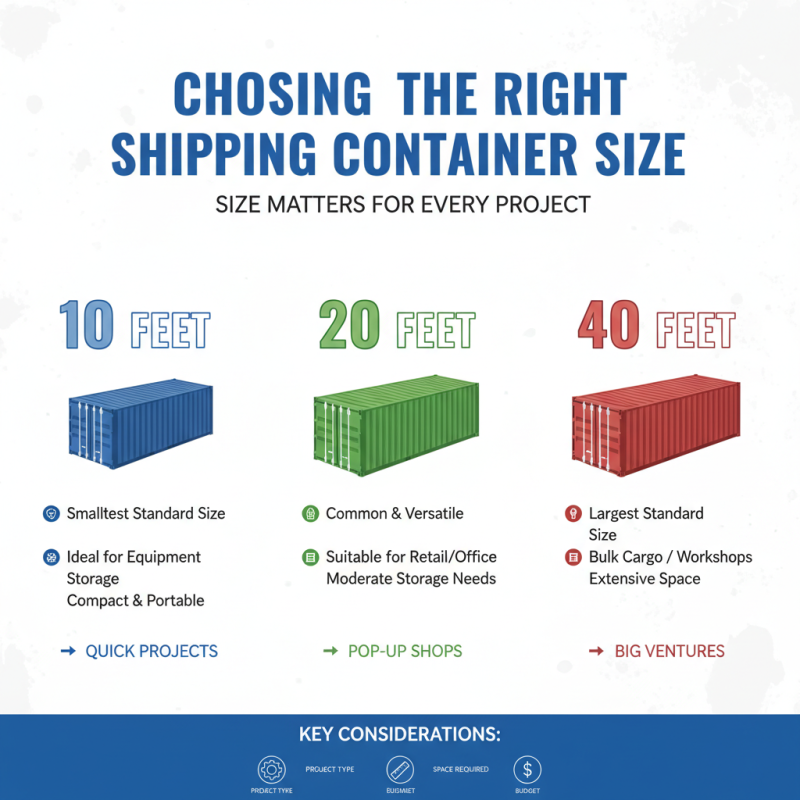
Choosing the right shipping container size is crucial for any project. Whether you’re storing equipment or planning a pop-up shop, size matters. Standard containers come in lengths of 10, 20, and 40 feet. Each option serves different needs.
When deciding on size, consider your items' dimensions. If you plan to store larger items, a 40-foot container may be necessary. However, smaller containers might suffice for display items or inventory. It's easy to underestimate space. Aim for more room than you think you'll need.
Tips: Measure your items. Don’t forget about access space. You may need room for moving items in and out. Also, think about future needs. Will your inventory grow? Choosing a slightly larger container might save you from future headaches.
Remember to assess your project’s specific requirements. Not every project needs a huge container. Some people find themselves with too much space and wasted costs. Take your time and make precise measurements. It could save money in the long run.
Comparing Container Size Options: Pros and Cons
Choosing the right shipping container size for your project can be challenging. Each size brings unique advantages and disadvantages. For instance, a standard 20-foot container has about 1,165 cubic feet of space. This size is ideal for compact projects or smaller storage needs. However, it may not fit larger equipment well. In contrast, a 40-foot container offers twice the space but requires more room for placement.
Consider the weight capacity too. A typical 20-foot container can hold around 22,000 pounds, while a 40-foot container can handle approximately 26,000 pounds. This difference can shape your project’s design. Larger containers are great for big loads, but they require more transportation space. Transportation costs also rise with larger container sizes, which could impact your budget significantly.
Questions arise when deciding the best solution. Will you need flexibility for future projects? Will the space be often used or is it a temporary requirement? Reflecting on these questions can help in making a more informed choice. Think about accessibility, as some sites may not accommodate large containers easily. Each option has its merits and drawbacks, making careful consideration essential.
Top Shipping Container Sizes Explained
This bar chart compares the most common shipping container sizes, highlighting their dimensions and typical uses.
Factors Influencing the Cost of Different Container Sizes
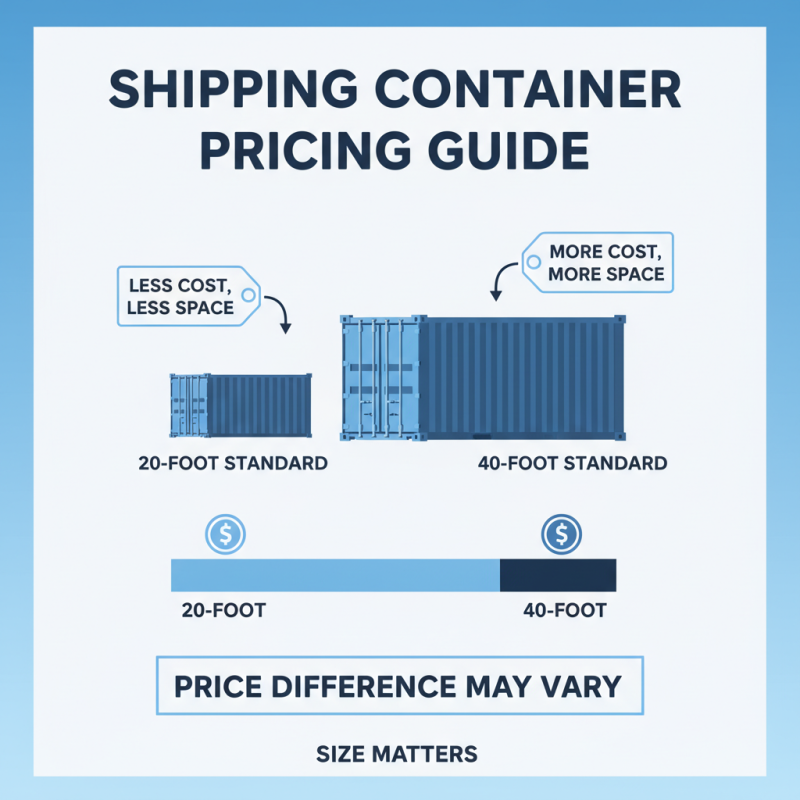
When choosing a shipping container, size significantly impacts the cost. Different sizes serve different purposes, and each comes with its pricing. For instance, a standard 20-foot container costs less than a 40-foot one. But, a larger container offers more space for goods. You may find the price difference surprising.
Several factors influence container prices. Demand fluctuates based on location and season. A container in a busy port may cost more due to high demand. Transportation fees also add to the overall price. Moving a larger container might require special permits. That high cost can catch you off guard.
Condition affects pricing as well. New containers are pricier than used ones. Yet, used containers can have hidden issues. Inspecting them is crucial. Additionally, modifications, if needed, can increase costs significantly. Customizing a container can lead to unexpected expenses. Always budget for these factors when planning your project.