How to Choose the Best 250cc Motocross Bike?
Choosing a 250 Cc Motocross bike is not just about horsepower or the newest model year. The right bike should match your height, experience, riding style, and the terrain you actually ride. A tall seat can feel intimidating at a muddy start. A sharp throttle can tire a newer rider before the second lap. Small details matter.
Motocross coach Gary Bailey is widely known for teaching riders to build control through sound technique. A useful principle for this decision is: “Choose a bike you can ride smoothly, not one that merely looks fast.” Treat that as practical guidance, not a verified verbatim quotation. Fit and control deserve more attention than showroom excitement.
This guide will compare power delivery, handling, suspension, maintenance, and overall cost. It will also explain how established models from Honda, Yamaha, Kawasaki, KTM, and Husqvarna can feel different on track. A lighter bike may change direction quickly, while softer suspension may feel more forgiving over braking bumps. Yet specifications alone cannot predict comfort. Setup, condition, and rider skill all matter.
There is no perfect choice for everyone. Even experienced riders can misjudge a bike after a brief test ride. Use the sections ahead to identify what to inspect, what questions to ask, and which trade-offs deserve a second look before choosing your next 250cc motocross machine.
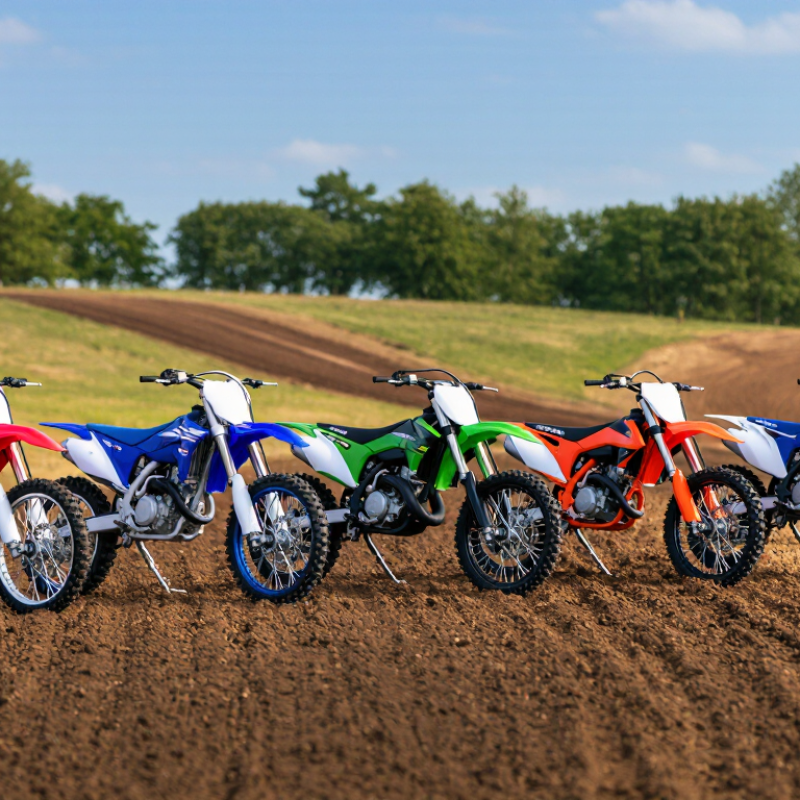
Define the 250cc Class: FIM MX2 Allows 100–250cc Four-Strokes
In FIM motocross, the MX2 class permits four-stroke engines from 100cc to 250cc. That rule defines an eligible range, not a promise that every 250cc bike will feel alike. Engine design, gearing, suspension setup, and overall condition all affect how a motorcycle responds on track. Check current event regulations before entering a competition, since technical rules can change.
A 250cc four-stroke can suit riders who want manageable power and a relatively light motocross machine. Still, “manageable” depends on the rider. On a tight practice circuit, smooth throttle response may matter more than peak power; on rough ground, suspension setup and control can make a bigger difference. Pay attention to how the bike behaves over braking bumps and when accelerating out of a corner. Does it feel predictable, or does it wear you out after a few laps?
Fit matters, too. Stand on the pegs and check whether the controls feel natural. Listen for unusual engine noises, and inspect the air filter, chain, and suspension for signs of neglected maintenance. A clean exterior can hide problems. I would not choose by displacement alone; it is an easy shortcut, but not a reliable one. A proper test ride, when available, tells you more than a specification sheet.
How to Choose the Best 250cc Motocross Bike? — Define the 250cc Class: FIM MX2 Allows 100–250cc Four-Strokes
Use this comparison as a buying guide, not as a specification sheet for a particular model. Dimensions and weights are indicative ranges for modern full-size 250cc motocross bikes and can vary by model year, setup, and measurement method. Check current competition regulations before entering an event.
| Comparison dimension | Useful reference or typical range | What to consider when choosing |
| FIM MX2 eligibility | The MX2 class allows four-stroke engines from 100cc to 250cc under the applicable technical rules. | Confirm the current FIM and event regulations, including age limits and any updates, before competing. |
| Engine configuration | Typically a liquid-cooled, single-cylinder, four-stroke engine in the 250cc class. | Compare power delivery and throttle response with your experience level and the tracks you ride. |
| Transmission | A multi-speed manual transmission is standard in this competition-bike category; five speeds are common. | Check clutch feel, shift precision, and whether the gear spacing suits tight corners and fast sections. |
| Wet weight | Approximately 105–115 kg (231–254 lb), depending on equipment and how weight is reported. | Compare figures measured on the same basis. Balance and ease of handling can matter more than a small weight difference. |
| Seat height | Typically around 950–970 mm (37.4–38.2 in) for full-size motocross bikes. | Sit on the bike in riding boots and test whether you can manage starts and uneven ground comfortably. |
| Wheelbase | Commonly about 1,480–1,500 mm (58.3–59.1 in). | A test ride can reveal whether the bike feels stable at speed while remaining manageable in turns. |
| Fuel capacity | Often approximately 6–8 L (1.6–2.1 US gal). | Consider your session length and access to refuelling; capacity alone does not determine range. |
| Suspension travel | Front and rear travel are generally around 300 mm (about 12 in) on full-size motocross bikes. | Prioritize suspension condition and setup for your weight, pace, and terrain over the headline travel figure. |
| Maintenance and parts | Motocross bikes require regular inspection and service; intervals depend on the model and use. | Review the service schedule, maintenance records, local parts availability, and total running costs. |
| Best-fit decision | No single specification makes one 250cc bike best for every rider. | Compare fit, controllable power, suspension setup, condition, service history, and overall cost; arrange a qualified inspection for a used bike. |
Note: MX2 engine-capacity eligibility is a competition rule, not a guarantee that every 250cc motocross bike meets all event requirements. Verify the current rulebook and the exact bike’s specifications.
Compare Engine Types: 250cc Four-Strokes Versus 175–250cc Two-Strokes
Choosing a 250cc motocross bike is less about peak power than how that power arrives. A four-stroke produces a power stroke every two crankshaft revolutions; a two-stroke produces one every revolution, as described in standard engine-cycle references such as Bosch’s Automotive Handbook. On track, that often means a four-stroke feels more tractable through a slick turn, while a two-stroke can deliver a sharper hit when the throttle opens. Feel varies with tuning, gearing, and rider skill.
The FIM’s 2024 motocross technical regulations distinguish classes by engine cycle and displacement, a useful reminder that “250cc” alone does not define a bike’s character or competition eligibility. A 175–250cc two-stroke may feel lighter to flick across ruts, but it can demand more deliberate throttle control. Four-strokes often reward smooth corner speed; their added engine complexity can make maintenance more involved. Neither type is automatically easier. I’d test both on the same familiar loop, noting how each behaves over braking bumps and out of tight corners.
Tips: Check the rulebook for your intended class before buying. During a test ride, compare low-speed response, fatigue after several laps, and how easily you can hold a line. Bring a notebook; memory gets optimistic.
250cc Four-Stroke vs. 175–250cc Two-Stroke Motocross Bikes
Engine displacement ranges shown in cubic centimeters (cc).
A 250cc four-stroke has a nominal displacement of 250cc. Two-stroke motocross bikes in the comparison range span 175–250cc. Displacement alone does not determine power, handling, or suitability; riding style, track conditions, maintenance needs, and rider experience also matter.
Assess Chassis and Suspension Using Manufacturer Weight and Travel Specs
A 250cc motocross bike can feel light in a showroom and stubborn in a rutted turn. Compare manufacturer-published weights, but check whether each figure is dry or includes fuel; the difference can distort a comparison. Published 250-class specifications commonly place ready-to-ride bikes around 220–235 pounds, though equipment and measuring methods vary. Treat that range as a screening guide, not a universal benchmark. A five-pound difference may matter less than how the bike carries its mass when changing direction.
Suspension travel is another useful number, but it does not reveal the whole ride. Many current motocross machines list roughly 12 inches of front travel and 12–13 inches at the rear. Verify figures against the manufacturer’s specification sheet, then compare wheelbase, ground clearance, and suspension adjustability too. More travel is not automatically better. A tall, firm setup can feel harsh over braking bumps, especially for a lighter rider. I’ve found that a small sag adjustment can change corner feel more than a spec-sheet comparison suggests; still, rider technique and terrain complicate that judgment.
Tips: Compare figures from the same model year and measurement basis. Ask a dealer to confirm fuel status and suspension settings. Check sag with your riding gear on, then test the bike over repeated bumps—not just a smooth parking lot. Specs help narrow choices. They do not replace a ride.
Match Power Delivery, Ergonomics, and Maintenance to Rider Skill and Terrain
A 250cc motocross bike should deliver power you can use, not merely power that looks impressive on paper. On a loose uphill, smooth throttle response helps the rear tire find grip. A sharp surge can break traction and tire you out. If possible, ride the bike on terrain similar to your regular track. Pay attention to how easily it pulls from slow corners and whether it feels manageable after several laps. That matters more than a quick impression in the parking area.
Check the fit while standing on the pegs, not only while seated. Your knees should grip the bike without forcing your hips forward, and the handlebar reach should feel natural when you shift your weight. Small differences become obvious in ruts or through repeated whoops. A seat that feels fine for five minutes may feel firm after a full session. It is easy to overlook that.
Maintenance also needs to match your time, tools, and experience. Ask what the service schedule requires, then check the owner’s manual rather than relying on a seller’s estimate. Some routine work is straightforward, but inspections still take care and consistency. Keep a simple log of hours, oil changes, and filter cleaning; muddy rides can change how often attention is needed. I would not assume the most powerful option is best. A bike that feels slightly tame at first may be easier to ride well, though that judgment deserves a proper test.
Compare Total Ownership Costs: Fuel, Tires, Service Intervals, and Parts
A 250cc motocross bike can look affordable until you price the parts that wear out. Compare the full year of riding, not just the purchase price. Fuel use varies with terrain, throttle habits, and engine setup, so keep receipts or track refills for a few weeks. Deep sand and repeated hard acceleration can empty the tank faster than a mellow practice day. Small details matter.
Tires are another recurring cost. Rocky tracks may cut knobs or damage carcasses sooner, while soft dirt can wear a rear tire quickly. Ask local riders how often they replace tires under similar conditions, then budget for more than one set if you ride regularly. Service intervals also affect ownership costs. Check the owner’s manual for oil, filter, valve-clearance, and piston inspection guidance; riding hours and conditions can change how soon attention is needed. A simple hour meter helps, though it is easy to forget to record a ride.
Parts availability deserves a practical check. Price common items such as levers, brake pads, air filters, chains, and sprockets before choosing a bike. Compare local stock and delivery times, not just online prices. I once underestimated small replacement parts; the total was annoying. Leave room in your budget for surprises, because motocross rarely follows a perfect spreadsheet.