What is a High Cube Shipping Container and Its Benefits?
High cube shipping containers have transformed the logistics industry. A high cube shipping container is typically one foot taller than standard containers. This extra height provides significant advantages, especially in maximizing cargo space. According to industry reports, up to 25% more volume can be utilized compared to standard containers, making them an ideal choice for various businesses.
Cargo transport efficiency relies heavily on container design. High cube containers offer better flexibility for shipping oversized items. They accommodate larger and bulkier goods without the need for additional containers. Recent data suggests that many companies are opting for high cube models to streamline their operations, reducing costs and improving delivery times. However, challenges remain. Not all ports are equipped to handle their size, leading to potential delays.
Understanding high cube shipping containers involves considering both benefits and limitations. The logistics sector continues to evolve, with stakeholders needing to adapt to changes. As demand increases for more efficient shipping solutions, high cube containers remain at the forefront of discussions. Balancing space efficiency and practical constraints is essential for future growth.

What Defines a High Cube Shipping Container: An Overview
A high cube shipping container is a specialized cargo container that provides extra vertical space. Typically, these containers are about one foot taller than standard containers. This additional height allows for more efficient space utilization when transporting goods. High cube containers are often used in international shipping due to their capacity.
When we consider what defines a high cube shipping container, the focus is mainly on its dimensions. Standard containers are usually 8.5 feet tall, while high cubes reach up to 9.5 feet. This change can make a significant difference for shipping companies. The extra foot can accommodate larger items or more goods stacked vertically. Not all shipments require this height, which sometimes leads to underutilization of space.
Choosing the right container type is crucial. High cubes may seem ideal, but they can be less efficient for certain loads. Weight distribution becomes a key consideration, and improper use can lead to transportation issues. It’s important to assess the specific needs of each shipment. Understanding these factors can help make better decisions when selecting containers.
High Cube Shipping Containers: Advantages Overview
Comparison Between Standard and High Cube Shipping Containers
High cube shipping containers are an upgraded solution for transporting goods. Their extra height provides significant advantages over standard containers. A high cube container typically stands at 9’6”, while the standard container is 8’6”. This extra foot can make a considerable difference during transport and storage. According to industry reports, these containers can increase cargo capacity by up to 15%. This means that shippers can transport more goods without increasing the number of containers used.
In terms of usability, high cube containers offer better options for storing oversized goods. Items like furniture or large machinery fit more easily. However, the increase in height may lead to stability issues during stacking. Cargo owners need to consider these factors. The extra height could limit the types of goods that can be loaded safely. Cost-wise, high cube containers are often slightly more expensive than standard ones, which can affect budget considerations.
Despite these challenges, the benefits can outweigh the drawbacks for many businesses. The ability to maximize shipping efficiency is critical nowadays. High cube containers can facilitate this, making them a valuable asset in the shipping industry. Companies often reevaluate their shipping processes to optimize the benefits. Adapting to such changes can enhance operational effectiveness and reduce costs in the long term.
Key Advantages of Using High Cube Shipping Containers
High cube shipping containers have gained popularity due to their unique advantages. Standing at 9.5 feet in height, they offer additional vertical space compared to standard containers. This extra space can be pivotal for certain cargo types, such as large machinery or tall goods. The flexibility in storage allows businesses to optimize their shipping strategies, catering to diverse inventory needs.
One significant advantage is improved capacity. According to a report by the International Maritime Organization, high cube containers can enhance shipping efficiency by approximately 15%. This can lead to reduced transport costs per unit, a key factor for businesses seeking to maximize profitability. Furthermore, these containers facilitate easier loading and unloading processes, reducing labor times and potential errors during handling.
Despite their many benefits, high cube containers come with considerations. They may not fit all shipping types. Some ports may have restrictions on container height. Assessing these factors is essential for companies looking to invest in high cube containers. Balancing the advantages against potential logistical hurdles is vital for informed decision-making.
Common Applications for High Cube Shipping Containers
High cube shipping containers are widely used in various industries due to their unique design. These containers provide an additional foot of height compared to standard containers. This extra space allows for more efficient storage options. Businesses often utilize this height for equipment, materials, or even as mobile offices.
One common application is in the construction industry. High cube containers serve as on-site storage for tools and materials. Their durability ensures that valuable items remain protected from weather elements. They can easily be transported to different construction sites without hassle. Another area is the retail sector, where these containers are transformed into pop-up shops. This allows brands to engage customers in unique ways.
Additionally, high cube containers are useful for shipping large items. Industries that deal with oversized goods benefit greatly. However, some limitations exist. Not every transport mode can accommodate their height, affecting logistics. It’s essential to plan transportation routes carefully. High cube containers offer versatility but require thoughtful consideration in specific scenarios.
What is a High Cube Shipping Container and Its Benefits? - Common Applications for High Cube Shipping Containers
| Dimension |
Size (ft) |
Capacity (CBM) |
Common Uses |
| Standard High Cube |
40 |
76.4 |
General cargo, furniture, and large equipment |
| High Cube Refrigerated |
40 |
67.9 |
Perishable goods, pharmaceuticals |
| High Cube Open Top |
20 |
32.6 |
Bulk materials, heavy machinery |
| High Cube Flat Rack |
40 |
48.0 |
Heavy or oversized cargo |
Factors to Consider When Choosing a High Cube Shipping Container
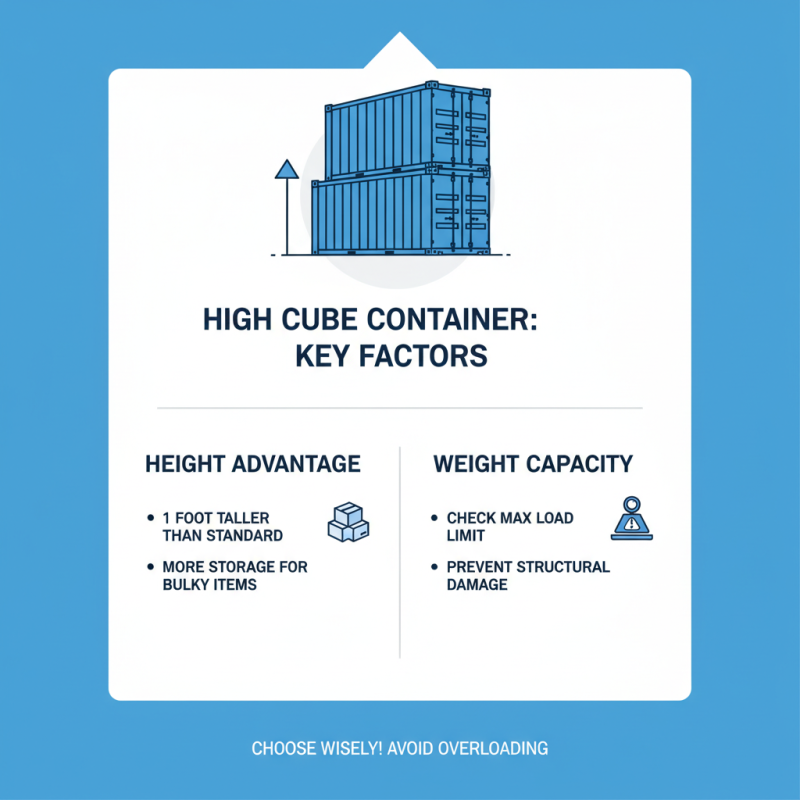
When choosing a high cube shipping container, several factors come into play. The height of the container is a significant advantage. High cube containers are about one foot taller than standard containers. This extra height allows for more storage, making them ideal for bulky items. However, it's essential to consider the weight capacity. Overloading can lead to structural damage or safety hazards.
Additionally, access and transport logistics are critical. Ensure the container fits your available space. Measure doorways, loading docks, and parking areas. Consider whether you will need additional equipment for loading and unloading. Ventilation is another important factor. Good airflow helps prevent moisture build-up inside the container. Poor ventilation can lead to mold and spoilage, especially for sensitive goods.
Always factor in the container's condition. Used containers may have wear and tear. Inspect for rust, structural integrity, and functionality. Transparency in the purchase process is vital. Look for sellers with solid reviews or industry experience. High cube containers offer many benefits when chosen correctly, but careful consideration prevents future challenges.