How to Choose the Right ELCB Switch in 2026?
Choosing the right Elcb Switch in 2026 requires more than comparing prices or reading a product label. Electrical systems now serve homes, workshops, solar installations, electric vehicle chargers, and sensitive digital equipment. Each application creates different protection demands. A switch that performs well in a dry apartment may not suit a humid workshop or an outdoor distribution board.
Mike Holt, a respected electrical educator, says, “Safety is not expensive, accidents are.” His principle remains relevant here. A suitable Elcb Switch must match the system voltage, current rating, number of poles, and required residual operating current. It should also work with the connected load. Motors, inverters, heat pumps, and electronic power supplies can produce leakage patterns that confuse unsuitable protection devices. Small details matter.
Look beyond the front label. Check certification, manufacturer test data, enclosure protection, test-button function, and operating temperature. Confirm whether the device is an ELCB, RCCB, or RCBO, because these products do not provide identical protection. A qualified electrician should verify earthing, wiring, coordination, and local installation requirements before energizing the circuit.
There is no universal “best” Elcb Switch. That answer sounds convenient, but it is incomplete. A higher sensitivity setting is not automatically safer if nuisance tripping becomes constant. A cheaper device may also bring uncertainty. Read the instructions carefully. Press the test button at the recommended interval. Record unusual trips instead of repeatedly resetting the switch. Good selection combines technical evidence, real site conditions, and honest review after installation.
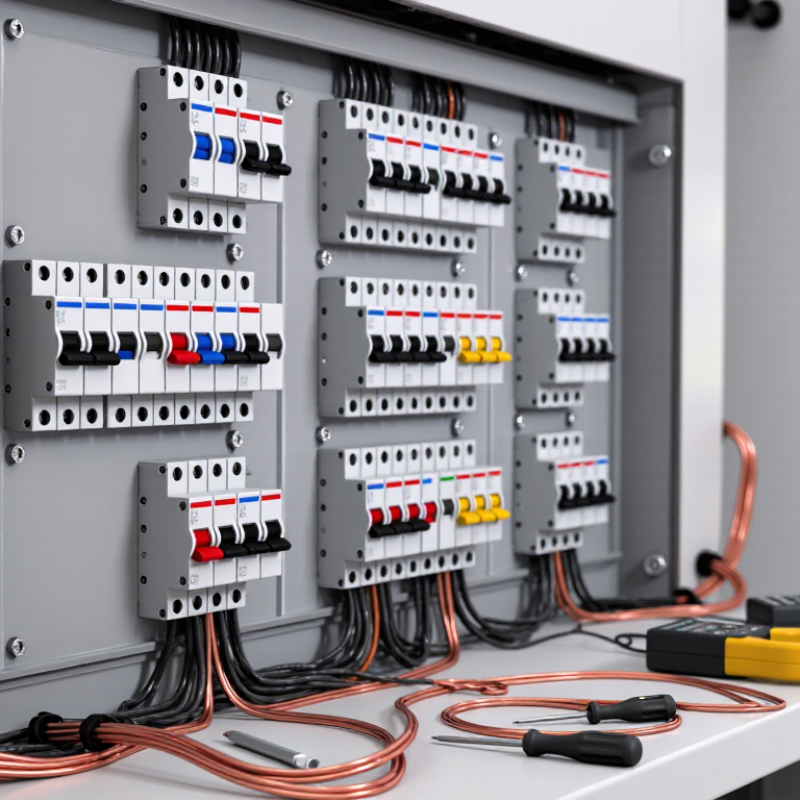
Understanding ELCB Functions and Protection Requirements in 2026
How to Choose the Right ELCB Switch in 2026?
Understanding ELCB functions starts with the protection requirement. Older voltage-operated ELCBs are different from modern residual-current devices, such as RCCBs and RCBOs. These devices detect leakage current and disconnect the circuit quickly. Under IEC 60364-4-41, 30 mA protection is commonly specified for additional protection against electric shock in many final circuits. It is not a substitute for proper earthing.
Selection should match the load, wiring, and installation environment. Type AC may suit simple alternating-current loads, while Type A is more appropriate for circuits containing electronic power supplies. Heat pumps, variable-speed drives, and some charging equipment may require Type F or Type B protection. Check the rated current, pole arrangement, breaking capacity, trip time, and compatibility with the distribution board. A 40 A device cannot safely replace correct upstream coordination.
The risk is practical, not theoretical. The NFPA report “Home Fires Involving Electrical Distribution and Lighting Equipment, 2016–2020” estimated about 32,620 home fires annually in the United States, with approximately 470 deaths and 1,100 injuries. Residual-current protection can reduce some leakage-related hazards, but it cannot correct loose terminals or overloaded cables. Test the device using its test button at the interval required by local rules. A neat label is not enough. Installation conditions can change. Recheck them.
How to Choose the Right ELCB Switch in 2026?
Understanding ELCB functions and residual-current protection requirements
The chart compares commonly used residual operating-current settings for modern current-operated ELCBs, also known as RCCBs or RCDs. A 30 mA device is widely used for additional protection against electric shock, while 100–300 mA settings are commonly selected for upstream, leakage-control, or fire-risk protection. The correct rating depends on the installation design, earthing system, expected leakage current, coordination requirements, and local electrical regulations.
Reference framework: IEC 61008-1 and IEC 61009-1. These values indicate typical protection applications and are not a substitute for national code requirements or professional design verification.
Identifying the Right ELCB Type for Each Electrical System
How to Choose the Right ELCB Switch in 2026?
Identifying the right ELCB type starts with the electrical load, not the cabinet appearance. Modern ELCBs, often called residual-current circuit breakers, detect leakage and disconnect dangerous circuits. Type AC suits simple alternating-current loads, such as resistive lighting and heaters. Type A handles pulsating DC leakage from electronic appliances, chargers, and washing machines. Type F supports single-phase equipment with variable-speed drives. Type B is designed for smooth DC and mixed-frequency leakage from electric vehicle chargers, solar equipment, and industrial drives.
Check the system carefully. A two-pole device usually fits a single-phase circuit, while a four-pole version suits three-phase installations. Select the rated current, voltage, residual operating current, and trip time according to the installation design. A 30 mA setting commonly provides additional personal protection, but it must not replace proper earthing or overcurrent protection. Type S time-delayed devices can reduce nuisance tripping in coordinated systems. Local electrical standards still matter.
Tips: Press the test button during scheduled maintenance. Confirm that the neutral passes through the sensing core. Do not use Type AC automatically for every circuit. I once focused too much on rated current and missed electronic leakage. That mistake taught me to inspect connected equipment first. Ask a qualified electrician to verify measurements, compatibility, and discrimination before energizing the panel. Some installations look simple but behave differently under real leakage conditions.
Comparing Voltage, Current, Sensitivity, and Breaking Ratings
How to Choose the Right ELCB Switch in 2026?
Choosing an ELCB switch starts with the system voltage. A 230 V single-phase circuit needs a device rated for that supply. Three-phase installations require matching voltage and pole arrangements. Check the distribution board label and local electrical requirements before selecting. The rated current must also exceed the circuit’s normal load without hiding an overload problem. A 40 A device is not automatically suitable for every 40 A circuit.
Sensitivity controls leakage protection. A 30 mA setting is commonly used for additional protection against electric shock. Higher settings may suit equipment or fire protection, but they need careful coordination. Lower is not always better. Excessive sensitivity can cause nuisance trips, especially with long cables or electronic equipment. I have learned that measuring actual leakage is more useful than guessing from appliance labels.
Breaking capacity shows how much short-circuit current the device can safely interrupt. Compare its rating with the prospective fault current at the installation point. A 6 kA rating may suit one small installation, while a higher rating may be necessary near a powerful supply transformer. The device should also match the circuit’s earthing arrangement and switching requirements. Test the mechanism after installation, and record the result. A rushed selection can look correct on paper. A qualified electrician should verify the final choice against current regulations.
How to Choose the Right ELCB Switch in 2026? – Comparing Voltage, Current, Sensitivity, and Breaking Ratings
| Selection Parameter | Common Options | Recommended Application | Important Selection Notes |
|---|---|---|---|
| Device Function | RCCB/RCD; RCBO; voltage-operated ELCB | RCCB/RCD for residual-current protection; RCBO when residual-current and overcurrent protection are required in one device | A modern RCCB or RCBO is generally preferred. Older voltage-operated ELCBs are largely obsolete and may not detect all leakage paths. |
| Rated Voltage (Ue) | 230 V AC; 230/400 V AC; 120/240 V AC, depending on the electrical system | 230 V single-phase circuits; 230/400 V three-phase systems | The device voltage rating must be equal to or higher than the system voltage. Confirm frequency, neutral arrangement, and the number of poles. |
| Number of Poles | 2-pole; 4-pole | 2-pole for single-phase circuits; 4-pole for three-phase plus neutral circuits | All live conductors, including the neutral where required by the installation design, should pass through the residual-current sensing device. |
| Rated Current (In) | 16 A, 25 A, 40 A, 63 A, 80 A, 100 A, 125 A | Select according to the maximum continuous load and the upstream protective device | For an RCCB, rated current is not overcurrent protection. The upstream circuit breaker or fuse must protect the conductors and the RCCB against overload and short circuit. |
| Residual Operating Current (IΔn) | 10 mA; 30 mA; 100 mA; 300 mA; 500 mA | 30 mA for additional personal protection; 100–300 mA for equipment or fire-risk protection and upstream selectivity | Lower sensitivity provides earlier protection but can increase nuisance tripping. Use the value required by local regulations and the installation risk assessment. |
| Trip Characteristic | Instantaneous; time-delayed/selective | Instantaneous for final circuits; selective time-delayed devices for upstream coordination | A selective upstream device must be coordinated with downstream devices for time delay and residual-current thresholds. Always follow the manufacturer’s coordination data. |
| RCD Type | Type AC; Type A; Type F; Type B | Type A for circuits with electronic equipment; Type F for certain single-phase inverter or variable-speed loads; Type B where smooth DC or higher-frequency leakage may occur | Type AC detects sinusoidal AC residual current only. Type selection must match the loads, especially solar inverters, EV charging equipment, heat pumps, and variable-speed drives. |
| Breaking and Short-Circuit Rating | RCCB conditional short-circuit withstand commonly rated at 6 kA or 10 kA; RCBO short-circuit breaking capacities commonly include 4.5 kA, 6 kA, or 10 kA | Choose a rating equal to or above the prospective short-circuit current at the installation point | An RCCB normally does not interrupt overload or short-circuit current by itself. Verify the required backup fuse or circuit breaker and the complete combination rating. |
| Frequency | 50 Hz; 60 Hz; 50/60 Hz | Installations operating on the local utility frequency | Confirm that the device is rated for the system frequency, particularly in industrial or generator-fed installations. |
| Neutral Switching | Switched neutral; unswitched neutral | Switched neutral is commonly used in single-phase and multi-phase installations where complete isolation is required | Use the wiring arrangement required by local standards. Never connect the neutral downstream of one RCD to the neutral of another RCD. |
| Environmental Conditions | Indoor distribution board; damp area; outdoor enclosure; industrial environment | Use an enclosure and device suitable for the expected temperature, humidity, dust, and mechanical exposure | Check operating-temperature limits, ingress protection of the enclosure, altitude restrictions, and resistance to vibration or contamination. |
| Testing and Maintenance | Built-in test button; periodic inspection and trip testing | Residential, commercial, industrial, and temporary installations | Press the test button at the interval required by local rules or the installation instructions. A qualified person should investigate any repeated or unexplained trip. |
Selection note: Confirm the applicable electrical code, system earthing arrangement, prospective short-circuit current, conductor size, and coordination requirements before installation.
Checking Compatibility with Wiring, Loads, and Local Safety Standards
How to Choose the Right ELCB Switch in 2026?
Selecting an ELCB switch starts with the wiring, not the product label. Confirm the supply voltage, frequency, number of poles, and neutral arrangement. A single-phase circuit may need different protection from a three-phase installation. Check whether the device suits the earthing system used in your building. Terminology can vary between regions, so verify whether “ELCB” means a voltage-operated device or a modern residual-current device.
Measure the expected load before choosing the rated current. Add air conditioners, water heaters, pumps, and kitchen appliances carefully. Motors may create brief starting surges. The switch must tolerate normal operation without nuisance tripping. However, it should disconnect quickly when leakage occurs.
Select an appropriate residual-current sensitivity, such as 30 mA for personal protection where local rules permit it. An ELCB does not replace overload or short-circuit protection.
Look for certification accepted by your local authority. Installation rules may specify testing procedures, enclosure ratings, isolation methods, and approved wiring practices. Ask a qualified electrician to compare the switch with conductor size, distribution-board space, and existing protective devices. Press the test button after installation. It should trip immediately. It should not be ignored.
Small details matter. A loose neutral can cause confusing faults. I have seen compatibility assumptions waste more time than the installation itself. Recheck the circuit diagram before energizing the system. Safety work deserves a second look.
Verifying Installation Quality, Testing Features, and Long-Term Reliability
How to Choose the Right ELCB Switch in 2026?
A dependable ELCB starts with installation quality, not packaging claims. Confirm the device matches the system voltage, pole configuration, rated current, and earthing arrangement. Modern residual-current ELCBs should comply with IEC 61008-1 or IEC 61009-1, depending on overload protection. Check conductor insulation, terminal torque, enclosure sealing, and cable routing. A loose neutral can create nuisance trips or leave protection ineffective.
Pressing the test button only confirms the mechanism can release. It does not prove the actual trip threshold or response time. Use a calibrated RCD tester to measure both values during commissioning. Test it under load. The Electrical Safety Foundation International’s analysis of U.S. Bureau of Labor Statistics data recorded 126 workplace electrical fatalities involving electricity in 2022. Verification deserves more than a quick visual check. Keep dated test records, including instrument identification and measured results.
Long-term reliability depends on heat, dust, moisture, vibration, and repeated switching. Inspect discolored terminals, cracked insulation, and unexplained trips during scheduled maintenance. NFPA 70B, 2023 edition, emphasizes documented electrical maintenance programs and condition-based evaluation. A practical weakness remains: many installations test the device but ignore the surrounding connections. That is a serious gap. Review manufacturer instructions, local regulations, and IEC 60364-6 verification requirements before energizing the circuit. Records matter. A perfect checklist can still miss poor workmanship.
Article Source:
Get a quote
Get a quote
Read More
Accept AllReject AllCustomise
Privacy Overview
| Cookie | Duration | Description |
|---|---|---|
| cookielawinfo-checkbox-advertisement | 1 year | Set by the GDPR Cookie Consent plugin, this cookie records the user consent for the cookies in the "Advertisement" category. |
| cookielawinfo-checkbox-analytics | 11 months | This cookie is set by GDPR Cookie Consent plugin. The cookie is used to store the user consent for the cookies in the category "Analytics". |
| cookielawinfo-checkbox-functional | 11 months | The cookie is set by GDPR cookie consent to record the user consent for the cookies in the category "Functional". |
| cookielawinfo-checkbox-necessary | 11 months | This cookie is set by GDPR Cookie Consent plugin. The cookies is used to store the user consent for the cookies in the category "Necessary". |
| cookielawinfo-checkbox-others | 11 months | This cookie is set by GDPR Cookie Consent plugin. The cookie is used to store the user consent for the cookies in the category "Other. |
| cookielawinfo-checkbox-performance | 11 months | This cookie is set by GDPR Cookie Consent plugin. The cookie is used to store the user consent for the cookies in the category "Performance". |
| CookieLawInfoConsent | 1 year | CookieYes sets this cookie to record the default button state of the corresponding category and the status of CCPA. It works only in coordination with the primary cookie. |
| viewed_cookie_policy | 11 months | The cookie is set by the GDPR Cookie Consent plugin and is used to store whether or not user has consented to the use of cookies. It does not store any personal data. |
| Cookie | Duration | Description |
|---|---|---|
| _cs_c | 1 year 1 month | The cookie is used by Content Square to save the user consent to be tracked. |
| Cookie | Duration | Description |
|---|---|---|
| _cs_id | 1 year 17 days 20 hours 13 minutes | This cookie is used to store the ContentSquare's user identifier ID. This is a persistent cookie and expires after 13 months. |
| _cs_s | 1 hour | This cookie is used to store the number of page's viewed by a visitor within the session for ContentSquare's solution. |
| _ga | 1 year 1 month 4 days | Google Analytics sets this cookie to calculate visitor, session and campaign data and track site usage for the site's analytics report. The cookie stores information anonymously and assigns a randomly generated number to recognise unique visitors. |
| _ga_* | 1 year 1 month 4 days | Google Analytics sets this cookie to store and count page views. |
| _gcl_au | 3 months | Google Tag Manager sets the cookie to experiment advertisement efficiency of websites using their services. |
| Cookie | Duration | Description |
|---|---|---|
| test_cookie | 15 minutes | doubleclick.net sets this cookie to determine if the user's browser supports cookies. |
| Cookie | Duration | Description |
|---|---|---|
| _cs_root-domain | session | Description is currently not available. |
| _cs_same_site | session | Description is currently not available. |