How to Choose the Right 40 Foot Storage Containers for Your Needs?
When selecting the ideal storage solution, 40 foot storage containers are often top of mind. According to industry expert Robert Jenkins, “Choosing the right storage container is crucial for efficiency.” With numerous options available, the decision can be overwhelming. Factors like intended use and location matter significantly.
These large containers serve various purposes. People often use them for moving, storing, or even creating pop-up shops. It's essential to evaluate your specific needs before making a choice. Are you storing items for months or just a few weeks? Do you need climate control?
Yet, buyers sometimes overlook crucial details. For instance, the container's condition affects durability. A used container may save money, but could present challenges. Reflecting on your requirements and planning ahead can lead to better choices in selecting 40 foot storage containers.
Understanding the Different Types of 40-Foot Storage Containers Available
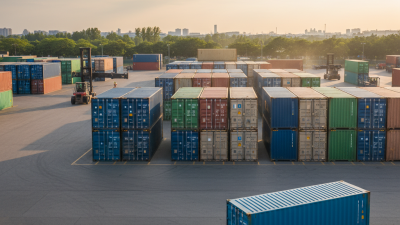
When selecting the right 40-foot storage container, it’s essential to understand the various types available. One common type is the standard storage container. These are made from durable steel and are designed for general storage. They are great for housing equipment or furniture. However, they lack climate control.
Another option is the refrigerated container. This type is ideal for storing perishable goods. It helps maintain a specific temperature, ensuring items remain fresh. Think about the goods you want to store. This will help you determine if temperature regulation is necessary. The downside? They often come at a higher cost.
There are also modified or specialty containers. These can be customized for specific purposes. Need to store machinery? A high cube container might be best. But modifications can take time and may require added investment. Reflect on your needs. Are you willing to wait and spend more for a tailored solution? Understanding these types helps streamline your choice. Choosing the right container is crucial for efficiency.
How to Choose the Right 40 Foot Storage Containers for Your Needs? - Understanding the Different Types of 40-Foot Storage Containers Available
| Container Type |
Dimensions (L x W x H) |
Weight Capacity |
Common Uses |
Features |
| Standard Container |
40' x 8' x 8.5' |
28,200 lbs |
General storage, shipping |
Venting, cargo doors |
| High Cube Container |
40' x 8' x 9.5' |
30,480 lbs |
Storing tall items, equipment |
Extra height, strong structure |
| Refrigerated Container |
40' x 8' x 9.5' |
30,480 lbs |
Food storage, pharmaceuticals |
Temperature control, insulation |
| Open Top Container |
40' x 8' x 8.5' |
28,200 lbs |
Bulk cargo, oversized items |
Removable tarp, flexible loading |
| Flat Rack Container |
40' x 8' x 8.5' |
30,480 lbs |
Heavy equipment, machinery |
No sides or top, easy loading |
Evaluating the Average Cost and Features of 40-Foot Storage Containers
When considering a 40-foot storage container, evaluating costs and features is crucial. The average price ranges from $2,000 to $5,000. However, many factors influence this range. Local market demand, condition, and seller negotiations all play a role. You might find it cheaper at auctions or more expensive from retailers. Researching local pricing trends helps set a reasonable budget.
Features vary widely among containers. Look for insulated options if you store temperature-sensitive items. Ventilation is also essential to prevent moisture buildup. Some containers have additional security features, like reinforced locks. These enhancements can add to the cost but may be worth the investment, depending on your needs.
You may want to reflect on your specific requirements. Consider your storage environment—is it humid or dry? Do you require frequent access to your items? These questions can significantly impact your choice. Balancing features and budget may seem challenging. Take your time to evaluate each option carefully. Your needs are unique, and what works well for one person may not suit another.
Factors Influencing the Selection of Storage Container Materials and Durability
Choosing the right 40-foot storage container goes beyond just dimensions. It’s crucial to understand the materials used and their durability. Research indicates that around 30% of container-related issues stem from compromised materials. Steel and aluminum are popular choices due to their strength and resistance to rust. However, untreated containers may corrode over time, especially in humid environments.
The expected lifespan of a storage container significantly varies. A study found that containers made with Corten steel can last up to 25 years. Yet, if a unit faces poor maintenance, this duration decreases drastically. Containers lacking insulation can face temperature fluctuations, leading to condensation and mold.
Additionally, the container’s intended use matters. For transporting sensitive goods, a container's sealing and airflow can be critical. Ventilated models can prevent moisture buildup. Unfortunately, many users neglect this detail, leading to damaged contents. Understanding these factors is essential for making a well-informed choice in storage solutions.
How to Choose the Right 40 Foot Storage Containers for Your Needs?
Assessing Your Space Requirements and Container Accessibility Needs
When choosing a 40-foot storage container, assessing space requirements is vital. Begin by measuring the area where the container will be placed. Remember to account for the container's height and width. Will it fit between buildings or fences? Ensure there’s enough room for access. A tight space can limit options for transporting goods in and out.
Accessibility is another key factor. How easy is it to reach the container? Consider the type of entry. Does the container need to be accessed frequently? If so, a ground-level setup is ideal. If the area has limited access, consider containers with side doors. It’s important to think about your long-term needs, not just immediate convenience. Sometimes, overlooking a few details can complicate logistics later. What seems sufficient now may not be enough in the future. Always plan for growth and flexibility.
Examining Industry Standards for Container Security and Safety Features
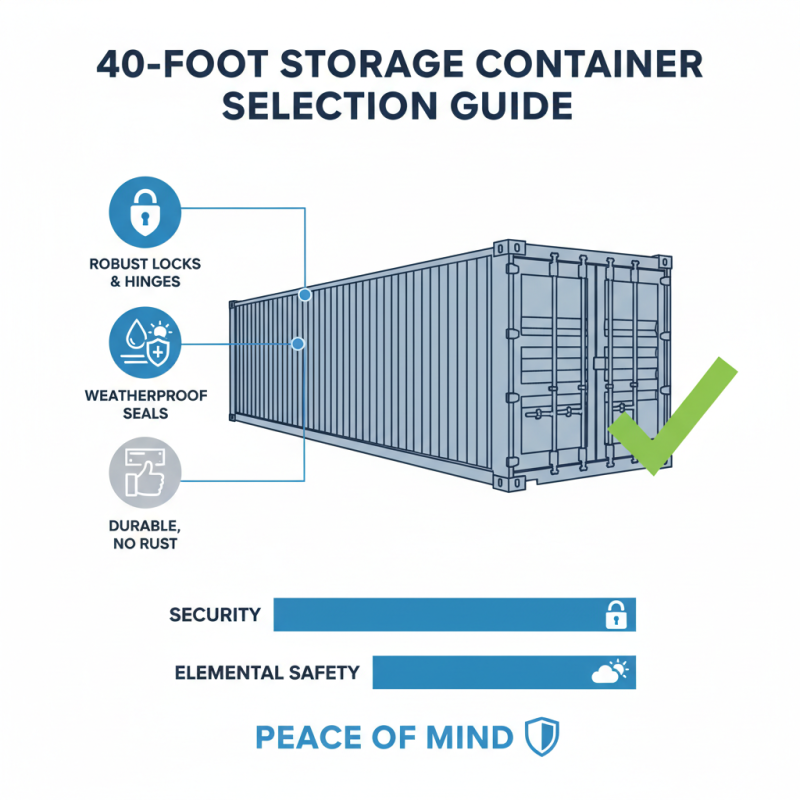
When selecting a 40-foot storage container, security and safety features are paramount. Look for robust locks that deter unauthorized access. Inspect the hinges and seals for sturdiness. A container shouldn't just look secure; it must ensure safety against the elements. Waterproofing is crucial. Containers should withstand rain, snow, and harsh sun. Old or rusty containers may not provide the protection you need.
Ventilation is another essential factor. Poor airflow can lead to mold and mildew. Be wary of containers lacking vents. Some might have air circulation issues, leading to damaged goods. If your container will house sensitive items, these details matter.
Consider the weight capacity outlined by standards. Overloading can compromise safety. It's easy to overlook this when considering space over weight limits. Remember, a heavy load can cause containers to warp or buckle under strain. Reflect on these aspects before making a decision.