How to Choose the Best Steel Panel Radiator in 2026?
Choosing the right Steel Panel Radiator in 2026 requires more than comparing prices and attractive finishes. Room size, insulation quality, window placement, and heating-system temperature all affect performance. A radiator that feels powerful in a showroom may struggle beside a cold, poorly sealed window. In practice, accurate heat-loss calculations remain more useful than guesswork.
Modern homes also create new demands. Heat pumps often operate at lower water temperatures than traditional boilers, so radiator output must be checked carefully. Manufacturers usually provide output figures under specific testing conditions, commonly based on EN 442 standards. Read those figures closely. They are not always directly comparable.
Look beyond surface appearance. Check the panel type, convector fins, steel thickness, connection options, warranty, and corrosion protection. A compact double-panel model may suit a small wall, while a wider radiator can provide gentler heat at lower temperatures. Thermostatic radiator valves and smart controls can improve comfort, but only when correctly installed and balanced.
Details matter.
An experienced installer can identify pipework limitations, uneven flow, and unsuitable mounting positions before purchase. Independent technical data is more dependable than vague marketing claims. Still, no buying guide can predict every home’s behavior. Occupants open doors, cover radiators, and change heating schedules. Those ordinary habits affect results.
This guide explains how to compare Steel Panel Radiator options for efficiency, durability, comfort, installation, and long-term value. It also questions common assumptions, because the cheapest model is not always economical, and the largest model is not automatically the best. Expect practical checks, clear specifications, and a few cautions where real-world decisions become less straightforward.
Understanding Steel Panel Radiator Types and Heating Functions
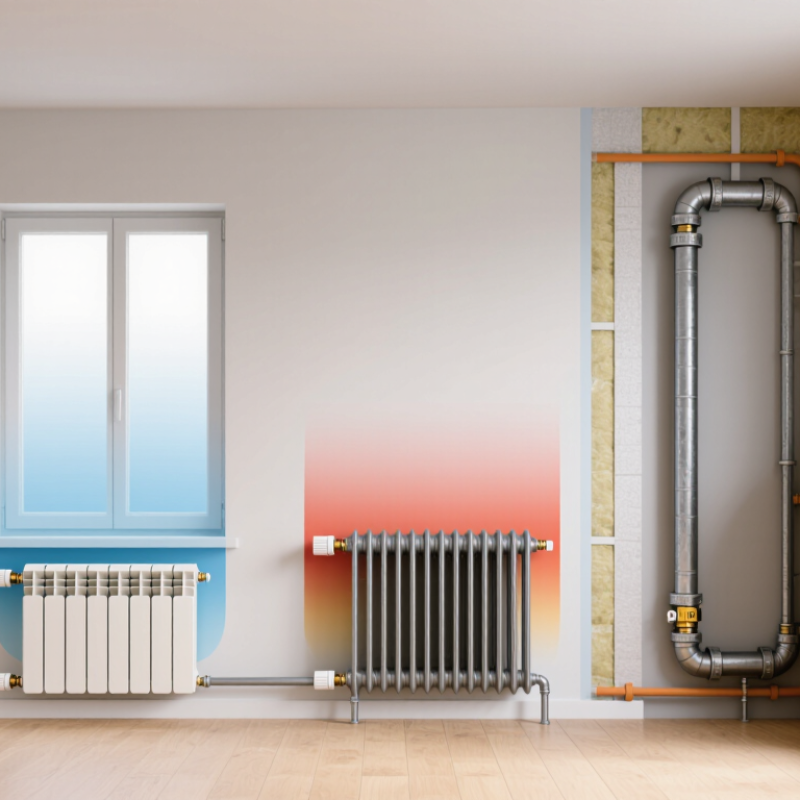
Steel panel radiators differ mainly by panel number and convector design. Type 10 has one panel and no fins, so it suits narrow spaces with modest heat demand. Type 11 adds one convector fin. It provides more output without becoming much deeper. Type 21 uses two panels and one fin, while Type 22 combines two panels with two fins. Type 22 is a practical choice for bedrooms, living rooms, and larger walls.
Heating function depends on more than size. Steel panels release heat through warm air movement and surface radiation. Convector fins increase airflow between the panels. A wider radiator usually spreads heat more evenly than a very tall, narrow model. Check the output rating at the system’s actual water temperature, not only the advertised standard. This matters with modern low-temperature boilers and heat pumps.
In real installations, I measure the room, window area, insulation, and outside wall exposure before choosing a radiator. A thermostatic valve helps control room temperature, but it cannot fix an undersized unit. Leave clear space around the radiator. Curtains and furniture can trap heat. Moisture also deserves attention, especially in bathrooms. Choose a suitable finish and inspect joints for early corrosion. I once saw a large radiator underperform because trapped air filled its upper section. Bleeding solved part of the problem, but poor system balancing remained. That experience is easy to overlook. A technically correct radiator can still heat badly when installation details are ignored.
Assessing Room Size, Heat Output, and Energy Requirements
Choosing the Best Steel Panel Radiator in 2026
Room size is the starting point, not the whole answer. Measure length, width, and ceiling height to estimate the room’s volume. A 4-by-5-metre room with a high ceiling needs more heat than a compact room with the same floor area. Window size, exterior walls, insulation, and local winter temperatures also affect heat loss. Cold glass near a sofa can create discomfort, even when the thermostat shows a normal reading.
Heat output is usually listed in watts under specific testing conditions. Check the required output at your heating system’s actual flow temperature. A radiator rated at 1,500 watts may deliver less with a lower-temperature heat pump system. This detail is often missed. Ask a qualified heating professional to calculate room-by-room heat loss, rather than copying a size from another room. It costs more time, but reduces guesswork.
Energy requirements involve more than radiator size. Oversized panels can heat quickly, yet they may encourage short boiler cycles or poor temperature control. Pair the radiator with a correctly adjusted thermostatic valve and suitable system controls. Keep furniture from blocking the panel; a thick sofa can trap warmth against the wall. I once underestimated a poorly insulated corner, and the room stayed chilly. My calculation looked reasonable, but the building’s weak spots mattered more than expected. No sizing shortcut is perfect.
How to Choose the Best Steel Panel Radiator in 2026?
Estimated radiator heat output based on room size and an 80 W/m² design heat-load assumption
The estimated heat requirement is calculated as room area × 80 W/m²: 10 m² requires approximately 0.8 kW, while 30 m² requires approximately 2.4 kW. The 80 W/m² value is a practical sizing guide for reasonably insulated rooms; actual requirements vary with climate, insulation, window area, ceiling height, ventilation, and indoor/outdoor temperature conditions. Choose a steel panel radiator whose certified output meets or exceeds the calculated heat load at the system’s operating temperatures.
Comparing Materials, Finishes, and Panel Configurations
How to Choose the Best Steel Panel Radiator in 2026?
Comparing Materials, Finishes, and Panel Configurations
Steel panel radiators remain practical because they heat quickly, resist daily knocks, and suit many room sizes. Their performance depends on steel thickness, water quality, and construction, not appearance alone. A powder-coated surface usually offers a durable finish for bedrooms, hallways, and living rooms. Glossy coatings look bright, but they can reveal dust and small scratches. My first choice was a high-gloss finish. It looked less practical after several months of cleaning.
Panel configuration affects heat output and wall space. A single-panel radiator suits compact rooms with modest heating demand. Double-panel models provide more output without becoming excessively wide. Triple-panel designs can heat larger rooms, but they project further into the space. Convector fins increase heat transfer, although they may collect dust in homes with pets. Check the radiator’s rated output against a room heat-loss calculation, rather than choosing by size alone. This is where many online comparisons become too simple.
Tips: Measure the available wall carefully, including pipe connections and skirting boards. Ask a qualified installer to check pressure ratings, valve placement, and local requirements. Choose a smooth, light finish for easier cleaning. Dark finishes may feel warmer visually, but they do not automatically produce more heat. If insulation is poor, upgrading the radiator alone may disappoint.
Checking Installation, System Compatibility, and Maintenance Needs
How to Choose the Best Steel Panel Radiator in 2026?
Checking Installation, System Compatibility, and Maintenance Needs
A steel panel radiator should match the room’s heat loss, not just its wall space. Measure the room, window size, insulation, and ceiling height before choosing output. In my experience, an oversized radiator heats quickly but may encourage short boiler cycles. That is not always efficient. A smaller unit can leave cold corners, especially beside poorly sealed windows.
Check the heating system carefully. Confirm the flow and return pipe positions, valve type, operating pressure, and available water temperature. Traditional boilers often run hotter than heat pumps. A radiator designed for lower temperatures may need a larger surface area. Ask an installer to verify the required output under your system’s actual conditions. Guessing from an online chart can be misleading. It happened to me once.
Installation details affect performance. Use secure wall brackets, leave clearance below the windowsill, and avoid covering the top with thick furniture. The radiator should sit level, with valves accessible for adjustment. Bleed trapped air after installation, then check system pressure. A small leak around a valve should never be ignored.
Maintenance is simple, but not optional. Remove dust between the panels with a narrow brush or vacuum attachment. Inspect painted areas for scratches and early rust, particularly in bathrooms or laundry rooms. Keep the surface dry. If the radiator stays cold at the top, trapped air may be present; if it remains cold throughout, the valve or system balance may need professional inspection.
Evaluating Safety, Efficiency, Cost, and Long-Term Value
How to Choose the Best Steel Panel Radiator in 2026?
A reliable steel panel radiator should balance safety, efficiency, cost, and long-term value. Check its tested pressure rating, heat output, and compatibility with your heating system. A radiator that looks powerful may perform poorly in a poorly insulated room. Measure the room and compare certified output data, not only advertised surface size. Rounded edges and a stable wall bracket also reduce everyday risks, especially around children.
Efficiency depends on water temperature, control quality, and heat distribution. I have seen radiators waste energy when thermostatic controls were incorrectly positioned behind curtains. Choose a model that responds evenly and supports room-by-room regulation. Inspect the steel thickness, protective coating, and corrosion resistance. These details matter in bathrooms or homes with frequent condensation. Installation quality matters too. A qualified installer should check pipe connections, air removal, and system pressure.
Tips: Keep clear space around the radiator, usually at least several centimetres. Bleed trapped air when the top feels cold. Record unusual noise, leaks, or pressure changes early. Compare purchase price with installation, maintenance, and expected service life. A cheaper unit can become expensive after repeated repainting or replacement. I once focused too heavily on initial cost and overlooked difficult access for future repairs. That choice was convenient, but not truly economical. Always review local installation requirements and the radiator’s technical documentation before buying.
| Radiator Configuration | Construction | Indicative Heat Output at ΔT50 per Metre | Typical Water Content per Metre | Typical Weight per Metre | Safety and Installation Considerations | Relative Purchase Cost | Efficiency and Operating Behaviour | Long-Term Value |
|---|---|---|---|---|---|---|---|---|
| Type 10 | One steel water panel with no convector fins. | Approximately 700–950 W/m | Approximately 3–4 L/m | Approximately 18–23 kg/m | Simple construction and easy cleaning. Confirm wall strength, valve compatibility, corrosion protection, and the manufacturer’s maximum working pressure before installation. | Low | Low water volume allows relatively quick response. It requires more wall length than multi-panel designs to provide the same heat output. | Good for shallow spaces, low-cost replacements, and rooms where easy maintenance is important. |
| Type 11 | One steel water panel with one row of convector fins. | Approximately 1,100–1,450 W/m | Approximately 4–5 L/m | Approximately 23–28 kg/m | Use suitable wall brackets and secure all connections against leakage. Keep air vents accessible and allow adequate clearance for convection. | Low to Medium | Provides more heat than Type 10 at similar length while remaining relatively compact. Suitable for systems using thermostatic radiator valves. | Strong value where wall space is limited but a slim radiator is preferred. |
| Type 21 | Two steel water panels with one row of convector fins between them. | Approximately 1,550–1,950 W/m | Approximately 6–7 L/m | Approximately 30–36 kg/m | Heavier than single-panel models, so brackets must be fixed to suitable masonry or properly reinforced wall supports. Check the filled weight during installation planning. | Medium | Higher surface area improves heat output without the full depth of a three-panel radiator. Moderate water content supports balanced response and heat retention. | Good compromise between output, size, material use, and installation cost. |
| Type 22 | Two steel water panels with two rows of convector fins. | Approximately 1,850–2,300 W/m | Approximately 7–8 L/m | Approximately 34–41 kg/m | Provide robust brackets, correct pipe supports, and safe clearances from combustible materials. Use corrosion-resistant water treatment in closed heating systems where specified. | Medium | High output in a widely available depth. It can work effectively with condensing boilers and lower flow temperatures when the radiator is correctly sized. | Often the best all-round option for residential rooms because of its balance of capacity, price, availability, and serviceability. |
| Type 33 | Three steel water panels with three rows of convector fins. | Approximately 2,400–3,000 W/m | Approximately 9–11 L/m | Approximately 45–55 kg/m | Requires careful load assessment, strong brackets, safe lifting procedures, and sufficient wall depth. Confirm that valves, pipework, and mounting hardware are rated for the filled radiator weight. | Medium to High | Delivers high output from a short radiator length. Its greater water volume may increase warm-up time, but it can provide stable heat once operating. | Valuable where available wall length is restricted and high heat output is required; installation cost and weight must be included in the total budget. |
Article Source:
Get a quote
Get a quote
Read More
Accept AllReject AllCustomise
Privacy Overview
| Cookie | Duration | Description |
|---|---|---|
| cookielawinfo-checkbox-advertisement | 1 year | Set by the GDPR Cookie Consent plugin, this cookie records the user consent for the cookies in the "Advertisement" category. |
| cookielawinfo-checkbox-analytics | 11 months | This cookie is set by GDPR Cookie Consent plugin. The cookie is used to store the user consent for the cookies in the category "Analytics". |
| cookielawinfo-checkbox-functional | 11 months | The cookie is set by GDPR cookie consent to record the user consent for the cookies in the category "Functional". |
| cookielawinfo-checkbox-necessary | 11 months | This cookie is set by GDPR Cookie Consent plugin. The cookies is used to store the user consent for the cookies in the category "Necessary". |
| cookielawinfo-checkbox-others | 11 months | This cookie is set by GDPR Cookie Consent plugin. The cookie is used to store the user consent for the cookies in the category "Other. |
| cookielawinfo-checkbox-performance | 11 months | This cookie is set by GDPR Cookie Consent plugin. The cookie is used to store the user consent for the cookies in the category "Performance". |
| CookieLawInfoConsent | 1 year | CookieYes sets this cookie to record the default button state of the corresponding category and the status of CCPA. It works only in coordination with the primary cookie. |
| viewed_cookie_policy | 11 months | The cookie is set by the GDPR Cookie Consent plugin and is used to store whether or not user has consented to the use of cookies. It does not store any personal data. |
| Cookie | Duration | Description |
|---|---|---|
| _cs_c | 1 year 1 month | The cookie is used by Content Square to save the user consent to be tracked. |
| Cookie | Duration | Description |
|---|---|---|
| _cs_id | 1 year 17 days 20 hours 13 minutes | This cookie is used to store the ContentSquare's user identifier ID. This is a persistent cookie and expires after 13 months. |
| _cs_s | 1 hour | This cookie is used to store the number of page's viewed by a visitor within the session for ContentSquare's solution. |
| _ga | 1 year 1 month 4 days | Google Analytics sets this cookie to calculate visitor, session and campaign data and track site usage for the site's analytics report. The cookie stores information anonymously and assigns a randomly generated number to recognise unique visitors. |
| _ga_* | 1 year 1 month 4 days | Google Analytics sets this cookie to store and count page views. |
| _gcl_au | 3 months | Google Tag Manager sets the cookie to experiment advertisement efficiency of websites using their services. |
| Cookie | Duration | Description |
|---|---|---|
| test_cookie | 15 minutes | doubleclick.net sets this cookie to determine if the user's browser supports cookies. |
| Cookie | Duration | Description |
|---|---|---|
| _cs_root-domain | session | Description is currently not available. |
| _cs_same_site | session | Description is currently not available. |