How to Choose the Right 40 Foot Storage Containers?
Choosing the right 40 foot storage containers can be a daunting task. These units serve various purposes, from relocating goods to providing long-term storage solutions. The size of 40 foot storage containers makes them ideal for both personal and business needs.
When considering a container, think about the specifics. What will you store? Heavy machinery, furniture, or inventory? It’s essential to assess the weight and volume of your items. A well-planned storage system can save time and frustration later.
Additionally, reflect on your budget. Higher quality containers might come at a premium. However, opting for cheaper alternatives might lead to regrets. Weatherproofing and security are key factors too. A reliable container can protect your items from damage. In conclusion, thinking through these details will lead to a better choice.
Understanding the Purpose of 40 Foot Storage Containers
When considering a 40-foot storage container, it’s essential to understand its purpose. These containers serve a wide range of functions. Many people use them for moving, while businesses rely on them for extra storage. According to a report by the Container Owners Association, the demand for storage containers increased by 25% last year. This indicates a growing reliance on these versatile solutions.
The design of a 40-foot container allows for significant capacity. It typically offers around 2,390 cubic feet of space. This is ample for storing furniture during a move or equipment for a construction site. However, not everyone needs this much space. It’s important to assess your requirements closely. Overestimating needs can lead to unnecessary costs. On the other hand, underestimating can result in a cramped situation and logistical challenges.
Environmental factors also play a role. For instance, placing a container in a flood-prone area might require additional measures for protection. According to industry experts, about 15% of containers face deterioration due to harsh weather. Reflection on location and storage conditions becomes crucial. Ultimately, understanding the purpose of these containers helps in making an informed decision that meets individual needs.
Usage Distribution of 40 Foot Storage Containers
Assessing Your Space and Accessibility Requirements
When choosing a 40-foot storage container, space and accessibility are crucial. Start by measuring your available area. Consider the dimensions not only of the container but also of the surrounding environment. You need to ensure that there is enough space for loading and unloading. Is there a wide path for a truck to maneuver? If the entrance is narrow, you might face challenges.
Think about the location of the container. Is it easily accessible throughout the year? Seasonal weather can affect accessibility. Will snow or rain create issues? These factors can lead to frustration. Additionally, evaluate the ground surface where the container will sit. A stable and flat surface is essential to prevent any structural problems later.
Reflect on how often you’ll need to access the container. If regular access is required, consider positioning it closer to entry points. A more remote location might save initial costs, but frequent visits can add time and effort. Balancing cost and convenience is vital. Remember, sometimes the best choice isn't the most obvious one.
Evaluating Container Quality and Durability Features
When selecting a 40-foot storage container, evaluating its quality and durability is crucial. The material used in construction directly affects longevity. Many containers are made from weather-resistant steel. Look for features like reinforced corners and an anti-corrosion coating. These factors help ensure that your container withstands harsh conditions over time.
Testing a container’s seals and floors can reveal its durability. A well-sealed container prevents moisture ingress, protecting your stored items. Check for visible rust or dents, which may compromise structure. Inspect the container’s flooring; a sturdy floor supports heavier loads. Consider how the container has been maintained as well. A previously damaged container may have unseen weaknesses, reflecting its overall durability.
Beyond physical attributes, reflect on your storage needs. Sometimes, you might overlook essential features. Think about ventilation if you plan to store sensitive items. A well-ventilated container helps prevent mold growth. Evaluating these qualities will aid in making a well-informed choice.
How to Choose the Right 40 Foot Storage Containers? - Evaluating Container Quality and Durability Features
| Feature |
Description |
Quality Indicators |
Durability Test |
| Material |
Made of Corten steel for rust resistance |
Thickness of steel (≥ 1.5 mm) |
Corrosion test for over 24 months |
| Sealing |
Weatherproof and airtight seals |
Gasket integrity check |
Water tight test with simulated rain |
| Flooring |
Marine plywood or treated steel floor |
Minimum load capacity of 2,500 kg |
Weight distribution test |
| Ventilation |
Air vents included for moisture control |
Number of vents (≥ 2) |
Humidity control test over 3 months |
| Security Features |
High-security lock systems |
Lockbox feature |
Tamper resistance test |
Exploring Cost Factors and Budget Considerations
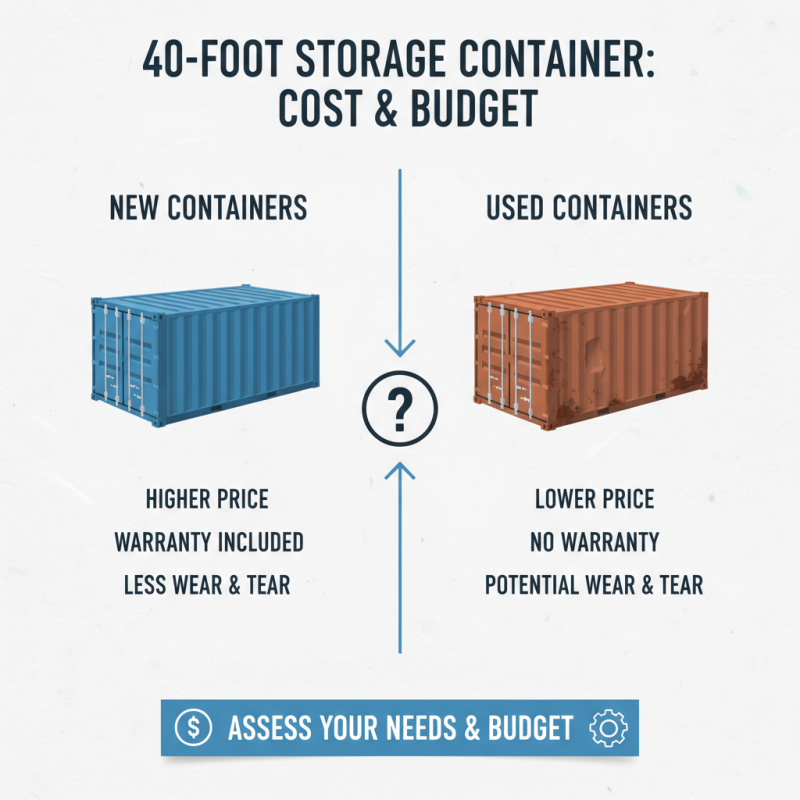
When selecting a 40-foot storage container, cost is a significant factor to consider. Prices can vary widely based on location and condition. New containers are pricier but come with warranties. Used containers are cheaper but may have wear and tear. It’s crucial to assess what best fits your budget and needs.
Tips: Always inspect a used container before purchase. Look for rust, dents, or leaks. These issues could affect your investment.
Hidden costs can arise. Delivery fees, taxes, and permits might add to the overall expense. Factor these into your budget early. It’s easy to overlook these details, but they can impact your spending.
Tips: Get quotes from multiple suppliers. This will give you a better understanding of the market rates. It may also reveal unexpected options.
Think about how long you’ll use the container. If you plan for a short-term need, renting could be a more economical choice. However, for long-term needs, buying might be worth the investment. Assess the pros and cons carefully.
Identifying Additional Features and Customization Options
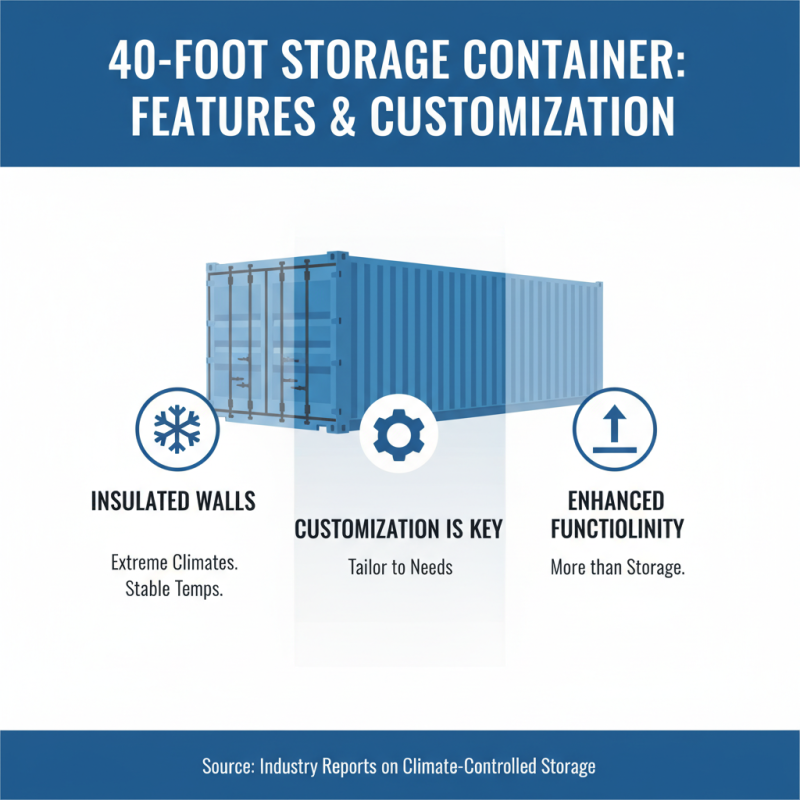
When choosing a 40-foot storage container, additional features can enhance its functionality. Customization is key. Consider the environment. For example, if you need extra insulation, choose containers with insulated walls. According to industry reports, insulated containers can maintain internal temperatures better than standard ones, especially in extreme climates.
Lighting is another important feature. Natural daylight can improve visibility and safety. Containers with windows or skylights can help reduce energy costs. Locks and security features, like reinforced doors, provide peace of mind. Statistics show incidents of theft can decrease significantly with better locks, enhancing overall security.
Ventilation is also critical. Poor air circulation can lead to moisture buildup, damaging stored items. Some designs come with adjustable vents. This customizable aspect is essential for preserving the content's condition. Custom features can cater to unique needs but may come at a higher cost. Balancing budget and requirements is vital. Assessing these factors can lead to better decisions while avoiding regrets later on.