Why Choose a Food Cooler for Global Sourcing?
Global food sourcing depends on more than attractive prices and reliable suppliers. Temperature control can determine whether products arrive fresh, safe, and commercially usable. A Food Cooler supports this control during storage, consolidation, transport, and short-term delivery. It helps protect seafood, dairy, meat, produce, and temperature-sensitive prepared foods from heat exposure and quality decline.
The scale of the problem is substantial. FAO’s The State of Food and Agriculture 2019 estimated that 14% of food is lost between harvest and retail, with annual economic losses of about US$400 billion. UNEP’s Food Waste Index Report 2024 reported 1.05 billion tonnes of food waste in 2022. Retail represented approximately 12% of that total. These figures make cold-chain decisions more than a logistics preference.
A suitable Food Cooler can maintain a stable internal environment while products wait at a warehouse dock or transfer point. The right choice still depends on the product, packaging, loading pattern, route, and local climate. A dairy shipment may need consistent chilled temperatures, while leafy vegetables require airflow and moisture management. One design cannot solve every problem.
That assumption is worth challenging.
The WHO estimates that contaminated food causes about 600 million illnesses and 420,000 deaths each year. A cooler does not replace sanitation, monitoring, or trained handling. It is one control within a wider food-safety system. Global Sourcing professionals should examine temperature records, insulation performance, cleaning access, energy use, spare parts, and service support before purchasing. The best solution is not always the cheapest unit. It is the one that protects quality repeatedly, under real operating conditions.
What Is a Food Cooler and How Does It Support Global Sourcing?
Why Choose a Food Cooler for Global Sourcing?
What Is a Food Cooler and How Does It Support Global Sourcing?
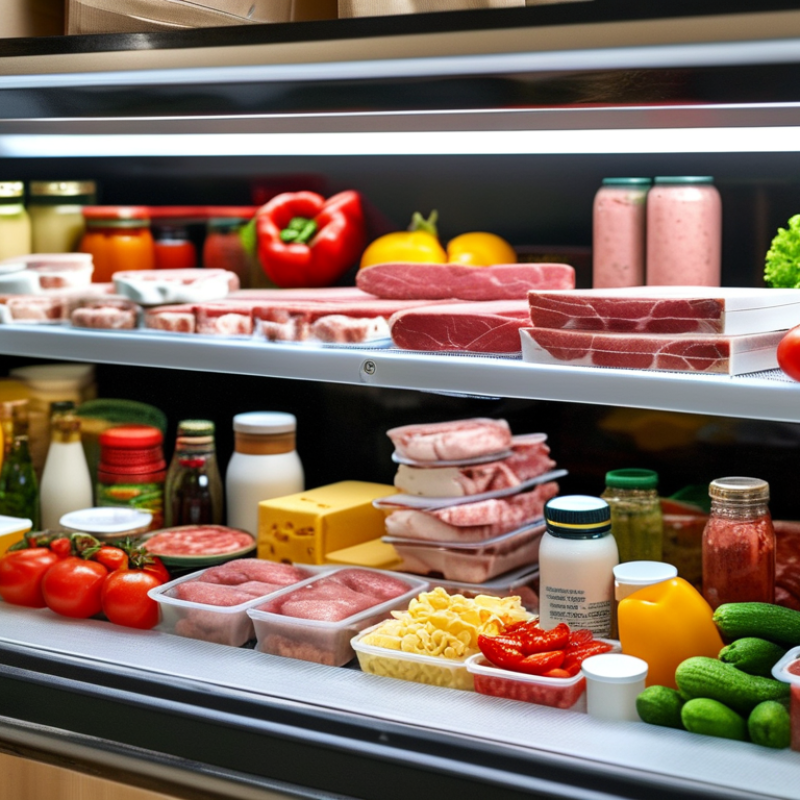
A food cooler is an insulated, temperature-controlled space for storing and moving perishable products. It protects meat, seafood, dairy, produce, and prepared foods during sourcing and distribution. Unlike a standard warehouse, it maintains a defined temperature range and limits exposure to heat, humidity, and sudden changes.
This matters when products cross borders and spend hours at ports or inspection facilities. A stable cooler can preserve texture, reduce spoilage, and provide safer handling conditions. The FAO’s State of Food and Agriculture 2019 report estimates that 14% of food is lost between harvest and retail worldwide. That figure makes temperature control a sourcing decision, not merely a storage expense.
Small details matter. A receiving team should check product temperature, packaging condition, airflow, and data logs. A cooler filled beyond its design capacity may create warm pockets near the door. That mistake is easy to miss. The UNEP Food Waste Index Report 2024 estimated 1.05 billion tonnes of food waste in 2022, representing nearly one-fifth of food available to consumers. Better cooling cannot solve every supply-chain weakness, but it can reduce avoidable losses. Suppliers and buyers should also review backup power, calibration records, cleaning routines, and delivery timing. A food cooler is useful only when people operate it consistently.
Which Cooling Features Help Preserve Sourced Food During Transit?
A food cooler protects sourced products by slowing temperature change during transit. Good insulation is the foundation. Thick foam walls reduce heat entering from hot loading areas and delivery vehicles. A tight lid seal matters just as much. Small gaps can admit warm air and cause condensation.
Pre-cooling the cooler and food before loading improves temperature stability. Cold packs or phase-change packs should match the expected journey length. Too few packs may leave the center warm, while too many can freeze delicate produce. A simple internal thermometer helps confirm actual conditions, not assumptions. Better models include data logging, which records temperature changes during handling delays. This evidence supports more reliable receiving checks.
Airflow also deserves attention. Packed items need contact with cold surfaces without being crushed. Separate compartments can protect soft fruit, prepared foods, or moisture-sensitive ingredients. A drain plug makes cleaning easier after melting ice, although it can become a leak point if poorly closed. In practical transit checks, I look for strong hinges, replaceable seals, and handles that remain secure under load. No cooler is perfect. Road delays, repeated opening, and direct sunlight can still reduce performance. Testing one packed shipment before larger sourcing orders is wiser than trusting specifications alone.
How Does a Food Cooler Improve International Supply Chain Handling?
An insulated food cooler gives international shipments a controlled thermal space, especially when routes include ports, warehouses, and long transfers. In practical handling, the advantage begins before loading. Staff can pre-cool the container, place chilled products inside, and limit door openings during staging. A stable internal temperature reduces quality loss caused by heat spikes, uneven airflow, or delayed handovers. Small details matter.
For global sourcing teams, a cooler also improves process visibility. A calibrated temperature logger records conditions throughout the journey. Those records help receiving staff compare product temperature with transport documents and agreed specifications. Clear readings can support supplier reviews, insurance discussions, and faster decisions when a shipment arrives warm. Use simple checklists. They reduce avoidable mistakes.
However, a cooler is not a complete solution. Poorly packed cartons may block airflow, while warm products can overload the cooling system. Operators should check pre-cooling time, package spacing, drainage, power continuity, and sensor placement. In my view, this is where many plans become too optimistic. A route may look efficient on paper, yet one open door at a sunny transfer yard can change the result. Reviewing temperature data after each shipment reveals weak points, although data alone cannot replace trained handling. That lesson deserves attention.
Why Choose a Food Cooler for Global Sourcing?
Typical chilled handling temperature ranges for internationally traded food categories
A food cooler helps maintain stable temperatures during storage, loading, customs clearance, and long-distance transport. Keeping products within their recommended chilled range supports food safety, slows quality deterioration, and reduces avoidable losses across international supply chains.
Reference basis: common chilled-food handling guidance from Codex Alimentarius and public food-safety regulations. Exact requirements vary by product, origin, destination, and applicable law.
What Costs and Compliance Factors Should Global Buyers Consider?
Why Choose a Food Cooler for Global Sourcing?
What Costs and Compliance Factors Should Global Buyers Consider?
A food cooler protects temperature-sensitive products during long, uncertain journeys. The cost is more than the purchase price. Buyers should calculate insulation, refrigerants, coolant packs, data loggers, labor, customs handling, storage, and disposal. FAO’s State of Food and Agriculture 2019 reported that 14% of food is lost between harvest and retail. Poor temperature control can increase that loss.
Compliance creates another layer of expense. Buyers should confirm destination rules for food-contact materials, labeling, sanitation, allergen control, and temperature records. HACCP-based procedures remain widely used for identifying food safety hazards. Chilled products often require temperatures near 0–5°C, but limits vary by product and destination. The UNEP Food Waste Index Report 2024 estimated that 1.05 billion tonnes of food were wasted in 2022. Cooler performance therefore affects both financial results and environmental reporting.
Tips: Request transport validation before signing a large contract. Test the cooler with realistic product weight, route duration, and weather conditions. Keep digital temperature records. Check whether local authorities accept the proposed materials and monitoring method. A cheaper cooler may look efficient on a spreadsheet, yet fail after a delayed customs inspection. I would not assume one design fits every market. Humidity, airport handling, and final-mile exposure can change the result. Review the landed cost quarterly, not only at purchase.
Why Choose a Food Cooler for Global Sourcing? – What Costs and Compliance Factors Should Global Buyers Consider?
| Evaluation Dimension | Typical Data or Requirement | Why It Matters in Global Sourcing | Buyer Cost or Compliance Impact |
|---|---|---|---|
| Recommended temperature range | Chilled food: approximately 0–5°C; frozen food: commonly −18°C or below | Temperature requirements vary by food category, destination market, and product shelf-life | A cooler that cannot maintain the required range may cause spoilage, rejected shipments, or regulatory action |
| Insulated capacity | Common portable capacities: approximately 10–100 liters; larger units are available for commercial logistics | Capacity should match product volume, packaging, ice packs, and required air circulation | Oversizing increases purchase, storage, and freight costs; undersizing can create unsafe loading pressure |
| Indicative purchase price | Basic insulated containers: about USD 20–100; powered or commercial-grade systems: about USD 150–1,500+ | Price depends on capacity, insulation, active cooling, monitoring, durability, and order quantity | Use supplier quotations and total landed cost rather than unit price alone; figures exclude freight, duties, and taxes |
| Thermal insulation | Closed-cell foam, vacuum insulation panels, or equivalent tested insulation systems | Better insulation reduces heat gain during customs delays, transfers, and last-mile delivery | Higher insulation performance can increase initial cost but reduce coolant use and product-loss risk |
| Cold-hold time | Often specified from several hours to multiple days, depending on ambient temperature, coolant load, and opening frequency | The stated hold time should reflect the actual route, including weekends, inspections, and unexpected delays | Longer hold time may require more insulation or coolant, increasing packaging and handling costs |
| Food-contact materials | Materials should be suitable for food contact and supported by migration or conformity documentation where required | Food-contact surfaces can transfer substances to food if materials, inks, adhesives, or coatings are unsuitable | Request declarations of compliance and test reports for each destination market before mass production |
| Key regulatory frameworks | Examples include EU Regulation (EC) No. 1935/2004, EU GMP Regulation (EC) No. 2023/2006, and applicable U.S. food-contact requirements | Requirements differ by country and may cover plastics, coatings, adhesives, labeling, and traceability | Non-compliance can result in relabeling, detention, recalls, fines, or loss of market access |
| HACCP and preventive controls | The cooler should be incorporated into the buyer’s HACCP plan or other documented food-safety control system | Temperature control is commonly treated as a critical or preventive control for perishable foods | May require validation, monitoring records, corrective actions, and employee training |
| Temperature monitoring | Use calibrated data loggers or sensors with suitable accuracy, recording intervals, and downloadable records | Recorded evidence helps verify that the shipment remained within specification | Adds equipment and calibration costs but can reduce disputes, rejected loads, and insurance claims |
| Temperature mapping and validation | Test multiple sensor positions under representative ambient conditions and loading patterns | Internal hot spots and cold spots may not be identified by a single measurement point | Validation testing is an upfront cost that supports repeatable, defensible shipping procedures |
| Coolant selection | Gel packs, dry ice, or phase-change materials may be used according to the temperature target | Different coolants have different holding times, handling procedures, and transport restrictions | Dry ice may trigger ventilation and air-transport requirements; reusable packs increase reverse-logistics needs |
| International freight and dimensional weight | Freight charges may be based on actual weight or volumetric weight, whichever is higher | Large empty spaces and thick insulation can substantially increase billable volume | Compare packed dimensions, stackability, pallet density, Incoterms, duties, and destination handling fees |
| Electrical and battery compliance | Powered units may require electrical safety, electromagnetic compatibility, battery, and transport documentation | Requirements depend on voltage, destination, battery chemistry, and mode of transport | Certification, labeling, testing, and dangerous-goods handling can add lead time and landed cost |
| Cleaning and sanitation | Use smooth, non-absorbent, cleanable surfaces; define cleaning agents, frequency, and inspection procedures | Residues and damaged surfaces can support contamination or cross-contact | Cleanability reduces sanitation labor and helps meet customer audit expectations |
| Traceability and documentation | Maintain purchase specifications, batch records, test reports, temperature logs, and corrective-action records | Documentation supports investigations, audits, customs inquiries, and targeted recalls | Administrative costs are generally lower than the financial impact of an undocumented temperature excursion |
| Total cost of ownership | Purchase price + coolant + monitoring + validation + freight + duties + cleaning + maintenance + loss risk | The lowest quoted unit price may not produce the lowest cost per successful shipment | Use a route-specific cost model and compare reusable, disposable, passive, and powered cooler options |
Note: Cost ranges are indicative planning figures in U.S. dollars and vary by specification, order quantity, destination, shipping method, and testing scope. Buyers should confirm current legal requirements and obtain route-specific quotations before purchasing.
How Can Businesses Choose the Right Food Cooler for Global Trade?
Choosing the right food cooler starts with the product, not the shipping route. Fresh seafood, dairy, produce, and frozen goods need different temperature ranges. A cooler should state its tested holding time, usable capacity, insulation performance, and recovery speed after opening.
The 2024 UNEP Food Waste Index Report estimates that 1.05 billion tonnes of food were wasted in 2022. Poor temperature control contributes to avoidable loss across storage and transport. Buyers should therefore request independent temperature-mapping records, not rely only on brochure claims. The World Health Organization reports about 600 million foodborne illness cases each year. Reliable monitoring matters. Look for calibrated sensors, visible alarms, secure lids, and data records that remain readable during border inspections.
Size also requires careful judgment. An oversized cooler wastes space and increases handling effort. An undersized unit may force overpacking and block cold-air circulation. Test the cooler with the actual carton shape, gel packs, dividers, and loading pattern. Confirm cleaning access, drainage, material safety, and compatibility with the destination’s food-handling requirements. Codex food hygiene principles and ISO 22000 practices provide useful reference points for documented control.
A perfect specification can still fail in a hot loading yard. It happens. Trial shipments should measure internal temperature at the center, corners, and lid area. Route duration, customs delays, seasonal heat, and repeated opening should be included. The cheapest cooler may become expensive after one rejected shipment, although that risk is often underestimated.
Article Source:
Get a quote
Get a quote
Read More
Accept AllReject AllCustomise
Privacy Overview
| Cookie | Duration | Description |
|---|---|---|
| cookielawinfo-checkbox-advertisement | 1 year | Set by the GDPR Cookie Consent plugin, this cookie records the user consent for the cookies in the "Advertisement" category. |
| cookielawinfo-checkbox-analytics | 11 months | This cookie is set by GDPR Cookie Consent plugin. The cookie is used to store the user consent for the cookies in the category "Analytics". |
| cookielawinfo-checkbox-functional | 11 months | The cookie is set by GDPR cookie consent to record the user consent for the cookies in the category "Functional". |
| cookielawinfo-checkbox-necessary | 11 months | This cookie is set by GDPR Cookie Consent plugin. The cookies is used to store the user consent for the cookies in the category "Necessary". |
| cookielawinfo-checkbox-others | 11 months | This cookie is set by GDPR Cookie Consent plugin. The cookie is used to store the user consent for the cookies in the category "Other. |
| cookielawinfo-checkbox-performance | 11 months | This cookie is set by GDPR Cookie Consent plugin. The cookie is used to store the user consent for the cookies in the category "Performance". |
| CookieLawInfoConsent | 1 year | CookieYes sets this cookie to record the default button state of the corresponding category and the status of CCPA. It works only in coordination with the primary cookie. |
| viewed_cookie_policy | 11 months | The cookie is set by the GDPR Cookie Consent plugin and is used to store whether or not user has consented to the use of cookies. It does not store any personal data. |
| Cookie | Duration | Description |
|---|---|---|
| _cs_c | 1 year 1 month | The cookie is used by Content Square to save the user consent to be tracked. |
| Cookie | Duration | Description |
|---|---|---|
| _cs_id | 1 year 17 days 20 hours 13 minutes | This cookie is used to store the ContentSquare's user identifier ID. This is a persistent cookie and expires after 13 months. |
| _cs_s | 1 hour | This cookie is used to store the number of page's viewed by a visitor within the session for ContentSquare's solution. |
| _ga | 1 year 1 month 4 days | Google Analytics sets this cookie to calculate visitor, session and campaign data and track site usage for the site's analytics report. The cookie stores information anonymously and assigns a randomly generated number to recognise unique visitors. |
| _ga_* | 1 year 1 month 4 days | Google Analytics sets this cookie to store and count page views. |
| _gcl_au | 3 months | Google Tag Manager sets the cookie to experiment advertisement efficiency of websites using their services. |
| Cookie | Duration | Description |
|---|---|---|
| test_cookie | 15 minutes | doubleclick.net sets this cookie to determine if the user's browser supports cookies. |
| Cookie | Duration | Description |
|---|---|---|
| _cs_root-domain | session | Description is currently not available. |
| _cs_same_site | session | Description is currently not available. |