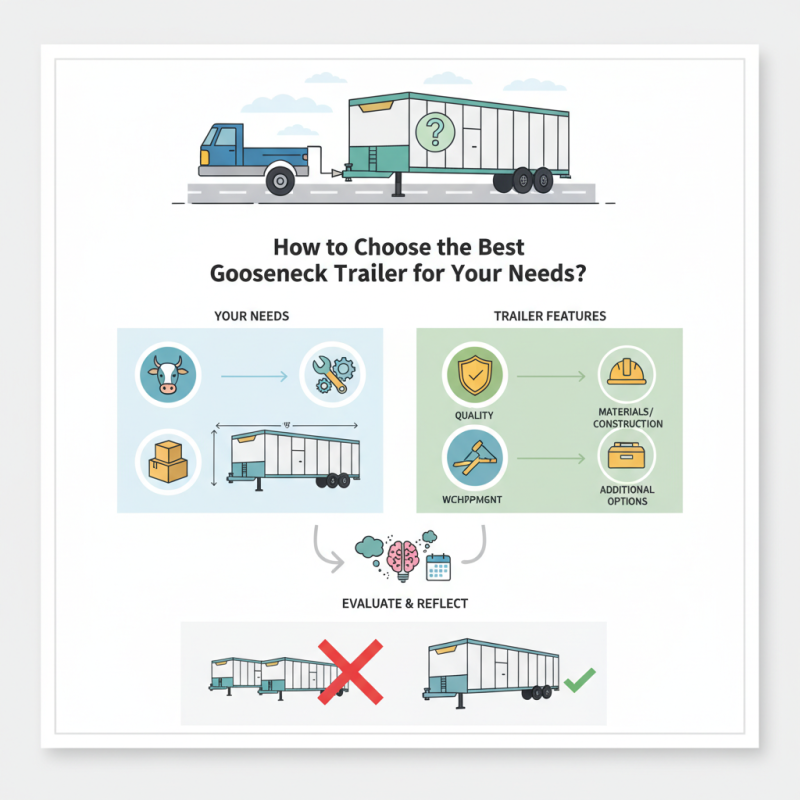
How to Choose the Best Gooseneck Trailer for Your Needs?
Choosing the best Gooseneck Trailer can be daunting. Different models and specifications may confuse potential buyers. Understanding your specific needs is essential.
When selecting a Gooseneck Trailer, consider your hauling requirements. What will you transport? Are you moving livestock, equipment, or cargo? Ensure the trailer meets those demands. The right size and weight capacity matter significantly.
Additionally, assess the features offered by various trailers. Look for quality materials and construction. Some trailers come with additional features like ramps or storage options. Take your time to reflect on what suits you best. Sometimes, the most popular option may not be the best fit. Avoid rushing into a decision without proper evaluation.
Understanding the Basics of Gooseneck Trailers
Gooseneck trailers are popular for their stability and capacity. They connect to a hitch in the bed of a truck. This design allows for better weight distribution. It provides enhanced maneuverability compared to traditional trailers. You can easily tow heavier loads with confidence. Understanding their features is key to making a good choice.
Size is an important factor. Gooseneck trailers come in various lengths and widths. Choosing the right size depends on what you plan to haul. A smaller trailer may work for everyday items. But larger trailers are better for bigger equipment. Remember that size affects maneuverability and parking.
Build quality also matters. Look for trailers made from robust materials. A well-built trailer lasts longer and performs better. Regular maintenance is crucial, too. Neglecting minor issues can lead to bigger problems down the line. Don't forget to reflect on your specific needs. Each user's requirements are different. Personalizing your choice can lead to more satisfaction.
Comparative Analysis of Gooseneck Trailer Features
Evaluating Your Towing Capacity and Vehicle Compatibility
When considering a gooseneck trailer, your towing capacity is crucial. Know your vehicle’s specifications. Many underestimate their limitations. Check your owner's manual or online resources. Understanding this ensures that you select a trailer that fits your needs.
Tips: Always leave a safety margin. If your vehicle can tow 3,000 pounds, consider a trailer closer to 2,500 pounds. This buffer helps with unexpected loads. Trailer weight varies. Think about cargo, too.
Vehicle compatibility is another factor. Adjustments might be necessary for some vehicles. Not every truck can handle a gooseneck trailer. Ensure your hitch is compatible. Some may require upgrades. Ignoring this can lead to issues.
Tips: Measure the distance from your vehicle’s bed to the trailer. This measurement can affect handling. If the trailer sits too high or low, it can create instability. A knowledgeable mechanic can provide valuable insights. Always consult experts when unsure.
Identifying the Right Size and Weight Capacity for Your Needs
Choosing the right size and weight capacity for your gooseneck trailer is crucial. You must assess your towing vehicle’s capabilities first. Check the gross vehicle weight rating (GVWR) and payload capacity. These factors determine how much weight your vehicle can safely tow.
Consider the cargo you'll transport. Different cargo types require varying trailer dimensions. For heavy machinery, a larger trailer may be necessary. Don’t forget about the length of the trailer. A longer trailer can hold more cargo but may be harder to maneuver. Think about your maneuvering skills and parking space available.
Weight distribution is also vital. Ensure you load the trailer evenly to avoid sway during transport. An unbalanced load can lead to accidents or damage. If you are new to towing, seek advice from experienced users. Reflect on your needs carefully. The wrong choice can lead to regrets later on.
How to Choose the Best Gooseneck Trailer for Your Needs? - Identifying the Right Size and Weight Capacity for Your Needs
| Trailer Type | Weight Capacity (lbs) | Deck Length (ft) | Axles | Best Use Case |
| Standard Gooseneck | 10,000 - 20,000 | 20 - 30 | 2 | Heavy Equipment Transport |
| Utility Gooseneck | 7,000 - 15,000 | 16 - 24 | 1 | Landscaping & Hauling |
| Flatbed Gooseneck | 12,000 - 25,000 | 20 - 40 | 2 | Construction Materials |
| Car Hauler Gooseneck | 10,000 - 14,000 | 20 - 28 | 2 | Automobile Transport |
| Livestock Gooseneck | 7,000 - 10,000 | 20 - 30 | 1 | Transporting Animals |
Choosing Between Different Types of Gooseneck Trailers
Choosing the right gooseneck trailer can feel overwhelming. Different types serve various purposes. Flatbed, utility, and cargo gooseneck trailers are popular options. Each has distinct features suited for specific needs. According to industry reports, flatbed models account for over 40% of sales. They are ideal for hauling equipment and materials.
Tip: Consider your weight requirements. A heavier load needs a more robust design. Ensure compatibility with your towing vehicle. Too much weight can cause safety issues. Check your vehicle specifications before deciding.
Utility trailers often feature side rails and ramps. They are great for landscape or construction businesses. On the flip side, cargo models often have enclosed structures. They protect sensitive cargo from the elements. However, think about ventilation and accessibility. Some owners struggle with access to packed items.
Tip: Review your storage needs carefully. Sometimes, a larger trailer is unnecessary. Oversized models might waste fuel and result in handling difficulties. Make sure to balance size with practicality.
Exploring Essential Features and Accessories for Gooseneck Trailers
When selecting a gooseneck trailer, it's crucial to consider essential features and accessories that enhance usability. A recent industry survey indicates that over 70% of users prioritize weight distribution capabilities. Proper weight distribution is vital for stability during transport. Adjustable couplers can help achieve this, ensuring a smoother ride. Additionally, a trailer’s load capacity is often highlighted by manufacturers.
Moreover, accessories such as tool boxes and spare tire mounts significantly affect user experience. Up to 40% of trailer owners report that these features improve efficiency and safety. For instance, having a built-in toolbox increases convenience for on-the-road repairs. It also maintains organization as tools are readily accessible. However, many users overlook maintenance requirements, leading to performance issues over time.
Another important consideration involves decking materials. Composite materials are becoming popular due to their durability and lightweight nature. However, some users express concerns about their longevity compared to traditional wood. Making an informed choice requires weighing the pros and cons. In a market where features may not always meet expectations, awareness leads to better decisions.