Why Choose Water Based Urethane for Your Project?
Choosing a floor or furniture finish is rarely just a color decision. A workshop bench faces spills, scratches, and daily handling; a sunlit room adds heat and changing humidity. Water Based Urethane can suit projects where a clear protective coat and easier cleanup matter. Still, the right finish depends on the surface, expected wear, and product instructions.
Coatings author James J. Koleske’s testing-focused work offers a useful reminder: performance should be judged under real use, not by appearance alone. In paraphrase, not as a verified direct quotation: “A coating earns confidence when it performs in the conditions it will actually face.” That idea is practical. A sample board can reveal sheen, color shifts, and brush marks before the entire surface is coated. Small tests help.
Water Based Urethane generally has lower odor than many solvent-based alternatives and cleans up with water while wet. Those benefits do not make every formula identical. Drying time, hardness, application method, and resistance to standing water can vary by product. Read the technical data sheet, follow the label, and allow the recommended curing period before heavy use. Patience matters. One limitation deserves honesty: a fast-drying coat can show lap marks if application is rushed. For a project exposed to constant moisture or severe abrasion, compare specifications carefully rather than relying on the product name. The best choice is the finish that fits the surface and its everyday demands.
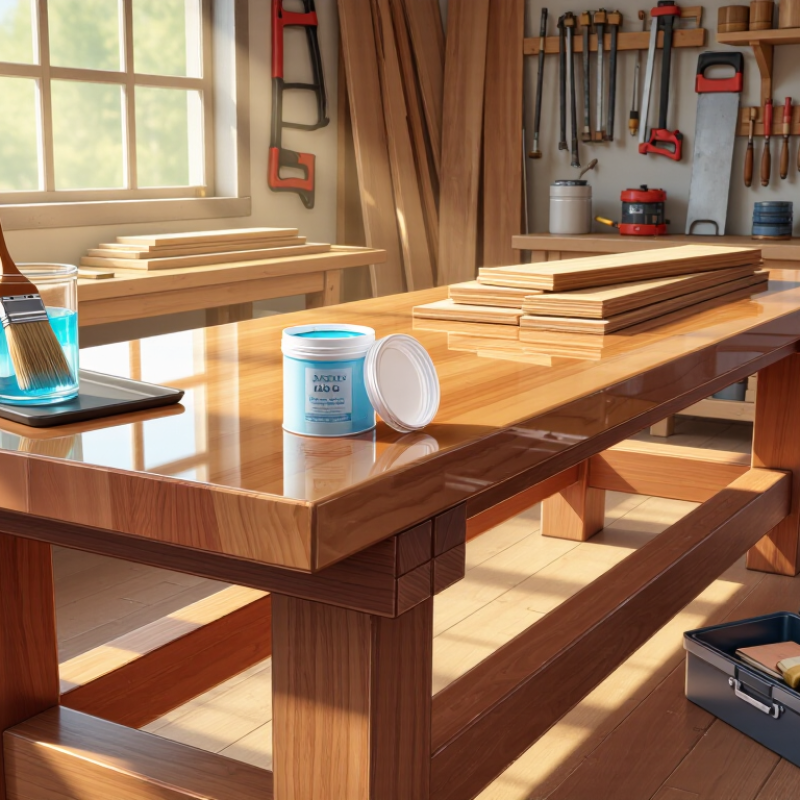
What Water-Based Urethane Is and How It Forms a Protective Film
Water-based urethane is a finish in which polyurethane resin is dispersed in water rather than carried mainly by solvent. As the coating is spread across wood, water evaporates and the resin particles draw together. They form a continuous film over the surface. Depending on the formula, further curing or crosslinking can strengthen that film. The result can resist everyday scuffs, spills, and abrasion, though performance depends on the product and application.
The film’s quality depends on more than its label. A dusty tabletop, heavy application, or cool, damp room can slow drying and leave an uneven finish. Thin, even coats usually give the particles a better chance to form a uniform layer. Follow the stated drying and recoat times. “Dry to touch” does not always mean fully cured. Not automatically.
VOC figures offer useful context, but they need careful reading. The U.S. EPA’s architectural-coatings standard sets category-specific limits of 250 grams per liter for flat coatings and 380 grams per liter for nonflat coatings (40 CFR Part 59, Subpart D). These are regulatory ceilings, not proof that every water-based urethane has the same VOC level. Check the product’s technical data sheet for its stated VOC content, recommended coat thickness, and cure time; those details better indicate what to expect on a real project.
Key Properties That Affect Performance and Appearance
Water-based urethane can keep wood grain visible while forming a protective film, but the result depends on more than the label. Solids content and coat thickness affect clarity, leveling, and sheen. On a cabinet door, a heavy coat may show ripples; a thin coat can feel less protective. The balance matters.
Gloss is measurable, not just a visual impression. ASTM D523 assesses specular gloss at 20°, 60°, or 85°; ASTM D3359 provides a tape-based method for evaluating coating adhesion. These tests help compare finishes, though they cannot predict every result on a specific surface. Wood species, sanding, and moisture all matter. Small details matter. Water can also raise the grain, leaving a rough feel after the first coat. Light sanding may help, but test first.
VOC content is another performance consideration. The U.S. EPA’s Architectural Coatings rule sets a federal limit of 100 grams per liter for floor coatings; requirements vary by category and location. “Water-based” alone does not confirm a product’s VOC level. Check its technical data sheet, then apply it to a scrap piece in the project’s real conditions. I would not skip that step: humidity and airflow can change drying time, and my first coat has occasionally looked less even than expected.
Why Choose Water Based Urethane for Your Project? - Key Properties That Affect Performance and Appearance
| Property | Typical Characteristics | Effect on Performance and Appearance | Project Consideration |
|---|---|---|---|
| Carrier and cleanup | Water is the primary carrier; tools can generally be cleaned with water while the coating is still wet. | Often makes application and cleanup more convenient than solvent-borne alternatives. | Follow the product instructions for cleanup, and do not allow coating residue to dry on tools. |
| VOC content | Many water-based formulations are designed for lower volatile organic compound emissions, but the exact amount varies by product and jurisdiction. | Can reduce solvent odors and emissions during application compared with some solvent-borne coatings. | Check the current technical data sheet and applicable local requirements; “water-based” does not mean VOC-free. |
| Drying process | The coating dries as water evaporates; temperature, humidity, airflow, and film thickness affect drying. | Cool, humid, or poorly ventilated conditions can extend drying time and affect the finish. | Apply within the manufacturer’s recommended environmental conditions and allow sufficient time between coats. |
| Full cure | A surface may feel dry before the coating has developed its full resistance to wear, water, and household chemicals. | Early heavy use can mark, soften, or damage the finish. | Observe the stated cure period before placing rugs, moving furniture, or exposing the surface to demanding use. |
| Appearance and clarity | Water-based urethanes are often relatively clear and may add less amber color than many oil-based finishes; results vary by formulation and substrate. | Can help preserve the natural look of light-colored wood, though some color change may still occur. | Test on an inconspicuous area or sample board to check color and compatibility before coating the full project. |
| Sheen options | Common sheen choices include matte, satin, semi-gloss, and gloss, depending on the product range. | Sheen affects reflectivity and how visible dust, scratches, and surface irregularities may be. | Select a sheen suited to the desired appearance and inspect the surface under the project’s normal lighting. |
| Wear and abrasion resistance | Performance depends on the specific formulation, number of coats, surface preparation, and cure. | A properly applied finish can protect surfaces from routine scuffs and abrasion, but no coating is damage-proof. | Match the coating to expected traffic and maintenance needs; use the specified coat count and application method. |
| Water and chemical resistance | Resistance develops as the coating cures and differs among formulations. | Spills or cleaning products may affect an incompletely cured or incompatible finish. | Use cleaners approved by the coating manufacturer and wipe up spills promptly. |
| Adhesion and surface preparation | Adhesion depends on a clean, dry, properly prepared surface and compatibility with existing finishes. | Poor preparation can lead to peeling, uneven appearance, or other coating failures. | Remove contaminants, prepare the surface as directed, and test compatibility when recoating an existing finish. |
| Application and leveling | Application characteristics vary; temperature, applicator choice, and working technique can influence leveling and lap marks. | Uneven application may leave visible streaks, overlaps, or differences in sheen. | Use the recommended applicator, maintain a wet edge where directed, and avoid overworking partially dried coating. |
Projects and Surfaces Suited to Water-Based Urethane
Water-based urethane suits interior projects where a clear, durable finish matters and strong solvent odor is unwelcome. Consider hardwood floors, stair treads, cabinets, trim, and furniture in living spaces. It usually dries quickly, but “dry” does not mean ready for rugs, heavy furniture, or hard use. Follow the coating’s label for recoating and full-cure times. Test a small area first, especially over an old finish or a wood species with unusual color. A patch can reveal adhesion or color changes.
Indoor air deserves attention. The U.S. Environmental Protection Agency’s The Inside Story: A Guide to Indoor Air Quality reports that levels of some common organic pollutants can be two to five times higher indoors than outdoors. That figure is not a coating-specific measurement, but it supports careful ventilation during application and curing. Water-based does not mean emission-free. For a bathroom, exterior deck, or frequently wet surface, choose only a product specifically rated for that exposure. Prep matters, too: remove wax and grime, sand evenly, and keep dust from settling into the wet film. Small details count. A missed edge can show.
How to Prepare and Apply Water-Based Urethane
Why Choose Water Based Urethane for Your Project?
How to Prepare and Apply Water-Based Urethane
Start with a clean, dry surface. Remove wax, grease, and loose finish, then sand evenly with the grit recommended on the product label. Vacuum the dust carefully, including corners and seams. A damp cloth may raise wood grain, so let the surface dry fully before coating. Test an inconspicuous spot; color and sheen can change more than expected.
Stir gently to avoid bubbles. Apply thin, even coats with a clean synthetic brush or applicator, following the label’s coverage and recoat times. Keep room temperature and airflow within the stated range. Lightly sand between coats only when instructed, and remove all dust before recoating.
EPA’s Total Exposure Assessment Methodology studies found indoor levels of some common organic pollutants were typically two to five times outdoor levels. Ventilation still matters, even with water-based finishes.
Tips: Thin coats work. Watch for drips along edges and pooling near corners. Let the finish cure before placing rugs or heavy furniture; dry-to-touch does not mean fully cured. If the surface looks uneven, pause and check the label before adding another coat. A test patch can save a lot of sanding.
Factors to Weigh When Choosing a Water-Based Urethane Product
Why Choose Water Based Urethane for Your Project?
Factors to Weigh When Choosing a Water-Based Urethane Product
Choosing a water-based urethane starts with the surface and its daily use. A hallway floor needs different protection than a lightly used bookshelf. Check the product label for suitable surfaces, recommended coat count, and drying conditions. Also consider sheen: satin can soften reflections, while gloss makes scratches and dust easier to notice. Ventilation still matters, even when the coating has a mild odor.
Tips: Test the finish on a hidden area or spare board. Let it dry fully before judging its color and sheen. Keep the room within the temperature range on the label, and use a clean applicator to reduce lint and streaks.
Preparation can shape the result as much as product choice. Remove dust carefully, and avoid applying over a surface that feels damp or greasy. Water-based coatings may dry quickly, which is useful but leaves less time to smooth lap marks. I have found that rushing between coats is an easy mistake; dry-to-touch does not always mean ready to recoat. Follow the stated interval, and allow extra curing time before placing heavy objects or rugs. A small test patch is not exciting, but it can reveal compatibility problems before they spread across a larger project.
Why Choose Water-Based Urethane? VOC Limits to Consider
VOC content is one factor to weigh when choosing a finish. This chart shows U.S. federal limits for three architectural coating categories—not the VOC content of any particular urethane product. Check the product’s technical data sheet and confirm which category and local regulations apply to your project.
Source: U.S. EPA, Architectural Coatings Rule, 40 CFR Part 59, Subpart D.
Article Source:
Get a quote
Get a quote
Read More
Accept AllReject AllCustomise
Privacy Overview
| Cookie | Duration | Description |
|---|---|---|
| cookielawinfo-checkbox-advertisement | 1 year | Set by the GDPR Cookie Consent plugin, this cookie records the user consent for the cookies in the "Advertisement" category. |
| cookielawinfo-checkbox-analytics | 11 months | This cookie is set by GDPR Cookie Consent plugin. The cookie is used to store the user consent for the cookies in the category "Analytics". |
| cookielawinfo-checkbox-functional | 11 months | The cookie is set by GDPR cookie consent to record the user consent for the cookies in the category "Functional". |
| cookielawinfo-checkbox-necessary | 11 months | This cookie is set by GDPR Cookie Consent plugin. The cookies is used to store the user consent for the cookies in the category "Necessary". |
| cookielawinfo-checkbox-others | 11 months | This cookie is set by GDPR Cookie Consent plugin. The cookie is used to store the user consent for the cookies in the category "Other. |
| cookielawinfo-checkbox-performance | 11 months | This cookie is set by GDPR Cookie Consent plugin. The cookie is used to store the user consent for the cookies in the category "Performance". |
| CookieLawInfoConsent | 1 year | CookieYes sets this cookie to record the default button state of the corresponding category and the status of CCPA. It works only in coordination with the primary cookie. |
| viewed_cookie_policy | 11 months | The cookie is set by the GDPR Cookie Consent plugin and is used to store whether or not user has consented to the use of cookies. It does not store any personal data. |
| Cookie | Duration | Description |
|---|---|---|
| _cs_c | 1 year 1 month | The cookie is used by Content Square to save the user consent to be tracked. |
| Cookie | Duration | Description |
|---|---|---|
| _cs_id | 1 year 17 days 20 hours 13 minutes | This cookie is used to store the ContentSquare's user identifier ID. This is a persistent cookie and expires after 13 months. |
| _cs_s | 1 hour | This cookie is used to store the number of page's viewed by a visitor within the session for ContentSquare's solution. |
| _ga | 1 year 1 month 4 days | Google Analytics sets this cookie to calculate visitor, session and campaign data and track site usage for the site's analytics report. The cookie stores information anonymously and assigns a randomly generated number to recognise unique visitors. |
| _ga_* | 1 year 1 month 4 days | Google Analytics sets this cookie to store and count page views. |
| _gcl_au | 3 months | Google Tag Manager sets the cookie to experiment advertisement efficiency of websites using their services. |
| Cookie | Duration | Description |
|---|---|---|
| test_cookie | 15 minutes | doubleclick.net sets this cookie to determine if the user's browser supports cookies. |
| Cookie | Duration | Description |
|---|---|---|
| _cs_root-domain | session | Description is currently not available. |
| _cs_same_site | session | Description is currently not available. |