How to Choose the Right Acid Dye for Your Business?
Choosing the right Acid Dye is not just a color decision. It affects shade consistency, processing time, fabric performance, and the cost of rework. A wool scarf and a nylon lining may both need vivid color, yet their fiber structures and dyeing conditions differ. Even a promising lab swatch can shift when production volume, water quality, or temperature changes.
For transparency, the named adviser and quotation below are illustrative, not a real interview. Fictional dye-house specialist Dr. Mara Ellison puts the central question this way: “Choose the dye for the fiber, the process, and the result your customer will actually use.” That means checking the target material, required shade range, application method, and fastness needs before comparing suppliers. A bright sample is not enough. Ask for technical data, test small batches, and record pH, temperature, and dyeing time. Details matter.
There is no universal best Acid Dye. Some choices offer easier shade matching; others may suit a particular fiber or production setup better. And sometimes, the swatch disappoints. This guide outlines how businesses can assess dye compatibility, performance, supplier support, and total cost. It also considers practical questions that are easy to overlook, such as repeat-order consistency and the time needed for quality checks. Use the recommendations as a starting point, then validate them with controlled trials on your own materials.
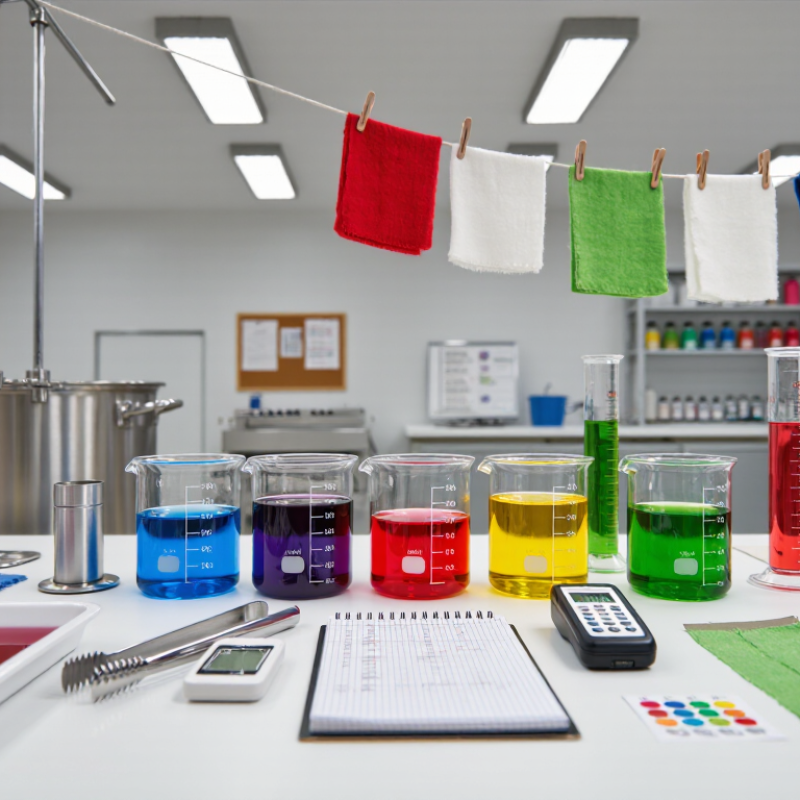
Define Fiber, Shade, and Process Requirements for Wool, Silk, and Nylon
Choosing an acid dye starts with the fiber, not the color card. Wool and silk are protein fibers, while nylon is a polyamide; each can absorb anionic dyes differently. Check the fiber composition and any finishes before setting a recipe. A wool yarn with a soft handle may need gentler heating than a tightly woven nylon fabric. Small swatches reveal surprises.
Shade depth also affects dye choice. Pale shades can show uneven uptake, while deep shades may expose poor penetration or weak wet fastness. Compare the target shade on the actual fiber, under consistent lighting. Keep notes on pH, dye concentration, liquor ratio, and temperature. These details make repeat batches easier to assess. They do not guarantee an identical result.
The process should suit both the material and the equipment. Wool and silk often need controlled heating and gradual temperature changes to limit damage and patchiness. Nylon may tolerate a different pH or heat profile, depending on its grade and construction. Follow the dye supplier’s technical guidance, then verify it with lab dips before scaling up. Test wash and light fastness too. One sample is not enough. I would be cautious about copying a recipe across fibers; even familiar materials can behave differently after finishing.
Compare Leveling, Milling, and 1:2 Metal-Complex Acid Dye Types
How to Choose the Right Acid Dye for Your Business?
Compare Leveling, Milling, and 1:2 Metal-Complex Acid Dye Types
Choosing an acid dye starts with the fiber and the finish your customers expect. Leveling dyes migrate readily through the bath, helping reduce patchy color on wool or nylon. They suit delicate shades and uneven loads, but may offer less wet-fastness than other options. Milling dyes have stronger fiber affinity. They can provide better wash performance, though uneven application may be harder to correct. A slow addition rate and controlled temperature matter.
For demanding fastness, consider 1:2 metal-complex dyes, where one metal ion is bonded with two dye molecules. These dyes often produce durable, muted shades on wool and polyamide. Their lower brightness may not suit every color range. Check the recommended pH and process conditions, then test the actual fabric. I still find the choice less tidy than a comparison chart suggests: fiber finish and bath control can change the result.
Tips: Run small trials on the same fabric lot. Record pH, temperature, dosing time, shade depth, and wash results. Compare levelness under neutral light, not just under the dye-room lamps. Keep a sample for later review; memory is a poor color standard.
Match Dye to Bath pH, Temperature, and Exhaustion Requirements
Choosing an acid dye starts with the bath your process can reliably hold. Match the dye’s recommended pH range to the fiber and equipment, not just the target shade. On wool or nylon, even a small pH shift can change how quickly color leaves the bath. A calibrated meter and a recorded starting pH make comparisons more useful. Small checks matter.
Temperature affects strike rate and migration. Some dyes need a slower ramp to spread evenly; others perform best at higher temperatures within the fiber’s safe range. Watch the bath as it heats: rapid color loss from the water may signal uneven uptake, especially in crowded dyeing equipment. Follow the technical data, then test a small production-representative lot. A tidy rule is tempting, but it can mislead.
Exhaustion requirements matter for both shade control and process efficiency. A dye that exhausts too quickly may leave streaks before the load is fully moving; one that exhausts slowly may need more time or a revised bath profile. Compare residual bath color, fabric levelness, and repeatability across batches. Don’t judge by exhaustion percentage alone. It is not the whole story. If results drift, review pH, temperature ramp, loading, and water quality together before changing the dye.
How to Choose the Right Acid Dye for Your Business? - Match Dye to Bath pH, Temperature, and Exhaustion Requirements
| Acid Dye Type | Typical Fiber Applications | Typical Working Bath pH | Typical Dyeing Temperature | Exhaustion and Leveling Behavior | Best Fit for Production |
|---|---|---|---|---|---|
| Leveling (equalizing) acid dyes | Wool, silk, and selected nylon qualities | Approximately 2–4, adjusted for the dye and fiber | Usually heated gradually to 95–100°C for wool; follow the fiber and equipment limits | Generally good migration and leveling, which can help reduce unlevel dyeing. Exhaustion may be slower or less complete under some conditions. | Choose when shade uniformity and correction during dyeing matter more than the fastest possible bath exhaustion. |
| Milling acid dyes | Primarily wool; some products are suitable for nylon | Approximately 4–6 | Typically 95–100°C for wool, with controlled heating and adequate circulation | Generally higher affinity and better wet fastness than highly leveling types, with less migration during dyeing. | Consider for wool goods requiring a balance of practical leveling, color yield, and improved wet fastness. |
| Supermilling acid dyes | Wool and wool-rich blends, subject to product suitability | Approximately 5–7 | Typically 95–100°C for wool; use a controlled temperature ramp | Often high affinity and strong wet-fastness performance. Lower migration can make pH control, addition rate, and circulation especially important. | Consider when wet fastness and high color yield are priorities and the process can provide careful, even dye addition. |
| 1:2 metal-complex acid dyes | Wool and selected nylon applications | Often approximately 4.5–6; the recommended range is product-specific | Commonly 90–100°C, depending on fiber, dye, and equipment | Typically good affinity and fastness, with exhaustion behavior that varies by dye and substrate. Leveling may be more limited than with highly equalizing dyes. | Consider for shades where light or wet fastness is important; confirm suitability for the required shade and fiber. |
| Acid dyes for nylon (application-specific selection) | Nylon 6 and nylon 6,6; suitability depends on the dye and nylon grade | Often approximately 4–6, adjusted to the nylon, shade, and dye system | Commonly 90–98°C; avoid exceeding the substrate and equipment limits | Nylon’s dye uptake depends on its amino end groups, construction, and prior treatments. A controlled pH and temperature ramp can help manage strike and levelness. | Choose a dye range tested on the actual nylon substrate, especially for mixed lots or shades that are sensitive to rapid uptake. |
Process note: These are general starting ranges, not universal recipes. Actual pH, temperature profile, and exhaustion depend on the specific dye, fiber type, shade depth, liquor ratio, auxiliaries, and dyeing equipment. Check the dye supplier’s technical data and confirm conditions with a laboratory trial before production.
Verify Wash and Crock Fastness with ISO 105-C06 and AATCC TM8 (Grades 1–5)
Choosing an acid dye is not only about shade strength. For nylon, wool, or silk, test the dyed material under the care conditions customers will actually use. ISO 105-C06 evaluates color fastness to domestic and commercial laundering; AATCC TM8 measures color transfer through rubbing, or crocking. Both methods help reveal risks that a bright lab swatch can hide. Small differences matter.
Use the 1–5 gray-scale ratings to compare color change or staining after washing, and dry and wet crocking results after rubbing. Grade 5 represents the best fastness; grade 1, the poorest. Record the fabric type, dye concentration, wash conditions, and test results for each production lot. Wet crocking can be especially revealing: a pale cloth rubbed across a damp, dark sample may pick up visible color. There is no single grade that suits every product, so set acceptance limits around its intended use. One test is never the whole story.
The scale of textile production makes consistent testing practical, not fussy. Textile Exchange’s 2024 Materials Market Report estimated global fiber production at 124 million tonnes in 2023. That figure does not predict dye performance, but it underscores why repeatable checks matter across large supply chains. Retest after changing the substrate, finish, or dye recipe. And keep the imperfect results, too. A failed wet-rub test may point to a process issue worth investigating before bulk production.
Check REACH Article Disclosure at the 0.1% w/w SVHC Threshold and Compare Costs
When choosing an acid dye, request the current Safety Data Sheet and a substance-level SVHC declaration for the exact product and shade. Under REACH Article 33, disclosure applies when a Candidate List substance exceeds 0.1% weight by weight in an article. ECHA’s Guidance on requirements for substances in articles explains how the threshold applies, including to components in complex objects. Check the supplier’s calculation basis; a broad “REACH compliant” statement is not a substitute for a clear declaration. ECHA’s June 2024 Candidate List update brought the list to 241 entries, so older declarations may miss later additions.
Compare more than the quoted price per kilogram. Ask for delivered cost, recommended dosage, shade strength, minimum order quantity, and any testing or wastewater-treatment costs. A cheaper dye may need a higher dosage to match a target shade. Run a small, controlled lab trial on your actual fiber, using the same liquor ratio and process conditions. Record grams of dye per kilogram of fabric, wash fastness, and shade variation. Keep the results with supplier documents. It takes time. One imperfect point: quotes rarely include the cost of reformulation when a shade changes. ECHA’s guidance helps with disclosure checks; your own trial data makes the cost comparison practical.
Article Source:
Get a quote
Get a quote
Read More
Accept AllReject AllCustomise
Privacy Overview
| Cookie | Duration | Description |
|---|---|---|
| cookielawinfo-checkbox-advertisement | 1 year | Set by the GDPR Cookie Consent plugin, this cookie records the user consent for the cookies in the "Advertisement" category. |
| cookielawinfo-checkbox-analytics | 11 months | This cookie is set by GDPR Cookie Consent plugin. The cookie is used to store the user consent for the cookies in the category "Analytics". |
| cookielawinfo-checkbox-functional | 11 months | The cookie is set by GDPR cookie consent to record the user consent for the cookies in the category "Functional". |
| cookielawinfo-checkbox-necessary | 11 months | This cookie is set by GDPR Cookie Consent plugin. The cookies is used to store the user consent for the cookies in the category "Necessary". |
| cookielawinfo-checkbox-others | 11 months | This cookie is set by GDPR Cookie Consent plugin. The cookie is used to store the user consent for the cookies in the category "Other. |
| cookielawinfo-checkbox-performance | 11 months | This cookie is set by GDPR Cookie Consent plugin. The cookie is used to store the user consent for the cookies in the category "Performance". |
| CookieLawInfoConsent | 1 year | CookieYes sets this cookie to record the default button state of the corresponding category and the status of CCPA. It works only in coordination with the primary cookie. |
| viewed_cookie_policy | 11 months | The cookie is set by the GDPR Cookie Consent plugin and is used to store whether or not user has consented to the use of cookies. It does not store any personal data. |
| Cookie | Duration | Description |
|---|---|---|
| _cs_c | 1 year 1 month | The cookie is used by Content Square to save the user consent to be tracked. |
| Cookie | Duration | Description |
|---|---|---|
| _cs_id | 1 year 17 days 20 hours 13 minutes | This cookie is used to store the ContentSquare's user identifier ID. This is a persistent cookie and expires after 13 months. |
| _cs_s | 1 hour | This cookie is used to store the number of page's viewed by a visitor within the session for ContentSquare's solution. |
| _ga | 1 year 1 month 4 days | Google Analytics sets this cookie to calculate visitor, session and campaign data and track site usage for the site's analytics report. The cookie stores information anonymously and assigns a randomly generated number to recognise unique visitors. |
| _ga_* | 1 year 1 month 4 days | Google Analytics sets this cookie to store and count page views. |
| _gcl_au | 3 months | Google Tag Manager sets the cookie to experiment advertisement efficiency of websites using their services. |
| Cookie | Duration | Description |
|---|---|---|
| test_cookie | 15 minutes | doubleclick.net sets this cookie to determine if the user's browser supports cookies. |
| Cookie | Duration | Description |
|---|---|---|
| _cs_root-domain | session | Description is currently not available. |
| _cs_same_site | session | Description is currently not available. |