10 Best Cargo Storage Containers for Efficient Space Management
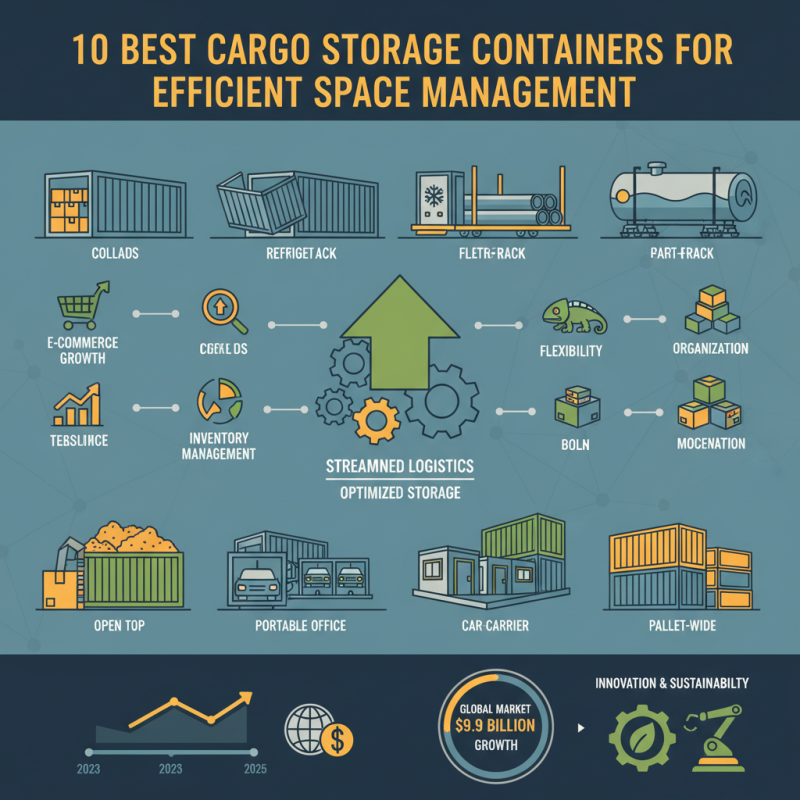
In today's fast-paced economy, efficient space management has become a critical concern for businesses of all sizes. The rise in e-commerce and the need for streamlined logistics have driven many companies to seek innovative solutions to optimize their storage capabilities. Among the most effective solutions are cargo storage containers, which not only offer flexibility in storage but also enhance organization and accessibility within warehouses and distribution centers. According to a report from MarketsandMarkets, the global market for cargo storage containers is projected to reach $9.9 billion by 2025, reflecting a growing recognition of their value in supply chain management.
Cargo storage containers come in various sizes and configurations, catering to diverse industries ranging from retail to construction. The increasing demand for efficient space utilization has led to advances in container design and functionality, allowing businesses to adapt to ever-changing inventory needs. A study by Grand View Research emphasizes that the containerized shipping industry is expected to expand significantly, driven by technological innovations and a stronger emphasis on sustainability. As organizations look to minimize waste and maximize storage efficiency, the selection of the right cargo storage containers becomes paramount in ensuring operational success. This article will explore the 10 best cargo storage containers that can help businesses achieve optimal space management.
Types of Cargo Storage Containers Available in the Market
When it comes to efficient space management, selecting the right type of cargo storage container is crucial. There is a diverse range of cargo storage solutions available in the market, each designed to meet specific storage needs. One common type is the shipping container, which is widely used for transporting goods internationally. These containers are rugged, weather-resistant, and available in various sizes, ranging from small 10-foot units to larger 40-foot options, making them versatile for various applications.
Another popular category includes collapsible containers, which are designed to optimize space when not in use. These containers can be easily folded down, allowing for convenient storage and transportation. Additionally, there are insulated containers that maintain a consistent temperature, suitable for perishable items.
Moreover, specialized containers like hazardous materials boxes and portable storage units are designed to meet specific compliance and safety standards. By understanding the types of cargo storage containers available, businesses can effectively choose options that align with their operational requirements and enhance their overall space management strategies.
Key Features to Consider When Selecting Cargo Storage Containers
When selecting cargo storage containers for efficient space management, several key features must be taken into consideration. First and foremost, the container size and capacity are pivotal; these factors can significantly influence storage efficiency. According to a recent industry report by the Global Portable Storage Container Market, optimizing container size can potentially increase storage capacity by approximately 30% in various settings, from warehouses to shipping yards. Therefore, it is essential to choose a container that aligns with specific cargo dimensions while maximizing available space.
Durability and security are also critical features to assess. High-quality materials and construction methods can prolong the lifespan of cargo containers, resulting in lower replacement costs over time. Data from the Container Closure Systems Association indicates that containers built with robust, weather-resistant materials can reduce damage and maintenance frequency by up to 25%. Additionally, security features like lockable doors and tamper-proof designs protect valuable goods from theft or damage, further enhancing overall efficiency in space management.
Lastly, ease of access and transportation should not be overlooked. Containers designed with dimensions that facilitate easy handling and stacking can minimize labor costs and improve workflow. Reports from the International Organization for Standardization highlight that containers with optimized handling features can reduce loading and unloading times by 15-20%, contributing to a more streamlined operation.
10 Best Cargo Storage Containers for Efficient Space Management
Comparing Sizes and Capacities of Popular Cargo Storage Solutions
When it comes to efficient space management, choosing the right cargo storage container is crucial. The variety of sizes and capacities available can significantly impact how effectively you utilize your space.
From small, portable units designed for personal use to larger containers suitable for commercial applications, understanding the dimensions of these storage solutions is essential. Some containers offer compact designs, making them ideal for urban settings where space is at a premium, while larger models cater to businesses needing to store bulk items.
Analyzing the capacities of popular cargo storage solutions reveals trends in storage needs across various industries. Many options feature modular designs that allow for easy stacking and reconfiguration based on specific requirements.
For example, a container with a capacity of 20 feet can hold multiple pallets, making it suitable for warehouses; conversely, smaller containers might be used for moving equipment or personal belongings. By assessing both size and capacity, businesses and individuals can select the most appropriate storage containers, ensuring optimal use of available space while meeting their particular needs.
Benefits of Using Cargo Storage Containers for Space Management
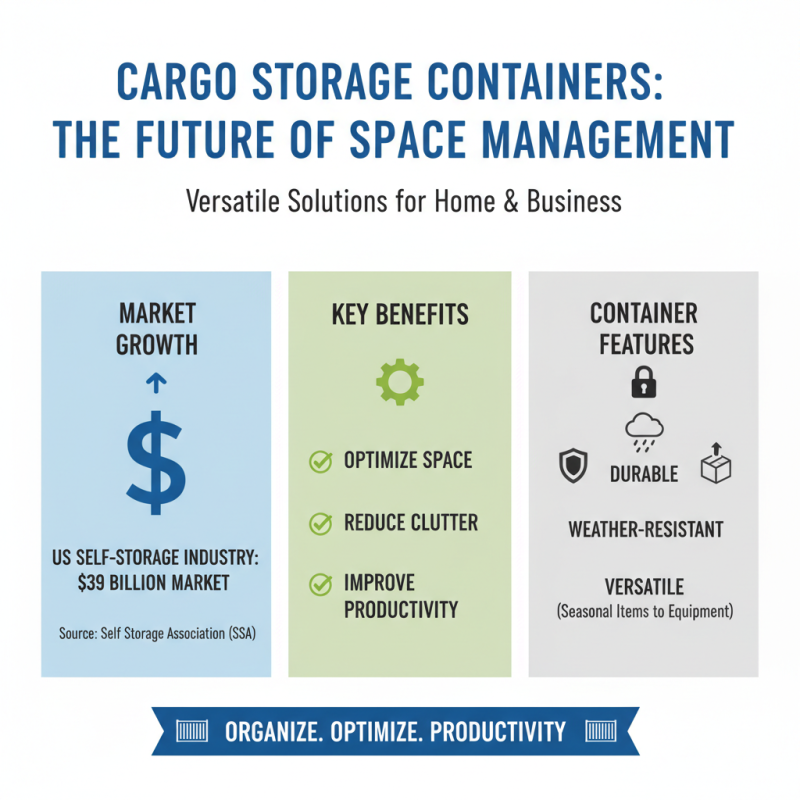
Cargo storage containers have become an essential component in modern space management, providing a versatile solution for both residential and commercial needs. According to a report by the Self Storage Association (SSA), the self-storage industry has grown to a $39 billion market in the U.S. alone, underlining the increasing demand for organized and efficient space utilization. By utilizing cargo storage containers, individuals and businesses can optimize their available space, reduce clutter, and improve overall productivity. These containers are designed to be durable, weather-resistant, and conducive to various storage requirements, ranging from seasonal items to valuable equipment.
The benefits of using cargo storage containers extend beyond simple organization. A study from the American Institute of Architects (AIA) indicates that efficient space management can lead to a 20-30% increase in workflow efficiency. This is particularly important in industrial and retail environments where space is at a premium. Utilizing cargo containers can free up essential floor space within operational areas, enabling smoother movement of staff and equipment. Furthermore, these containers can be easily relocated, allowing for flexible space management solutions that can adapt to changing business needs. The integration of cargo storage containers into logistics and inventory management strategies not only enhances space efficiency but also contributes to cost savings and sustainability goals.
Tips for Maintaining and Optimizing Cargo Storage Container Use
Maintaining and optimizing the use of cargo storage containers is essential for improving efficiency and maximizing space. According to a report from the Global Container Shipping Industry, inefficiencies in cargo storage can lead to spending that exceeds 20% of operating costs, highlighting the necessity for effective management practices.
One of the key tips for maximizing the use of these containers is to implement a systematic organization strategy. By categorizing items based on size, weight, and frequency of access, businesses can significantly reduce retrieval times and minimize the risk of damage during handling.
Moreover, regular maintenance of cargo containers is imperative for ensuring their longevity and reliability. Studies indicate that poorly maintained containers can incur repair costs upwards of 15% annually, which illustrates the financial impact of neglecting routine inspections. Conducting regular checks for structural integrity, cleanliness, and ventilation not only prolongs the life of the containers but also ensures the safety of the stored items.
Additionally, investing in technology such as inventory management systems can enhance tracking capabilities, allowing for real-time updates and more efficient inventory turnover, thereby ultimately boosting overall operational efficiency.