2026 Best Weatherproof Tape for Outdoor Use?
Choosing the best Weatherproof Tape for outdoor use in 2026 requires more than trusting a bold label. Outdoor surfaces face rain, sunlight, dust, temperature swings, and repeated movement. The U.S. National Oceanic and Atmospheric Administration reported 27 billion-dollar weather and climate disasters in 2024. That figure does not measure tape failure directly, but it highlights harsher conditions for repairs, sealing, mounting, and maintenance.
Industry reports from Grand View Research and MarketsandMarkets show continued growth across the global adhesive tapes market. Demand is rising in construction, automotive, packaging, renewable energy, and home improvement. However, market growth does not guarantee equal outdoor performance. A low-cost roll may stick strongly to a clean metal panel, then curl after several weeks of ultraviolet exposure. It may also lose contact when water enters a rough joint.
Professional evaluation should include recognized testing methods. ASTM D3330 measures peel adhesion, while ASTM D3654 examines holding power under sustained load. ASTM D1000 helps assess pressure-sensitive tape properties, and ISO 4892-3 supports accelerated ultraviolet exposure testing. Manufacturer technical data sheets from companies such as 3M and tesa also report temperature ranges, substrate limits, and aging behavior. Read them carefully.
No tape is truly permanent outdoors. That is worth remembering. The strongest choice depends on the surface, weather pattern, load, and expected service life. This 2026 guide compares backing materials, adhesive chemistry, waterproof ratings, UV resistance, temperature performance, and installation results. Some recommendations may still require testing on-site, because real walls, gutters, roofs, and cables rarely behave like laboratory samples.
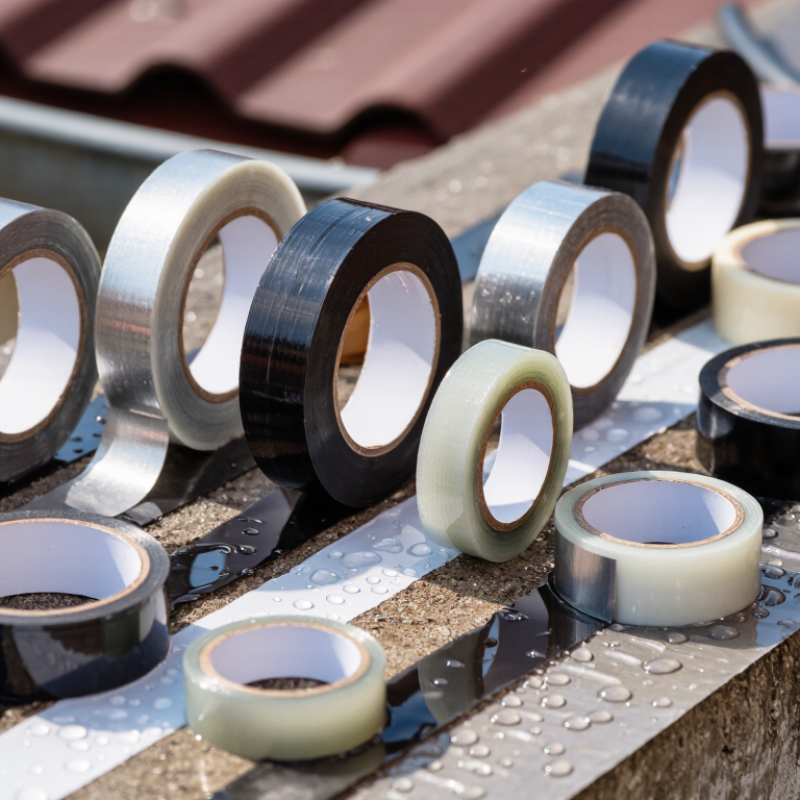
What Makes Outdoor Tape Weatherproof in 2026?
Weatherproof tape is not simply tape with a waterproof label. It needs a stable backing, flexible adhesive, UV resistance, and reliable temperature performance. ASTM D3330 measures peel adhesion, while ASTM D3654 evaluates holding power under sustained load. These tests matter because a tape can stick strongly at first, then creep under summer heat.
UV exposure is another major weakness. ASTM G154 and ISO 4892-3 provide accelerated weathering methods using ultraviolet light and moisture cycles. They do not perfectly reproduce every outdoor location. That limitation deserves attention. NOAA’s 2024 climate report recorded global temperatures about 1.46°C above the twentieth-century average. More heat can mean stronger expansion, contraction, and adhesive stress on exposed surfaces.
Water changes everything. Outdoor tape should resist rain, condensation, and repeated wet-dry cycling without edge lifting. A useful field check includes clean, dry surfaces, firm pressure, and a 24-hour cure period before loading. Test the actual material, not just a sample board. Painted metal, rough concrete, plastic, and wood behave differently. I would also question impressive laboratory claims without stated exposure hours, temperature ranges, and substrate details. “All-weather” sounds reassuring, but conditions are rarely all the same.
2026 Best Weatherproof Tape for Outdoor Use: Key Performance Benchmarks
What makes outdoor tape weatherproof? Reliable UV stability, water resistance, temperature tolerance, and strong adhesion are the most important selection factors.
The chart shows practical engineering targets commonly used when evaluating outdoor adhesive tapes: at least 1,000 hours of accelerated UV exposure, 24 hours of water resistance, a service range of approximately −20°C to 80°C, and peel adhesion of at least 20 N per 25 mm. Actual performance depends on the adhesive chemistry, backing material, surface condition, and installation quality.
Key Materials and Performance Features of Weatherproof Tape
2026 Best Weatherproof Tape for Outdoor Use?
Choosing weatherproof tape starts with its materials. A polyethylene or polypropylene backing resists rain and surface abrasion. For stronger flexibility, fabric-reinforced layers can handle movement around pipes, panels, and outdoor cables. The adhesive matters just as much. Butyl rubber offers strong sealing on many surfaces, while acrylic adhesive usually performs better under sunlight and temperature changes.
Look for resistance to ultraviolet light, moisture, freezing temperatures, and heat. A reliable tape should remain bonded after repeated expansion and contraction. Check its temperature range before applying it to metal roofing or exposed equipment. Adhesion also depends on the surface. Dust, oil, loose paint, and frost can cause early failure. Clean and dry the area carefully.
I have seen tape fail on a damp wall within one night. That mistake was easy to avoid. Press the tape firmly, especially along the edges. A small roller can remove hidden air pockets. For gaps or rough joints, thicker tape may seal better than a thin film. However, thicker does not always mean stronger. Some tapes stretch too much and lose shape under tension. Others feel secure at first but peel after several hot days. Test a small section for 24 to 48 hours when possible. Outdoor conditions are unpredictable, and no tape works equally well on every material.
Main Types of Weatherproof Tape for Outdoor Applications
Outdoor projects need more than a tape labeled weatherproof. The right type depends on sunlight, rain, movement, and the surface being repaired.
In field repairs, butyl rubber tape works well around roof flashing, vents, and metal joints. It remains flexible and creates a strong moisture barrier. However, dusty surfaces can weaken its grip quickly.
Acrylic adhesive tape suits long-term outdoor use because it resists ultraviolet light and temperature changes. It bonds well to clean glass, painted metal, and many plastics. Silicone tape is different. It stretches around irregular shapes and seals pipes, cable connections, and emergency repairs without adhesive residue. It stays flexible. Yet silicone tape may not provide enough holding strength on smooth, oily surfaces.
Aluminum foil tape reflects heat and protects insulation seams from moisture. It is useful near ducts and exterior panels, but sharp edges can tear it during installation. PVC and cloth-backed tapes are practical for short-term covering, bundling, or surface protection. They are easy to tear by hand, though some products become brittle after months of direct sun. Test a corner. Clean and dry every surface, then press the tape firmly with a roller or cloth. A common mistake is stretching adhesive tape too tightly; it can shrink later and expose the seam. I have also found that cold-weather application often gives weaker results than expected, so checking the temperature range is essential.
How to Choose the Best Tape for Your Outdoor Project
2026 Best Weatherproof Tape for Outdoor Use?
Choosing the best tape starts with the outdoor surface, not the tape roll. Wood, metal, glass, and painted walls need different adhesive strengths. A tape that grips metal may lift from dusty brick. Read the label. Check its resistance to rain, sunlight, temperature changes, and movement. For roof seams or gutters, select tape designed for continuous moisture exposure. For temporary cable protection, a flexible outdoor tape may work better.
Preparation often decides the result. Remove loose paint, mud, oil, and moisture before applying the tape. A clean, dry surface gives the adhesive a fair chance. Press the tape firmly with a roller or your fingertips, especially along the edges. Overlap joints carefully, because water usually enters through small gaps. Apply it within the recommended temperature range. Cold surfaces can weaken early bonding.
Test a small hidden area first. Small tests matter. I once trusted a strong tape on rough timber, but its edges lifted after a wet night. The problem was poor surface contact, not weak adhesive. That mistake changed my method. Now I check the substrate, measure the expected movement, and allow proper curing time. Inspect the repair after heavy rain and strong sunlight. If the surface flexes, cracks, or sheds dust, even excellent tape may fail. Reliable outdoor work requires matching the tape to real conditions, not just choosing the thickest option.
How to Apply, Test, and Maintain Weatherproof Tape Outdoors
2026 Best Weatherproof Tape for Outdoor Use?
Outdoor tape works best on clean, dry, and stable surfaces. I wipe away dust, oil, and loose paint with a lint-free cloth. Then I let the surface dry completely. Even a small water film can weaken adhesion. Cold weather creates another problem. I warm the tape and surface gently, never with an open flame. A firm roller removes hidden air pockets. Press the edges twice.
Application technique matters. I cut a piece longer than the damaged area and round its corners. Sharp corners lift sooner in wind and rain. For seams, I overlap each strip by at least two centimeters. I avoid stretching the tape during placement. It may shrink later. That mistake happened to me once. The repair looked tight, then opened after several hot days. Apply steady pressure for thirty seconds, especially along the edges.
Testing should happen before a large repair. I place a small sample in the same sunlight and moisture conditions. After twenty-four to forty-eight hours, I check lifting, bubbling, and water entry. A gentle peel test helps, but it should not damage the surface. Inspect outdoor tape monthly and after storms. Look for cracked edges, dirt buildup, and fading. Clean the surrounding area before adding a narrow reinforcement strip. If the material supports weight, heat, or electrical equipment, tape alone may be unsuitable. Always compare the tape’s technical limits with the actual outdoor conditions.
2026 Best Weatherproof Tape for Outdoor Use? - How to Apply, Test, and Maintain Weatherproof Tape Outdoors
| Tape Type | Typical Outdoor Use | Suitable Surfaces | Main Strength | Limitations | Typical Service Temperature* | Best Application Method |
|---|---|---|---|---|---|---|
| Butyl rubber sealing tape | Flashing, roof joints, window and door perimeter sealing | Metal, glass, masonry, wood, many plastics | Excellent water resistance and gap filling | Can remain soft; exposed edges may collect dirt | Approximately −30°C to 90°C | Apply to a clean, dry surface and compress firmly with a roller |
| Acrylic foam mounting tape | Outdoor signs, trim, nameplates and lightweight fixtures | Painted metal, glass, sealed wood, smooth plastic | High bond strength with good UV and aging resistance | Needs smooth contact; not ideal for dusty, porous or constantly wet surfaces | Approximately −40°C to 95°C | Clean with a suitable solvent, apply pressure, and allow bond buildup before loading |
| EPDM flashing tape | Roofing details, exterior seams and building-envelope transitions | Metal, concrete, masonry, wood and compatible membranes | Strong resistance to sunlight, rain and ozone | May require primer on porous or low-energy surfaces | Approximately −40°C to 120°C | Use overlapping seams and press the tape from the center toward the edges |
| Silicone self-fusing tape | Temporary cable, hose and pipe insulation; emergency moisture sealing | Cables, rubber hoses, metal pipes and irregular shapes | Forms a seamless, flexible, moisture-resistant wrap without adhesive residue | Does not bond well to dirty surfaces and is not a structural repair | Approximately −50°C to 200°C, depending on construction | Stretch to about 50–75% of its width and overlap each turn by half |
| PVC outdoor utility tape | Color coding, bundling and light-duty electrical insulation | Insulated wires, smooth plastic and clean metal | Flexible, easy to tear and available in multiple colors | Adhesive performance can decline with prolonged UV, heat or water exposure | Approximately −18°C to 80°C | Wrap with consistent tension and extend beyond the damaged area |
| Aluminum foil sealing tape | HVAC duct joints, insulation seams and radiant-barrier repairs | Clean metal, foil-faced insulation and smooth rigid panels | Reflects radiant heat and provides a vapor-resistant surface | Foil can wrinkle or tear on rough and highly flexible surfaces | Approximately −20°C to 120°C | Smooth with a hand roller to remove air pockets and seal all edges |
| Stage | Recommended Procedure | Acceptance Check |
|---|---|---|
| 1. Inspect | Remove loose coatings, rust, old adhesive and sharp contaminants. Confirm that the surface is structurally sound. | No flaking material, standing water or sharp edges remain. |
| 2. Clean | Wipe away dust and grease using a compatible cleaner. Allow the surface to dry completely. | The surface is dry, clean and free of visible residue. |
| 3. Apply | Apply tape without stretching adhesive-backed products. Overlap outdoor seams by at least 25 mm unless the product instructions specify otherwise. | No wrinkles, fish-mouths, open seams or trapped air channels are visible. |
| 4. Consolidate | Press firmly with a suitable roller, especially along edges, overlaps and corners. | Edges are fully bonded and cannot be lifted by light finger pressure. |
| 5. Test | After the recommended dwell time, perform a visual inspection, gentle peel check and controlled water-spray test. | No lifting, water entry, adhesive squeeze-out or seam opening occurs. |
| 6. Maintain | Inspect at least twice per year and after severe weather. Clean dirt gently and reseal damaged sections promptly. | Tape remains bonded, flexible and free from cracks, splits or exposed gaps. |
*Temperature ranges are typical values for generic tape constructions and can vary by backing, adhesive, thickness, surface and exposure conditions. Always verify the product specification before installation.
Article Source:
Get a quote
Get a quote
Read More
Accept AllReject AllCustomise
Privacy Overview
| Cookie | Duration | Description |
|---|---|---|
| cookielawinfo-checkbox-advertisement | 1 year | Set by the GDPR Cookie Consent plugin, this cookie records the user consent for the cookies in the "Advertisement" category. |
| cookielawinfo-checkbox-analytics | 11 months | This cookie is set by GDPR Cookie Consent plugin. The cookie is used to store the user consent for the cookies in the category "Analytics". |
| cookielawinfo-checkbox-functional | 11 months | The cookie is set by GDPR cookie consent to record the user consent for the cookies in the category "Functional". |
| cookielawinfo-checkbox-necessary | 11 months | This cookie is set by GDPR Cookie Consent plugin. The cookies is used to store the user consent for the cookies in the category "Necessary". |
| cookielawinfo-checkbox-others | 11 months | This cookie is set by GDPR Cookie Consent plugin. The cookie is used to store the user consent for the cookies in the category "Other. |
| cookielawinfo-checkbox-performance | 11 months | This cookie is set by GDPR Cookie Consent plugin. The cookie is used to store the user consent for the cookies in the category "Performance". |
| CookieLawInfoConsent | 1 year | CookieYes sets this cookie to record the default button state of the corresponding category and the status of CCPA. It works only in coordination with the primary cookie. |
| viewed_cookie_policy | 11 months | The cookie is set by the GDPR Cookie Consent plugin and is used to store whether or not user has consented to the use of cookies. It does not store any personal data. |
| Cookie | Duration | Description |
|---|---|---|
| _cs_c | 1 year 1 month | The cookie is used by Content Square to save the user consent to be tracked. |
| Cookie | Duration | Description |
|---|---|---|
| _cs_id | 1 year 17 days 20 hours 13 minutes | This cookie is used to store the ContentSquare's user identifier ID. This is a persistent cookie and expires after 13 months. |
| _cs_s | 1 hour | This cookie is used to store the number of page's viewed by a visitor within the session for ContentSquare's solution. |
| _ga | 1 year 1 month 4 days | Google Analytics sets this cookie to calculate visitor, session and campaign data and track site usage for the site's analytics report. The cookie stores information anonymously and assigns a randomly generated number to recognise unique visitors. |
| _ga_* | 1 year 1 month 4 days | Google Analytics sets this cookie to store and count page views. |
| _gcl_au | 3 months | Google Tag Manager sets the cookie to experiment advertisement efficiency of websites using their services. |
| Cookie | Duration | Description |
|---|---|---|
| test_cookie | 15 minutes | doubleclick.net sets this cookie to determine if the user's browser supports cookies. |
| Cookie | Duration | Description |
|---|---|---|
| _cs_root-domain | session | Description is currently not available. |
| _cs_same_site | session | Description is currently not available. |