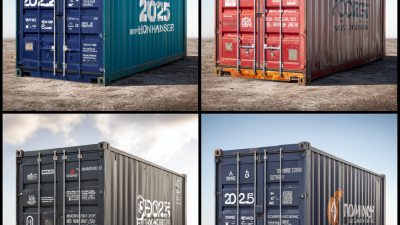
2026 Best High Cube Shipping Container for Global Buyers?
Global cargo flows are becoming more complex, while space, equipment, and delivery schedules remain under pressure. UNCTAD’s Review of Maritime Transport 2024 reported that global maritime trade grew by approximately 2.4% in 2023, despite geopolitical disruption and uneven economic recovery. For exporters, importers, and logistics planners, this environment makes equipment selection more important than it first appears.
A high cube shipping container provides about 30 centimeters of additional internal height compared with a standard container. That extra space can accommodate tall machinery, retail displays, lightweight industrial goods, and carefully stacked cartons. It may improve loading efficiency. It may also increase unused volume when cargo is poorly planned. The choice is not always obvious.
John Fossey, former head of container equipment research at Drewry, has said, “Equipment availability is a key component of reliable container shipping.” His observation remains practical for global buyers comparing new, used, and one-trip units. Drewry’s container equipment research consistently highlights the relationship between trade growth, fleet replacement, manufacturing capacity, and leasing demand. Container xChange market analyses also show that prices and availability can vary sharply by region, depot, and equipment condition.
This guide examines the 2026 high cube shipping container market through dimensions, steel quality, CSC safety certification, flooring, door design, supplier reliability, and total delivered cost. Small details matter. A clean floor, functional door seals, and visible inspection records can prevent expensive delays. Yet no report can remove every uncertainty. Regional inventory changes quickly, and published prices may exclude inland transport, storage, customs procedures, or repair costs. Global buyers should compare verified specifications with real cargo requirements before choosing a unit.

What Defines a High Cube Container: ISO 668’s 9 ft 6 in Height Standard
2026 Best High Cube Shipping Container for Global Buyers?
What Defines a High Cube Container: ISO 668’s 9 ft 6 in Height Standard
A high cube shipping container is defined mainly by its exterior height. ISO 668 sets the nominal height at 9 feet 6 inches, or about 2,896 millimetres. This is roughly one foot higher than a standard container. That extra space matters when cargo includes tall machinery, stacked cartons, or bulky equipment. The usual external width remains about 8 feet, while internal measurements vary with wall thickness, flooring, and door design. Do not confuse nominal dimensions with usable space.
ISO 668 provides a dimensional framework, but it does not guarantee identical interiors everywhere. Manufacturing tolerances, repairs, and floor condition can reduce clearance. A careful buyer should review the container’s data plate, inspection report, and current measurement sheet. Check door opening height, internal length, roof condition, corner fittings, and floor strength. A 9 ft 6 in exterior height may still fail a loading plan if cargo needs extra handling clearance. Small details become expensive overseas.
Tips: Measure the tallest cargo, including pallets and protective packaging. Leave practical clearance above it. Confirm transport height restrictions before booking inland delivery. Request recent photographs, but treat photographs as supporting evidence only. They can hide rust beneath paint. I would also compare the stated dimensions with an independent inspection. Specifications are useful. Verification is better. Sometimes, buyers focus on height and overlook weight limits, which is an easy mistake to repeat.
40-Foot High Cube Dimensions: 12.19 m Length and 2.90 m External Height
2026 Best High Cube Shipping Container for Global Buyers?
For global cargo planning, a 40-foot high cube container offers useful extra vertical space. Its external length is about 12.19 meters, while its external height reaches approximately 2.90 meters. The standard external width is usually 2.44 meters. Inside, usable dimensions are smaller because of wall panels, flooring, and door structures. Internal height often measures near 2.69 meters, but exact figures can vary.
That extra height helps with tall machinery, lightweight cartons, and carefully stacked pallets. It can also reduce pressure on horizontal space. However, higher capacity does not mean unlimited loading. Cargo weight, axle limits, floor strength, and port handling rules still matter. Measure twice. A 40-foot high cube may hold more volume, yet poor weight distribution can create operational problems.
From practical inspections, I would check the door opening, corner posts, roof condition, and floor moisture before selection. The external 2.90-meter height must fit through inland routes, warehouse entrances, and lifting areas. Some older units show dents or repaired panels that affect usable space. Buyers should compare measured dimensions with the container’s safety plate and inspection records. I once underestimated door clearance during planning, and the delay was avoidable. Regional equipment availability can also change the final choice, so published dimensions should never replace a physical verification.
Capacity and Payload: About 76 m³ Volume and 30,480 kg Gross Weight
2026 Best High Cube Shipping Container for Global Buyers?
A 40-foot high cube container offers about 76 m³ of internal volume. Its typical external height is 2.90 metres, giving extra room for tall cartons, machinery, and retail fixtures. ISO 668:2020 defines the basic dimensional framework for freight containers. However, volume is not the same as usable loading space. Door openings, corner posts, and lashing clearance reduce practical capacity.
The stated 30,480 kg figure is maximum gross weight, not payload. It includes the container’s tare weight and cargo. With a typical tare weight near 3,900–4,200 kg, the realistic payload may reach approximately 26,000 kg. Local road limits can reduce it further. UNCTAD’s Review of Maritime Transport 2024 highlights how intermodal transport depends on standardized equipment and efficient weight planning. Yet, published specifications are not universal. Some units differ after repairs, flooring changes, or regional certification.
Tips: Weigh the loaded container before dispatch. Check the door rating, floor condition, and CSC inspection plate. Distribute heavy cargo across the floor, not against one wall. Leave space for secure lashing. A 76 m³ estimate can mislead when cargo is dense or irregularly shaped. I have seen buyers focus on height and overlook axle limits. That mistake can create extra handling costs.
2026 Best High Cube Shipping Container for Global Buyers
A standard 40-foot high cube container provides approximately 76.4 m³ of internal volume. Its typical maximum gross weight is 30,480 kg, including the container tare weight, leaving an estimated payload capacity of about 26,280 kg. Actual specifications may vary by manufacturer, construction, and transport regulations.
CSC Safety Requirements: Inspection, Plates, and International Ocean Transport
For global buyers, a high cube container is more than a taller steel box. Its 9-foot-6-inch height improves cargo capacity, but ocean transport depends on valid CSC compliance. The International Maritime Organization’s CSC Convention requires containers to pass structural safety examinations before international use. A high cube unit needs the same safety discipline as a standard container.
Inspect the corner posts, floor cross-members, roof rails, doors, and locking bars. Look for buckling, deep corrosion, cracked welds, or water stains. A fresh coating can hide serious damage. That is easy to miss.
The CSC Safety Approval Plate should show the identification number, manufacture date, maximum gross weight, stacking load, and racking test value. Missing or unreadable plates can delay acceptance at terminals.
The first periodic examination is generally required within five years of manufacture. Later examinations usually occur at intervals of no more than 30 months, unless an approved continuous examination program applies. The UNCTAD Review of Maritime Transport 2024 recorded about 12.3 billion tons of seaborne trade in 2023, showing why dependable containers remain essential. Yet inspection records are not always perfectly consistent between owners and depots. Buyers should verify the plate, inspection status, repair history, and payload limits before booking shipment. A certificate alone is not enough. Physical condition still matters.
How Global Buyers Should Compare New, Used, and One-Trip Containers in 2026
2026 Best High Cube Shipping Container for Global Buyers?
How Global Buyers Should Compare New, Used, and One-Trip Containers in 2026
A high cube container offers about 30 centimeters more internal height than a standard unit. That extra space helps with tall cargo, shelving, and ventilation. In 2026, buyers should compare condition, certification, delivery distance, and total landed cost. The lowest price is not always the best value.
New containers usually provide the cleanest floors, strongest seals, and longest service life. However, they often cost more and may have limited availability near your destination. One-trip containers have completed one international journey, so they often look nearly new. Check the production date, corner posts, door alignment, roof, and floor carefully. A clean exterior can mislead.
Used containers can work well for storage or less demanding transport. Their condition varies widely. Inspect for deep corrosion, repaired panels, water stains, damaged locking bars, and soft flooring. Ask for recent photos and an independent inspection report. Confirm the CSC safety plate and matching identification numbers before payment. Details matter.
Allow for inland trucking, lifting, port charges, taxes, and local delivery restrictions. A container priced cheaply overseas may become expensive after arrival. I would also test the doors in person when possible. They should close evenly, without forcing the handles. Some buyers focus too heavily on paint. That assumption deserves testing. Reliability comes from documented condition, suitable specifications, and a realistic delivery plan.
2026 Best High Cube Shipping Container for Global Buyers? - How Global Buyers Should Compare New, Used, and One-Trip Containers in 2026
| Comparison Dimension | Newly Manufactured | One-Trip | Used / Cargo-Worthy | What Global Buyers Should Check |
|---|---|---|---|---|
| Typical Condition | Unused and manufactured to the buyer's specification. | Manufactured new, shipped once with cargo, then offered for resale. | Previously used in international or domestic transport; condition varies by unit. | Request dated inspection photographs, repair history, and a written condition grade. |
| Common External Dimensions | Approximately 12.19 m long × 2.44 m wide × 2.90 m high (40 ft × 8 ft × 9 ft 6 in). | Confirm dimensional tolerances and local road, rail, and site-access limits before purchase. | ||
| Typical Internal Dimensions | Approximately 12.03 m long × 2.35 m wide × 2.69 m high. | Internal dimensions can vary slightly by manufacturer, wall thickness, flooring, and repairs. | ||
| Approximate Internal Volume | About 76 m³, commonly listed near 76.4 m³ for a standard 40 ft high cube. | Allow clearance for doors, packing materials, load restraints, and irregular cargo. | ||
| Typical Tare Weight | Approximately 3,800–4,200 kg. | Approximately 3,800–4,200 kg. | Approximately 3,800–4,500 kg, depending on repairs, flooring, and modifications. | Use the tare weight stamped on the CSC safety approval plate for payload calculations. |
| Maximum Gross Weight | Typically up to 30,480 kg for an ISO 40 ft high cube, subject to the container's safety plate and transport rules. | Do not rely only on a sales listing; verify the manufacturer's plate and applicable road limits. | ||
| Approximate Payload Capacity | Usually about 26,280–26,680 kg before route or axle restrictions. | Usually about 26,280–26,680 kg before route or axle restrictions. | Often about 25,980–26,680 kg, depending on tare weight and approved gross mass. | Legal payload may be lower than the container rating because of chassis, axle, road, or port limits. |
| Exterior Appearance | Best consistency in paint, panels, doors, and markings. | Usually very good, with limited handling marks. | May show dents, surface corrosion, faded paint, patches, or previous markings. | Minor cosmetic wear may be acceptable if structural integrity and weather-tightness are unaffected. |
| Floor Condition | New marine-grade plywood or an approved equivalent, depending on specification. | Generally new or nearly new flooring. | May have wear, staining, repairs, or localized replacement sections. | Check floor thickness, soft spots, oil contamination, water damage, and permitted treatment status. |
| Door and Seal Condition | New locking bars, hinges, gaskets, and door alignment. | Usually close to new, but inspect after the first voyage. | Gaskets may be hardened, locking gear may be bent, and doors may require adjustment. | Open and close every door; check gasket compression and verify that locking bars operate smoothly. |
| Weather-Tightness Risk | Lowest when factory quality control is reliable. | Low, but handling or voyage damage can occur. | Moderate to high unless the unit has passed a documented inspection and leak test. | Inspect roof, corner castings, side rails, welds, door headers, and repaired panels for light or water entry. |
| Structural Repair Risk | Lowest initial repair risk. | Low initial repair risk, subject to shipping damage. | Higher; look for buckled rails, cracked welds, distorted corner posts, and unauthorized patches. | Structural defects should be assessed by a qualified container inspector before payment. |
| CSC Safety Approval | Should be issued before international use and shown on a valid safety plate. | Normally supplied with a valid CSC safety approval for its intended service. | Must have a valid CSC plate or pass re-inspection before international cargo movement. | Verify plate number, next examination date, maximum gross mass, and consistency with the sales documents. |
| Expected Remaining Service Potential | Longest potential service life, subject to maintenance and operating environment. | Long remaining service potential with limited prior handling. | Highly variable; depends on age, corrosion, repairs, cargo history, and maintenance. | Age alone is not enough; condition, inspection records, and intended use are more important. |
| Indicative 2026 Purchase Price | Approximately US$4,000–7,500 before delivery, taxes, and local charges. | Approximately US$3,000–6,000 before delivery, taxes, and local charges. | Approximately US$1,800–4,000 before delivery, taxes, and local charges. | Actual prices vary by country, inland freight, port availability, currency, specification, and market supply. |
| Delivery and Total-Landed-Cost Risk | Higher budget certainty when the specification and production slot are fixed. | Often a practical balance between condition and purchase cost. | Lowest purchase price, but inspection, repairs, transport, and cleaning can increase the final cost. | Compare delivered, unloaded, inspected, and tax-inclusive cost rather than unit price alone. |
| Best Use Case | Long-term fleet use, demanding cargo, export programs, and projects requiring consistent appearance. | International shipping, storage, conversion projects, and buyers seeking near-new condition. | Budget-sensitive storage, temporary projects, domestic use, and non-critical applications. | Match the grade to cargo sensitivity, intended route, ownership period, and available maintenance. |
| Main Advantage | Maximum specification control and the lowest initial wear. | Near-new condition with a lower price than a never-used unit. | Lower entry cost and wider availability in many inland markets. | Consider the cost of downtime and repairs, not just the initial purchase price. |
| Main Disadvantage | Highest purchase price and possible production or delivery lead time. | Availability, color, location, and specifications may be less flexible than a factory order. | Condition is inconsistent, and hidden repair or compliance issues are more likely. | A pre-purchase inspection is especially important for used units and remote transactions. |
| Recommended Buyer Profile | Buyers prioritizing standardization, appearance, predictable condition, and long-term use. | Buyers seeking a strong balance of price, condition, and international usability. | Buyers prioritizing initial savings and able to inspect, repair, and maintain the unit locally. | Choose based on total cost of ownership, cargo requirements, and local compliance. |
Buyer note: A “one-trip” container is generally a new container that has completed one loaded voyage, but terminology and condition standards can vary by market. Price ranges are indicative and exclude inland delivery, unloading equipment, customs duties, taxes, storage, inspection, and site preparation.
Related Posts
-
2025 Top 5 One Trip Shipping Containers: Best Choices for Your Needs
-
What is One Trip Shipping Containers and Why They are the Best Choice for Your Move
-

How to Choose the Best Shipping Container Storage Units for Your Needs
-

Why Choosing One Trip Shipping Containers is the Best Option for Your Business
-

Top 10 Benefits of Using Small Shipping Containers for Your Storage Needs?
-
Why Choose Second Hand Shipping Containers for Your Next Project?
Get a quote
Get a quote
Read More
Accept AllReject AllCustomise
Privacy Overview
| Cookie | Duration | Description |
|---|---|---|
| cookielawinfo-checkbox-advertisement | 1 year | Set by the GDPR Cookie Consent plugin, this cookie records the user consent for the cookies in the "Advertisement" category. |
| cookielawinfo-checkbox-analytics | 11 months | This cookie is set by GDPR Cookie Consent plugin. The cookie is used to store the user consent for the cookies in the category "Analytics". |
| cookielawinfo-checkbox-functional | 11 months | The cookie is set by GDPR cookie consent to record the user consent for the cookies in the category "Functional". |
| cookielawinfo-checkbox-necessary | 11 months | This cookie is set by GDPR Cookie Consent plugin. The cookies is used to store the user consent for the cookies in the category "Necessary". |
| cookielawinfo-checkbox-others | 11 months | This cookie is set by GDPR Cookie Consent plugin. The cookie is used to store the user consent for the cookies in the category "Other. |
| cookielawinfo-checkbox-performance | 11 months | This cookie is set by GDPR Cookie Consent plugin. The cookie is used to store the user consent for the cookies in the category "Performance". |
| CookieLawInfoConsent | 1 year | CookieYes sets this cookie to record the default button state of the corresponding category and the status of CCPA. It works only in coordination with the primary cookie. |
| viewed_cookie_policy | 11 months | The cookie is set by the GDPR Cookie Consent plugin and is used to store whether or not user has consented to the use of cookies. It does not store any personal data. |
| Cookie | Duration | Description |
|---|---|---|
| _cs_c | 1 year 1 month | The cookie is used by Content Square to save the user consent to be tracked. |
| Cookie | Duration | Description |
|---|---|---|
| _cs_id | 1 year 17 days 20 hours 13 minutes | This cookie is used to store the ContentSquare's user identifier ID. This is a persistent cookie and expires after 13 months. |
| _cs_s | 1 hour | This cookie is used to store the number of page's viewed by a visitor within the session for ContentSquare's solution. |
| _ga | 1 year 1 month 4 days | Google Analytics sets this cookie to calculate visitor, session and campaign data and track site usage for the site's analytics report. The cookie stores information anonymously and assigns a randomly generated number to recognise unique visitors. |
| _ga_* | 1 year 1 month 4 days | Google Analytics sets this cookie to store and count page views. |
| _gcl_au | 3 months | Google Tag Manager sets the cookie to experiment advertisement efficiency of websites using their services. |
| Cookie | Duration | Description |
|---|---|---|
| test_cookie | 15 minutes | doubleclick.net sets this cookie to determine if the user's browser supports cookies. |
| Cookie | Duration | Description |
|---|---|---|
| _cs_root-domain | session | Description is currently not available. |
| _cs_same_site | session | Description is currently not available. |